Common Mistakes Buying Amazon Return Pallets
We bought a $1,400 raw Amazon returns lot and spent three weeks learning why original MSRP is a trap. Here is where new buyers bleed cash and how to stop it.
By Pallet IQ Editorial Team
Published
 Pallet Buying
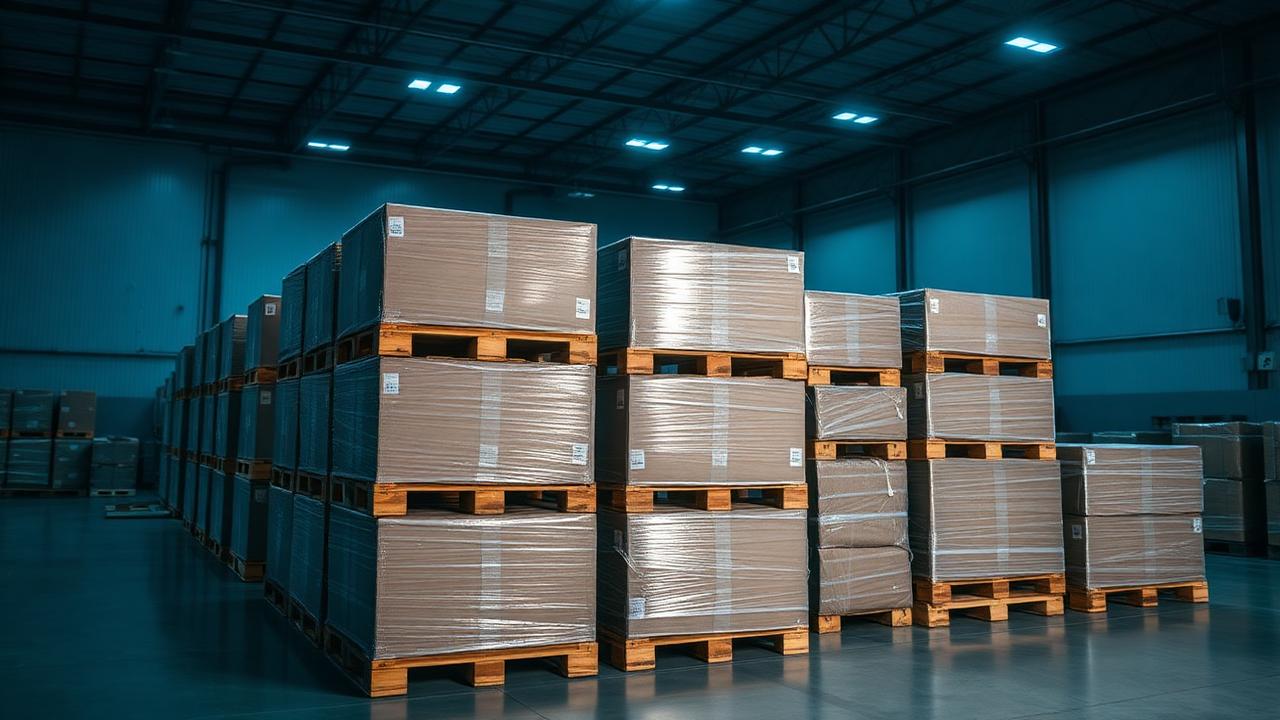
Two pallets wrapped in cloudy black stretch film sat in the driveway of my storage unit on an eighty-degree Tuesday. The paperwork taped to the side showed $8,400 in original Amazon retail value. I had paid $1,150 on an auction site, plus another $380 for LTL freight. I felt like I had beaten the system.
Two days later, I was surrounded by forty-seven broken humidifiers, twelve vacuum cleaners missing internal filters, and three shrink-wrapped boxes containing literal bricks. My actual net return from that load was $640 against a $1,530 cash outlay. When newcomers jump in, the common mistakes buying amazon return pallets almost always trace back to that exact same illusion of free retail margin.
Liquidation is not discounted retail shopping. It is wholesale trash sorting where you get paid to find the needles in the scrap pile. If you treat Amazon returns like guaranteed inventory, your working capital will bleed out within three auctions.
Believing the Stated Manifest Value
Amazon lists original manufacturer suggested retail prices (MSRP) on manifests because it costs them nothing to be optimistic. A manifest claiming a $12,000 retail value might look like an incredible opportunity at a 15% bid ($1,800). But that $12,000 figure is almost pure fiction.
First, retail prices erode constantly. A Bluetooth speaker released three years ago at $120 might sell brand new on Amazon right now for $42. Second, Amazon customer returns have brutal defect rates. According to our recovery rate report, electronics typically recover between 25% and 40% of their original street value, while customer-returned apparel routinely drops down to 8% to 15% due to missing tags, stains, and sizing oddities.
Third, third-party sellers on Amazon often inflate catalog MSRPs to make strike-through pricing look like a bargain. When that item enters the returns stream, the liquidation manifest captures the inflated figure. If you price your bids against stated retail rather than realistic secondary market value, you lose immediately. Never calculate your ceiling from original retail. Run your raw counts through a manifest analyzer to spot low-velocity SKUs and inflated list prices before placing a bid.
The Common Mistakes Buying Amazon Return Pallets Freight Math
Freight will wipe out your margin faster than defective inventory. Most beginners calculate their bids, win a lot for $800, and only then realize the shipping carrier wants $520 to haul it 400 miles.
LTL (Less-Than-Truckload) shipping operates on rigid rules. Carriers base rates on weight, distance, freight class, and accessorial fees. Base linehaul rates might run $1.20 to $2.50 per mile depending on fuel surcharges and freight lanes. But the real surprises hit when the bill of lading gets finalized with accessorial charges.
If you do not have a commercial loading dock or a forklift, you need a liftgate truck. That adds $50 to $75. If the truck delivers to a house or a mini-storage facility, carriers tack on a residential or limited-access fee of $50 to $100. If you miss the driver's delivery window, redelivery charges can tack on another $150.
Take a look at carrier rules from providers like FedEx Freight before you tender a shipment. If you have not checked whether a pallet lot allows local warehouse pickup, you are giving away 20% to 40% of your total potential profit to logistics companies before you even slit the shrink wrap.
Buying Raw Mystery Boxes Instead of Manifested Freight
There is a massive difference between a manifested pallet from an authorized enterprise contract and a mystery gaylord bought from a local secondary liquidator.
A manifested load lists the ASIN, description, expected condition, and unit quantity for every piece on the skid. It is never 100% accurate. You should always expect a 10% to 15% discrepancy rate between the paperwork and the actual physical count. But a manifest gives you data. You can look up eBay sold comps, calculate sell-through velocity, and set a hard maximum bid.
Mystery pallets sold on unregulated marketplaces or secondary wholesale yards are an entirely different animal. In many cases, those pallets have already been picked over. A broker buys full truckloads from major enterprise auction sites like B-Stock or Direct Liquidation, pulls out the clean Apple items, Dyson vacuums, and sealed electronics, and restacks the unsellable junk back onto a wood skid. They wrap it in pristine stretch film, slap a label on it, and market it as an "unsearched raw Amazon return pallet."
If you buy unmanifested returns, you are paying someone else for the privilege of hauling their garbage to the county landfill.
| Pallet Type | Manifest Accuracy | Typical Recovery Rate | Labor Required | Risk Profile |
|---|---|---|---|---|
| Manifested Overstock | 90-95% | 45-65% of street price | Low (inspect and list) | Low |
| Manifested Customer Returns | 80-88% | 25-40% of street price | High (test, clean, parts) | Moderate to High |
| Unmanifested Mystery Skid | 0% | 5-15% of street price | Very High (heavy scrap rate) | Extreme (often cherry-picked) |
| Salvage / Damaged Returns | 75-85% | 10-20% (parts/repair) | Extreme (board repair/harvest) | Very High |
Ignoring the True Cost of Processing Labor
When a pallet lands, the clock starts ticking. Your cash is tied up until those items turn back into dollars.
Opening forty brown boxes, peeling off shipping labels, testing power switches, hunting for missing cords, wiping down dust, photographing items, and drafting listings takes hours. If you spend 20 minutes testing and cleaning a returned coffee maker that you eventually sell on eBay for $28, you did not make money. Take out eBay final value fees (around 13.25% plus $0.30), outbound shipping materials, the initial item cost basis, and you earned less than minimum wage for your time.
Before you bid on any lot, run the numbers through our pallet ROI calculator to include a realistic testing buffer. If a lot contains 60 small items with an average selling price under $15, the unit economics are broken before you start. Low-dollar returns demand more labor than their resale value can support.
A Realistic Pallet P&L Breakdown
Let us look at what an actual return pallet looks like when you run the balance sheet honestly. This is based on a mid-tier small-appliance lot out of an Amazon return processing center.
- Units on manifest: 42
- Stated manifest retail: $4,850
- Winning auction bid: $620
- Buyer premium (10%): $62
- LTL freight with residential liftgate: $310
- Total cash invested: $992
- Landed cost per unit: $23.62
Now, look at the reality of the 42 units once inspected:
- 14 units: Complete in box, tested working. Resold on eBay at average $45 ($630 gross).
- 11 units: Minor cosmetic wear or non-original box. Resold locally on Facebook Marketplace at average $25 cash ($275 gross).
- 7 units: Incomplete (missing charger, tray, or blade). Sold "for parts/repair" on eBay at average $15 ($105 gross).
- 10 units: Completely dead, smashed, or counterfeit items swapped by consumers. Landfill/scrap ($0 gross).
Let us calculate the net return:
- Gross secondary sales: $1,010
- Selling marketplace fees (eBay took ~13.5% across $735 in sales): -$99.22
- Packing supplies, bubble wrap, poly bags: -$35
- Total net revenue: $875.78
- Minus total cash invested: -$992.00
- Final net profit: -$116.22
This is how normal people lose money. On paper, they bought $4,850 in retail merchandise for $620 and assumed a 400% return. In reality, freight, dead inventory, fees, and real-world defect rates turned the load into a net loss. Before you commit capital to an auction, use a maximum bid calculator to set your ceiling strictly based on net yield, not retail fantasy.
How This Goes Wrong: The Manifest Wash
The most dangerous failure mode in this business is the slow inventory bleed. It happens when a reseller refuses to write off bad buys.
You unpack a pallet. The best five items sell within two weeks, bringing back $400 of your $1,200 purchase. The remaining thirty items sit on your shelves. They are missing parts, require obscure power cords, or belong to dead product categories with zero search demand.
Instead of taking the loss, listing them for parts, or clearing them out for five dollars a piece at a yard sale, the reseller leaves them on the racks. They count those items as "assets" on their internal balance sheet. Two months later, they buy another pallet to get fresh items to sell.
Within six months, their garage is full of unsellable plastic. Cash flow freezes. You cannot pay next month's freight bill with unsellable return inventory. Successful operators know how to slash prices quickly, dump stagnant deadstock, and protect their working capital.
How to Avoid Common Mistakes Buying Amazon Return Pallets
Surviving your first half-dozen pallet purchases comes down to discipline and process. If you want to avoid the common mistakes buying amazon return pallets, follow four concrete rules on every auction:
- Calculate bids backward from conservative secondary values. Assume 30% of customer returns are complete scrap. Assume another 20% are missing critical accessories. Price the remaining 50% at current used market comps, subtract all shipping, platform fees, and packaging costs, and set your bid at 15% to 20% of that adjusted figure.
- Factor freight accessorials into your initial math. If a pallet costs $250 to buy but $400 to ship, you are buying a shipping label, not inventory. Source geographically close to your location to cut transit miles.
- Specialize in categories where you have diagnostic competence. If you cannot test an electronic circuit board, do not buy unmanifested consumer audio gear. If you do not have space to test and clean large appliances, stick to smaller goods.
- Read our complete buying decision guide before wiring funds to an auction house. Never place a bid when you are excited or running out of time on an auction countdown clock.
Treat liquidation as an industrial processing business. When you bid with cold math, account for dead units, and respect freight costs, you can pull consistent profit from customer returns. When you bid on raw retail dreams, the market will gladly take your cash.
What defect rate should I expect on Amazon return pallets?
Plan on seeing a 25% to 35% defect rate on standard customer-return merchandise. In consumer electronics, return lots frequently climb higher, with 40% or more of units requiring component repair, missing proprietary cables, or functioning solely as parts donors.
Can I return a pallet if the manifest is inaccurate?
Almost never. Liquidation auctions are strictly sold as-is, where-is, with all faults. Unless the seller shipped the wrong pallet entirely or the manifest discrepancy exceeds extreme thresholds (often 20% or more by value or unit count on specific enterprise platforms), dispute claims will be denied.
Do I need a business license or resale certificate to buy liquidation pallets?
Most major primary liquidation marketplaces require an active business tax ID and a state resale certificate. This exempts you from paying standard retail sales tax on the pallet purchase, because you intend to collect sales tax when you resell the individual units to end consumers.
Pallet IQ Editorial Team
We buy, grade and resell liquidation pallets, then turn what we learn into the tools on Pallet IQ. Every guide here comes from real manifests, real bids and real sell through numbers.
Written November 20, 2026