ROI Calculator for Tool Liquidation Pallets: The Real Math
Unmanifested power tool lots look like easy money until you get three naked bare tools and four dead batteries. Here is how we run the math before bidding.
By Pallet IQ Editorial Team
Published · Updated
 Pallet Buying
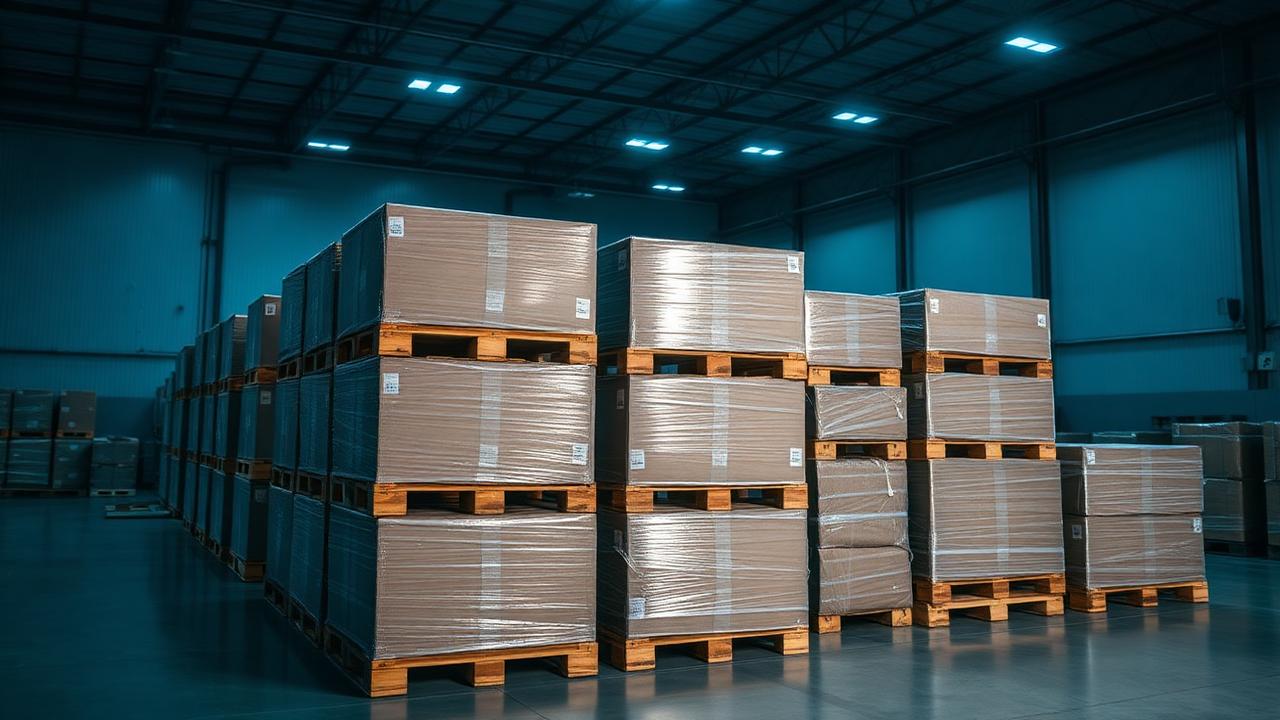
Two years ago, we won a 28-unit lot of mixed Milwaukee and DeWalt power tools out of a retail distribution center in Columbus, Ohio. The manifest listed $6,400 in original retail value. The bid closed at $1,150. On paper, it looked like a 400% win. Then the freight carrier tacked on a $75 residential fee and a $65 liftgate charge because our warehouse dock was blocked for maintenance that morning. When we opened the shrink wrap, eight of the cordless brushless angle grinders were bare tools stripped of their side handles and flange nuts, four chargers were missing power cords, and three battery packs refused to take a charge.
Our net profit on that lot dropped from an estimated $2,200 down to $340 after 18 hours of cleaning, testing, and parted-out sales. That payload was our final wake-up call to stop relying on wholesale retail MSRPs and start running a rigorous roi calculator for tool liquidation pallets before typing in a maximum bid.
Hardware and power tools carry some of the strongest demand in secondary markets, but they also carry mechanical risk. A sweater either fits or it does not. A 20V rotary hammer drill, however, might have a fried armature that looks pristine from the outside. If you want to make consistent money buying surplus hardware, you need an exact formula for your total landed cost, expected yield, and resale margins.
Why Hardware Returns Need Hard Math
According to industry data in our recovery rate report, hardware and power tools generally yield a 30-45% recovery rate against original retail value. That is significantly higher than apparel, which often sits down at 8-15%, but lower than clean consumer electronics.
The trap in hardware is that buyers confuse wholesale MSRP (Manufacturer Suggested Retail Price, or the original sticker price at retail) with real secondary market value. If a big-box store sells a brushless hammer drill combo kit for $299 new, that same kit open-box on eBay usually maxes out around $170-$190. If it is missing the secondary 4.0Ah battery, the market price drops to $120.
Liquidation marketplaces like B-Stock and Liquidation.com host thousands of tool lots every month. These lots range from clean store shelf pulls to heavily abused customer returns. To protect your capital, you must classify inventory into standard industry grades before calculating your expected revenue:
- Grade A (Overstock or Shelf Pull): Factory sealed or unused box. Expect 50-65% recovery.
- Grade B (Open Box): Unused or lightly handled return with complete accessories. Expect 40-50% recovery.
- Grade C (Customer Return): Used condition, potential missing parts, cosmetic wear. Expect 25-35% recovery.
- Grade D (Salvage or Heavy Defect): Non-functional, severe damage, missing critical components. Expect 10-20% recovery, mostly as parts.
If you treat a Grade C return lot like a Grade A shelf pull, your margin evaporates before the delivery truck drops the pallet.
Building an ROI Calculator for Tool Liquidation Pallets Step by Step
Running a reliable ROI calculation requires breaking down five distinct cost variables. Never bid based on hammer prices alone.
- Hammer Price and Buyer's Premium Your winning bid is rarely what you pay at checkout. Most auction platforms charge a buyer's premium ranging from 10% to 15%. A $1,000 winning bid on a lot with a 10% buyer's premium instantly becomes an $1,100 base cost.
- True Landed Freight Costs Freight can destroy your margins faster than broken tools. Less-Than-Truckload (LTL) shipping, which means renting a fraction of a semi-truck trailer for a few pallets, usually runs between $0.80 and $2.50 per mile depending on fuel surcharges and freight class. Accessorial fees add up fast. Delivery to a residential address costs $50-$100 extra. A liftgate on the truck adds another $50-$75. Limited-access locations like small farms or storage units add $30-$60. You can estimate these charges using a shipping cost calculator before submitting your bid.
- Testing, Cleaning, and Spare Parts Overhead Unlike home goods, power tools require labor. Every unit needs a physical inspection, a trigger test, and a battery check under load. You will also spend money on generic replacement parts. Buying a pack of generic side handles, chuck keys, or replacement battery caps costs $3-$8 per unit, but it raises a bare tool from a bargain listing to a complete, high-value listing.
- Sales Channel Fees and Payment Processing Selling locally on Facebook Marketplace or Craigslist incurs 0% in platform fees, but the buyer pool is smaller and cash offers tend to be lower. Selling on eBay or Mercari gives you national reach, but platform take rates bite hard. For instance, eBay seller fees average 13.25% plus a $0.30 fixed transaction fee for most hardware categories. Running your projections through a marketplace fee calculator keeps your revenue expectations grounded in reality.
- Realized Yield Rate Never assume 100% of the manifest will sell. In a standard customer return tool lot, assume 70% of units are immediately sellable, 15% need minor parts or light repair, and 15% are scrapped or parted out.
Real World P&L: The 24-Unit Home Improvement Power Tool Lot
Let us walk through a complete profit and loss scenario. Imagine an auction manifest featuring 24 units of mixed cordless power tools (DeWalt 20V Max and Makita LXT series) listed as Grade C Customer Returns. The total retail manifest value is $4,800.
Here is how to calculate your maximum bid using a pallet ROI calculator alongside a dedicated maximum bid calculator to enforce your profit margin targets.
Cost Basis Breakdown
- Winning Hammer Price: $850.00
- Buyer's Premium (10%): $85.00
- LTL Freight (320 miles, commercial dock): $215.00
- Liftgate Fee: $50.00
- Replacement Parts (6 generic handles/cords): $36.00
- Testing Labor & Cleaning Supplies: $60.00
- Total Landed Investment: $1,296.00
Expected Gross Revenue Realization
- 16 Fully Functional Units (sold on eBay at ~45% MSRP average): $1,580.00
- 4 Minor Repair / Bare Units (sold locally at ~30% MSRP average): $430.00
- 4 Scrap / Defective Units (sold as a salvage parts bundle): $90.00
- Total Estimated Gross Revenue: $2,100.00
Selling Fees & Net Profit
- Online Marketplace Fees (~14% average on $1,580 eBay sales): $221.20
- Shipping Outbound (seller-paid promotions or shipping supplies): $110.00
- Net Realized Revenue: $1,768.80
- Less Total Landed Investment: -$1,296.00
- Net Cash Profit: $472.80
- Return on Investment (ROI): 36.5%
If your target ROI threshold is 35%, this $850 hammer price works. If the bidding competitive pressure pushes the hammer price to $1,100, your total landed investment climbs to $1,571, cutting your net profit to $197.80 (a 12.6% ROI). At that price point, you walk away. A disciplined buyer lets another reseller eat that low-margin risk.
Tool Liquidation Grade Breakdown
To standardize your evaluations across different wholesale suppliers, use this reference table when scoring auction manifests.
| Inventory Grade | Physical Condition | Tested Working Rate | Average Recovery Range | Typical Resale Channel |
|---|---|---|---|---|
| Grade A (Overstock) | Sealed original packaging, no retail stickers | 98-100% | 50-65% MSRP | Amazon, eBay, Local Retail |
| Grade B (Open Box) | Complete in box, light handling, minor box damage | 85-95% | 40-50% MSRP | eBay, Mercari, Whatnot |
| Grade C (Customer Returns) | Mixed condition, cosmetic scratches, missing accessories | 60-75% | 25-35% MSRP | eBay (Used), Local Marketplace |
| Grade D (Salvage / Parts) | Heavy wear, cracked housings, non-functional motors | 10-30% | 10-20% MSRP | eBay (For Parts/Not Working) |
When you run your numbers through an roi calculator for tool liquidation pallets, always map the manifest line items to these realistic recovery percentages rather than original retail stickers.
How Tool Pallet Math Goes Wrong in the Field
Even experienced buyers get caught off guard by specific hardware failure modes. Here are the three most common ways a tool lot turns negative on your balance sheet.
- The Bare Tool Trap Liquidation manifests often list high retail prices for tool combo kits, but customer returns frequently arrive with the batteries, chargers, and hard cases missing. A contractor buys a 2-tool combo kit at a retail store, takes the two 5.0Ah batteries and double charger, puts his old burnt-out bare tools in the box, and returns it to the customer service desk. If the retail manifest lists the item as a $399 kit but you receive a $90 bare tool without batteries, your expected revenue drops by 70%. When reviewing uninspected return lots, haircut your projected sales value by at least 25% to account for missing accessories.
- Battery Degradation and Clone Knockoffs Lithium-ion batteries are expensive to buy new and risky to resell used. Customer return pallets frequently contain lithium packs that have tripped their internal battery management system (BMS) fuses due to deep discharge. A dead Milwaukee M18 6.0Ah pack has zero resale value to a retail customer unless you rebuild the internal 18650 cells yourself. Furthermore, keep an eye out for counterfeit batteries mixed into returned tool boxes. Fraudulent clone batteries lack UL safety testing and cannot be resold legally as OEM products.
- Inflatable MSRPs on Store Brand Tools Not all tool brands command strong resale value. High-tier professional brands like DeWalt, Milwaukee, Makita, and Bosch retain strong secondary pricing. Mid-tier consumer brands like Ryobi, Craftsman, and Porter-Cable sell steadily but at lower price points. Store-exclusive budget lines lose up to 80% of their value the moment they leave the retail store. If a manifest is filled with generic $40 corded drills marked up to $90 list price, your real recovery rate will hover around 15%.
You can consult our buying decision guide to help filter out inflated manifests before committing capital.
Final Checklist Before Bidding With an ROI Calculator for Tool Liquidation Pallets
Before you hit the bid button on that next 800-pound pallet of power tools, run through this quick checklist:
- Did you calculate the full landed cost including buyer fees, freight accessorials, and liftgate delivery?
- Have you applied a 25-30% discount to manifest MSRP values to reflect real eBay completed sold listings?
- Did you factor in $5-$10 per unit for generic replacement handles, chargers, or cords?
- Does your projected net profit meet your minimum dollar threshold, not just a percentage? A 50% ROI on a $100 investment is only $50 for three hours of work.
- Have you verified the brand mix to ensure you are not buying low-demand white-label inventory?
By running every load through a dedicated roi calculator for tool liquidation pallets, you take the gambling out of hardware wholesale. You stop buying on hope and start buying on net margin.
What is a good ROI for a tool liquidation pallet?
A healthy target net ROI for customer return tool pallets sits between 35% and 50% after accounting for all freight, marketplace fees, and minor replacement parts. Overstock or Grade A open-box tool lots typically offer lower ROI percentages (20-30%) because bidding is more competitive, but they require far less testing labor and convert to cash much faster.
How do I price power tools that are missing batteries or chargers?
Check completed sales on eBay for bare tool units (the tool body only). Bare power tools typically sell for 40-50% of the full retail kit price. If a tool requires a specific proprietary charger or handle to be usable, either purchase a cheap functional replacement to bundle with it or list the unit clearly as "Bare Tool Only" and price it $15-$20 below market average to move it quickly.
Should I repair broken power tools or sell them for parts?
If a tool only needs a simple bolt-on part like a new guard, carbon brush set, or cord relief boot, fixing it yourself is usually worth the $5-$10 in parts. If a brushless motor armature is burnt or a main gear housing is cracked, do not waste labor hours tearing it down. List non-working tools in multi-unit "Salvage / Repair / Parts" lots on eBay. Hobbyists and repair shops buy broken high-end tools regularly for spare housings and switches.
Pallet IQ Editorial Team
We buy, grade and resell liquidation pallets, then turn what we learn into the tools on Pallet IQ. Every guide here comes from real manifests, real bids and real sell through numbers.
Written September 3, 2026, last reviewed October 19, 2026