ROI Calculator for Amazon Return Pallets: Realistic Math
Most resellers lose money on Amazon returns because they calculate margins on sticker retail instead of real net yield. Here is how to run the numbers before bidding.
By Pallet IQ Editorial Team
Published · Updated
 Resale Strategy
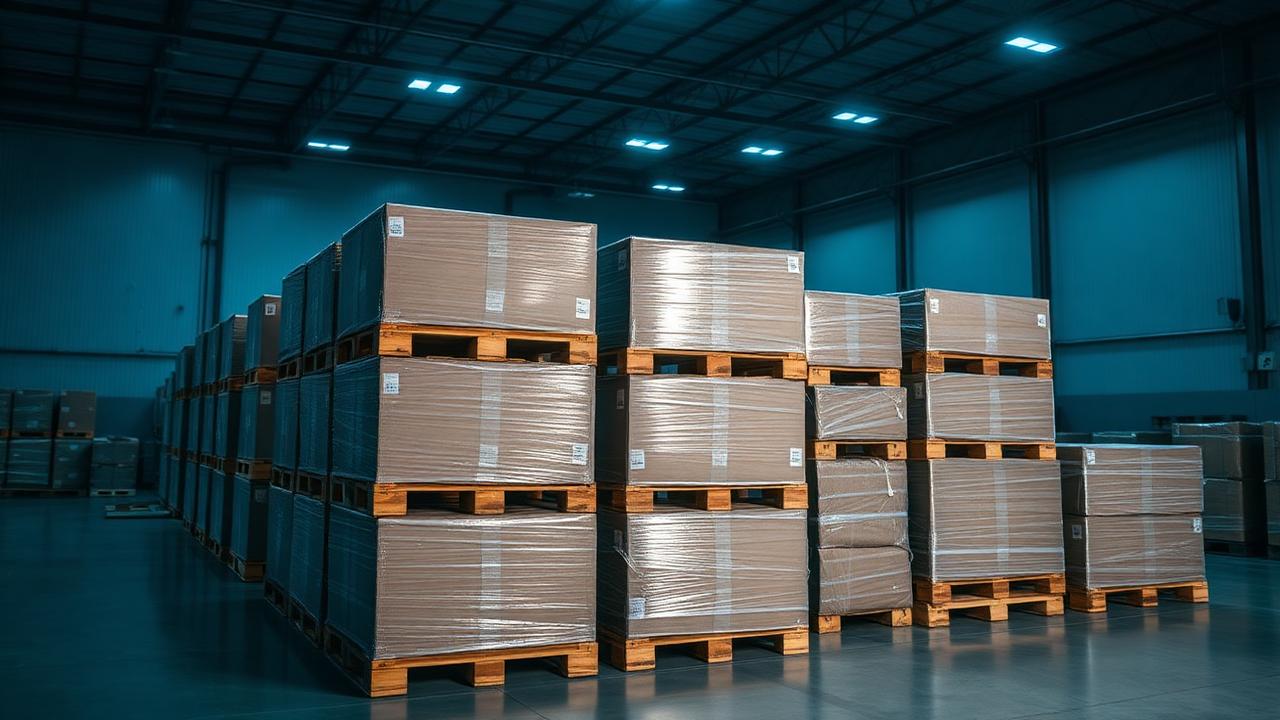
Three months ago, a 42-unit lot of small kitchen appliances out of an Indiana distribution center landed on our warehouse floor. The manifest listed $9,400 in original retail value. The winning bid was $1,420. On paper, it looked like a slam dunk with over 80 percent gross margin potential.
Then we popped the shrink wrap. Seven espresso machines had crushed plastic housings. Four air fryers were coated in crusty, burnt grease without their crisping trays. Two high-end blenders were missing their blade assemblies entirely. By the time we cleaned, tested, parted out, and listed what was actually sellable, our real net return was $380 after 18 hours of bench labor and $340 in freight charges. We made about twenty dollars an hour for our trouble.
That lot taught us a harsh lesson about raw customer returns. If you evaluate liquidation lots by taking manifest MSRP and subtracting your bid price, you are gambling with your working capital. You need a dedicated roi calculator for amazon return pallets that bakes in freight accessorials, category recovery curves, platform fee drag, and an aggressive scrap rate before you hit submit on an auction clock.
According to NRF returns research, retail returns represent hundreds of billions in displaced merchandise annually. Retailers want it off their balance sheets fast. That means you are buying unfiltered consumer behavior, complete with missing parts, buyer fraud, and transit damage.
The Real Cost Basis: Beyond the Auction Hammer
When you win an auction on a primary marketplace like B-Stock, the hammer price is just your starting point. Beginners calculate profit like this: Manifest Retail minus Hammer Price equals Margin. Experienced buyers know that math is fiction.
Your actual landed cost basis includes three distinct financial hurdles before you make a single sale:
- The Auction Hammer Price plus buyer premiums (typically 3-10% depending on the portal).
- Less-Than-Truckload (LTL) Freight, which covers moving a pallet via commercial semi-trailer.
- Freight Accessorials, which are extra service fees billed by carriers for non-standard delivery conditions.
If you do not have a commercial loading dock or a forklift, accessorial fees will decimate your budget. A liftgate charge runs $50-$75 per delivery. A residential delivery surcharge adds another $50-$100. Limited-access location fees for farm properties or storage units add $30-$60. You can plug your lane miles and delivery conditions into a shipping cost calculator to catch these hidden costs before bidding.
If your winning bid is $800 on a pallet with $350 in total freight costs, your true cost per unit just jumped by nearly 44 percent. Every margin formula you run must start from landed cost, not hammer price.
Grading Conditions and Scrap Rates
To build an accurate projection, you need to understand the standard grading system used across the liquidation trade:
- A-grade: Factory sealed, pristine box, full market resale value.
- B-grade: Open box, minor outer packaging wear, complete accessories, 100% functional.
- C-grade: Heavily used, noticeable cosmetic scuffs, missing non-essential accessories.
- D-grade: Broken, missing critical parts, economic scrap, or write-off.
You cannot list every item at eBay average sold prices. A customer return lot usually splits across these grades in a predictable bell curve. Based on historical data from our recovery rate report, mixed consumer tech returns average 25-40% gross recovery against original retail, while unmanifested softgoods or apparel often drop to 8-15%.
When running numbers through a pallet ROI calculator, we automatically mark down 15-20% of the total unit count directly to zero dollars. That represents your D-grade scrap rate. If the pallet turns out cleaner, that extra yield is pure upside. If it arrives trashed, your downside was already hedged.
Worked P&L Example: A 110-Unit Tech and Appliance Lot
Let's walk through a complete, real-world profit and loss statement for a single pallet. This lot was sourced from a major Midwest returns hub containing 110 mixed units of small electronics and home goods.
Raw Inputs
- Total Manifested MSRP: $12,400
- Winning Auction Bid: $1,650
- Buyer Premium (5%): $82.50
- Base LTL Freight Quote: $260.00
- Residential Surcharge: $85.00
- Liftgate Accessorial via FedEx Freight: $65.00
- Total Landed Cost Basis: $2,142.50 ($19.48 per unit average)
Actual Condition Breakdown and Resale Realities
After five hours of unboxing, testing, cleaning, and cataloging on the bench, here is how the 110 units broke down:
- 15 units A-Grade (New / Open Box): Sold at 65% MSRP = $1,800 gross
- 50 units B-Grade (Tested Good / Minor Packaging Damage): Sold at 40% MSRP = $2,480 gross
- 25 units C-Grade (Used Acceptable / Missing Manuals or Accessories): Sold at 20% MSRP = $820 gross
- 20 units D-Grade (Broken Screens, Dead Motors, Missing Parts): $0 gross revenue
- Total Gross Realized Sales: $5,100.00
Deductions and Channel Drag
Gross revenue is not what goes into your bank account. Selling across major online platforms incurs distinct fee structures:
- Marketplace Selling Fees: eBay averages around 13.25% plus $0.30 per order. Checking current eBay seller fees helps track category-specific rate changes. Across 90 sold items, marketplace fees totaled $702.50.
- Outbound Shipping Subsidies & Packing Supplies: Box tape, bubble wrap, poly mailers, and partial postage subsidies averaged $4.25 per shipped order across 90 items, totaling $382.50.
- Total Expenses Beyond Landed Cost: $1,085.00
You can run these numbers through a marketplace fee calculator to see how channel choice changes your net bottom line.
The Final Financial Verdict
- Total Gross Revenue: $5,100.00
- Less Landed Cost Basis: -$2,142.50
- Less Platform Fees & Supplies: -$1,085.00
- Net Cash Profit: $1,872.50
- Net Margin on Gross Sales: 36.7%
- Return on Capital Invested (ROI): 87.4%
- Realized Net Recovery Rate against MSRP: 15.1%
Notice that despite gross sales hitting $5,100, the actual profit was $1,872.50. That is an outstanding return on an $800-per-pallet risk budget, but it is nowhere near the fantasy figure of $10,000 profit that a naive buyer calculates off the initial $12,400 MSRP tag.
Building an ROI Calculator for Amazon Return Pallets
When setting up your own bidding spreadsheet or scoring tool, ensure your formula accounts for every link in the financial chain. A robust math model follows this exact logical flow:
- Input Total Manifest MSRP.
- Apply Category Discount Factor (Target 25-35% realized gross value for electronics, 15-20% for softlines).
- Subtract Expected D-Grade Trash Percentage (15-20% of estimated gross).
- Subtract Estimated Marketplace Fees (13-15% of gross revenue).
- Subtract Outbound Shipping & Packing Costs ($4.00-$6.00 per unit expected to sell).
- Subtract Inbound Landed Freight (Base rate + all accessorials).
- Set Target ROI Multiplier (Minimum 50-100% return on invested capital).
- Output Maximum Allowable Bid Ceiling.
If you want to automate this process without building complex spreadsheet macros from scratch, plug the lot manifest directly into a dedicated manifest analyzer to run these risk-adjusted math models in seconds.
Return Pallets vs. Other Liquidation Streams
Not all surplus merchandise carries the same risk profile. Customer returns require significant bench testing, while overstock case packs can be listed straight out of the box.
| Inventory Category | Realized Gross Recovery (% MSRP) | Bench Testing Time | Channel Fee Drag | Recommended Max Bid (% MSRP) |
|---|---|---|---|---|
| Amazon Customer Returns | 25% - 35% | High (15-20 min/unit) | 13% - 15% | 12% - 16% |
| Retail Overstock / Case Packs | 45% - 60% | Low to None | 13% - 15% | 22% - 28% |
| Shelf Pulls & Store Displays | 35% - 45% | Moderate (Visual Check) | 12% - 15% | 18% - 22% |
| Salvage & Heavy Damage Lots | 10% - 20% | Very High (Part-out) | 10% - 13% | 4% - 8% |
Notice how maximum recommended bids scale with labor requirements. You can bid higher percentages of retail on overstock items because your labor costs per unit drop to near zero. Returns demand a wider safety margin because your bench time eats into net margins.
How This Goes Wrong: The Silent Death of High-Value Units
Every reseller who has bought customer returns for more than six months has a story about the single item that was supposed to pay for the whole pallet.
It is usually a $1,200 handheld gaming console, a high-end digital SLR camera body, or a premium robot vacuum sitting right at the top of the manifest. You bid aggressively because if that one item works, the remaining 40 units are pure profit.
Here is how that scenario actually plays out on the teardown table:
- The $1,200 camera has a clean body, but the sensor is scratched and the shutter count is at 180,000 actuations.
- The robot vacuum turns on, but the internal motherboard has water damage from a previous owner vacuuming up a spilled dog bowl.
- The gaming console is in perfect physical shape, but the serial number has been permanently banned from online network services, or it is locked to a previous user account.
When a pallet's profitability hinges on 1 or 2 high-ticket items, your real financial risk skyrockets. A single dead unit drops your total recovery rate by 30 points in an instant. Always run your bid calculations assuming the top two highest-value items on any return manifest are complete scrap. If they work, it is a bonus. If they are dead, your lot remains profitable.
Before placing a bid on an tempting lot, review our comprehensive buying decision guide to ensure you are not falling for single-unit valuation traps.
Final Check Before You Bid
Liquidation reselling is not a game of buying cheap and hoping for the best. It is an exercise in strict cash flow control, process speed, and ruthless math.
Before you hit the bid button on your next auction, verify three numbers:
- Do you have a firm LTL shipping quote that includes liftgate and residential fees?
- Did you knock at least 15 percent of the unit count straight off the top as unrecoverable scrap?
- Does your net projection still yield at least a 50 percent return on your total landed capital?
If the math passes those three tests, make your bid. If it fails even one, close the tab and let someone else take the loss. Running a disciplined roi calculator for amazon return pallets on every lot keeps your capital safe and your warehouse moving.
What is a good target ROI for Amazon return pallets?
A healthy target is a minimum 50% to 100% net return on your total landed capital (hammer price plus all freight and fees). Aiming for anything under a 40% projected ROI leaves zero margin for error if your D-grade scrap rate ends up higher than expected or freight quotes adjust upward.
How do I calculate freight accessorials before winning an auction?
Carriers charge standardized rates for non-commercial deliveries. Expect to add $50-$75 for a liftgate, $50-$100 for residential delivery, and $30-$60 for limited access locations. Always get a full quote that includes your specific drop-off zip code and delivery options before setting your bid ceiling.
Why is original manifest MSRP so unreliable for resale projections?
Manifest MSRP reflects the original retail price when the item was brand new on store shelves. It ignores customer wear, missing parts, damaged packaging, outdated product revisions, and current secondary market supply. Resellers should evaluate lots using realistic sold comps on platforms like eBay or Mercari rather than sticker retail.
Pallet IQ Editorial Team
We buy, grade and resell liquidation pallets, then turn what we learn into the tools on Pallet IQ. Every guide here comes from real manifests, real bids and real sell through numbers.
Written September 3, 2026, last reviewed October 19, 2026