How to Flip Mixed General Merchandise Pallets for Profit
GM pallets are the grab bags of liquidation. Here is how we sort high-margin electronics from crushed trash, run the math, and turn customer returns into net cash.
By Pallet IQ Editorial Team
Published · Updated
 Resale Strategy
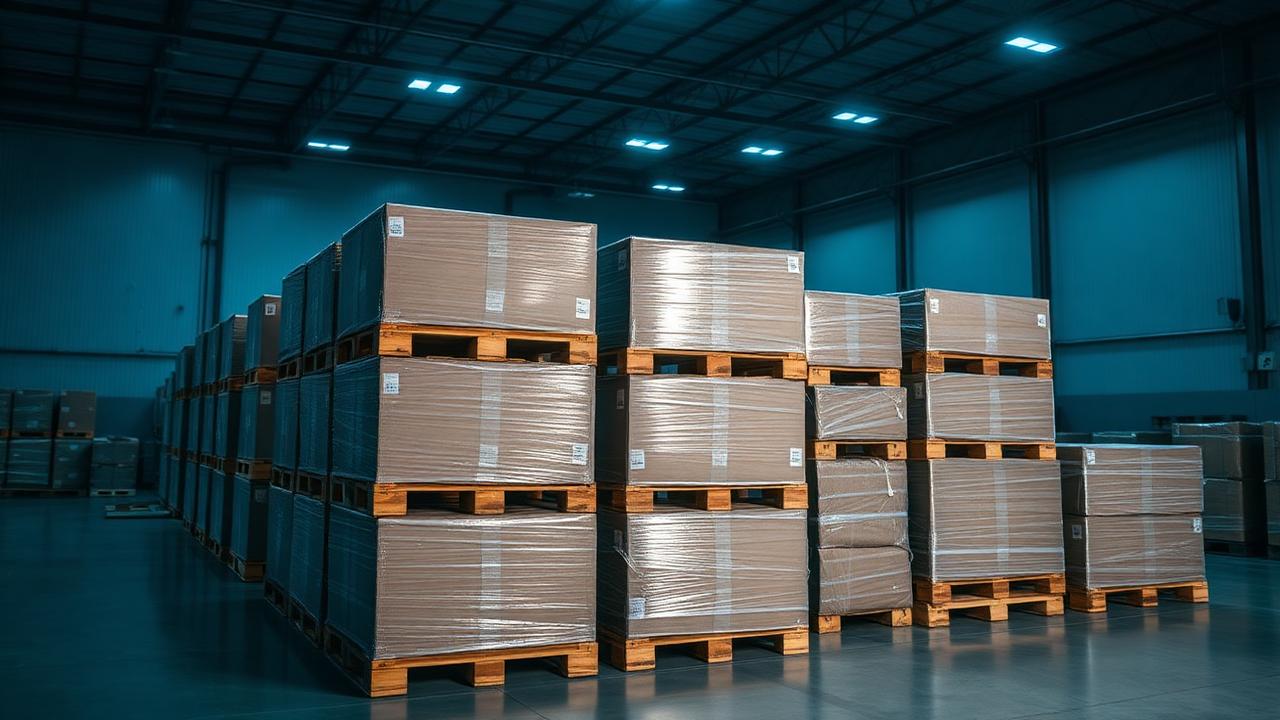
Two summers ago, a liftgate truck backed into our driveway and unloaded a 700-pound Gaylord box stacked high with mixed customer returns out of a Charlotte fulfillment center. On top sat a pristine Dyson V8 vacuum right next to a crushed box of instant pot lids and three half-empty packages of diapers. We paid $410 for the skid and another $165 in LTL (Less-Than-Truckload) freight. By the time we sorted the trash from the treasure, we learned the brutal reality of how to flip mixed general merchandise pallets without burning through your working capital.
General merchandise pallets, often called GM lots, are the grab bags of the liquidation business. Retail giants like Target, Walmart, and Amazon pile everything that does not fit into a clean, single-category manifest onto wooden skids and auction them off. You will find $200 air fryers sharing space with $6 dog leashes and bent curtain rods. If you know how to process them fast, GM pallets offer some of the highest dollar-for-dollar returns in reselling. If you buy blind and guess on shipping, you end up paying $200 in freight just to store someone else's household trash.
Sourcing GM Lots: Manifested vs. Unmanifested and A-to-D Grading
Not all general merchandise skids are created equal. Liquidation brokers classify merchandise into four distinct grades. Knowing these definitions prevents you from overpaying for junk.
- A-Grade (Overstock / Shelf Pulls): Unsold retail inventory. Boxes may have store clearance stickers or light shelf wear, but the products inside are complete, unused, and fully functional.
- B-Grade (Open Box / Like New): Customer returns where the buyer opened the package, inspected the item, and sent it back. Usually 80% to 90% functional, missing minor inserts or manuals.
- C-Grade (Used / Defective): Items returned after actual use. Expect missing power cords, cosmetic scratches, and a 20% to 30% failure rate on electronics.
- D-Grade (Salvage / Trash): Heavily damaged goods, broken plastic, water-damaged packaging, or incomplete assemblies. Good only for replacement parts or scrap.
Your first big decision is choosing between manifested and unmanifested lots. A manifest is an itemized spreadsheet showing MSRP, UPC, quantity, and product description for everything on the skid. Unmanifested pallets are sold blind. You see a fuzzy thumbnail image and a vague description like "210-unit Mixed Home Goods."
Here is our firm rule: Never buy an unmanifested GM pallet shipped via freight unless your land-in cost is under $150 total. Unmanifested truckloads are frequently filtered by wholesale warehouses before you see them. The high-value tech and small appliances get pulled, leaving you with heavy, low-value plastics. If you want predictable margins, stick to manifested lots where you can run a manifest analysis tool like Pallet IQ to evaluate individual unit values before dropping your bid.
How to Flip Mixed General Merchandise Pallets Step by Step
When a pallet hits your shop floor, momentum is everything. Letting a skid sit in your garage for three weeks untouched kills your cash velocity. We run a three-stage triage process the day a skid arrives.
First, do a visual audit and physical split. Cut the shrinkwrap and sort items into three physical piles: High-Value (resale value above $40), Bread-and-Butter ($15 to $40), and Local Cash / Bin Items (under $15 or too heavy to ship). Do not waste time cleaning or testing a $10 item first. Focus on the inventory that pays off your pallet cost basis immediately.
Second, test and grade your High-Value items. Plug in the small appliances, check for missing accessories, and clean off dust. Small appliances and tools carry solid demand, but category recovery rates vary dramatically across general merchandise:
- Tools and Outdoor Equipment: 30% to 45% recovery rate of original MSRP.
- Electronics and Small Appliances: 25% to 40% recovery rate.
- Home Goods and Cookware: 15% to 25% recovery rate.
- Apparel and Linens: 8% to 15% recovery rate.
Third, match the product to the right platform. Do not list everything on eBay out of habit. Heavy items eat your profit margins in shipping costs if you sell them nationally. Send compact, high-value tech to eBay or Mercari. Move bulky kitchen appliances, power tools, and lawn equipment on Facebook Marketplace or OfferUp for local cash pickups with zero platform fees.
The Math That Matters: Freight, Accessorials, and Platform Fees
Most novice buyers fail at the freight level, not the product level. You win an auction for $300 and feel like a genius until the broker adds $220 in shipping fees. LTL freight typically runs $0.80 to $2.50 per mile depending on fuel surcharges, distance, and freight class.
Then come accessorial fees, extra charges carriers bill for non-standard deliveries:
- Liftgate Service: $50 to $75 (required if you do not have a commercial loading dock or forklift).
- Residential Delivery: $50 to $100 (charged whenever a semi-truck enters a neighborhood).
- Limited Access Fee: $30 to $60 (applies to storage units, farms, or tight downtown alleys).
If you buy a $350 pallet and forget to account for residential and liftgate charges, your true cost basis jumps to $525 before you process a single box. Here is a real-world P&L breakdown from a 92-unit Target GM return lot we processed recently:
- Pallet Auction Price: $420.00
- LTL Freight Cost (140 miles): $135.00
- Liftgate Fee: $50.00
- Residential Accessorial Fee: $45.00
- Total Landed Cost Basis: $650.00
Now look at the actual revenue generated from sorting and selling those 92 units:
- 12 High-Value Items (eBay): $680.00 gross sales
- 28 Mid-Tier Items (eBay / Mercari): $510.00 gross sales
- 30 Low-Value Items (FB Marketplace / Local Cash): $220.00 gross sales
- 22 Defective / Unsellable Items (D-Grade): $0.00
- Total Gross Revenue: $1,410.00
Minus expenses:
- eBay Fees (~13.25% + $0.30 per order across 40 shipped sales): $169.50
- Outbound Shipping Boxes & Bubble Wrap: $45.00
- Total Gross Revenue ($1,410) - Fees ($214.50) - Landed Cost ($650): $545.50 Net Profit
We spent roughly 14 hours sorting, testing, listing, and shipping over five days. That yielded an effective rate of around $38.96 per hour. That is solid, but if 10 more of those units had been unsellable trash, our hourly wage would have collapsed down to minimum wage.
Sales Channel Strategy for General Merchandise
Matching the right inventory grade to the correct sales channel keeps inventory moving through your space. Use this matrix to route items as soon as they are unboxed:
| Sales Channel | Best Product Categories | Target Recovery Rate | Fee Structure | Typical Turnaround |
|---|---|---|---|---|
| eBay | Electronics, Small Appliances, Brand-Name Tools | 25% - 40% MSRP | ~13.25% + $0.30 per sale | 10 to 30 Days |
| Facebook Marketplace | Furniture, Heavy Appliances, Power Tools | 30% - 45% MSRP | 0% for local cash pickups | 2 to 7 Days |
| Mercari | Beauty, Small Home Goods, Shoes | 15% - 25% MSRP | 10% seller fee structure | 14 to 45 Days |
| Local Flea Market / Yard Sale | Open-box decor, cheap linens, C-grade toys | 5% - 15% MSRP | $20 - $40 daily booth fee | 1 to 2 Days |
Where How to Flip Mixed General Merchandise Pallets Goes Sideways
Processing mixed lots has three major points of failure that drain your bank account if you do not watch them closely.
First is the trash density trap. Unmanifested GM lots occasionally carry a 40% or higher trash density. You spend $600 to land a skid, open the Gaylord, and find broken particle-board furniture, open cosmetics, and unhygienic personal care goods. You cannot list these items legally or ethically. You end up paying municipal dump fees just to throw away the pallet's contents.
Second is long-tail storage decay. If you list every single $12 item on eBay, your workspace fills up with odd-shaped boxes that take six months to sell. Meanwhile, your working capital is tied up in slow-moving stock. If an item sells for under $15 online, lot it up with three similar items or throw it in a local weekend cash bin sale for $5 cash. Clear the shelf space for the next shipment.
Third is the return rate penalty on customer returns. Buyers return small electronics at a higher rate than any other liquidation category. If you list an open-box espresso machine on eBay as "Used - Excellent" without bench-testing it for 10 minutes first, prepare for a forced Return Merchandise Authorization (RMA) where you pay outbound and return shipping fees. Test everything that plugs into a wall.
Knowing how to flip mixed general merchandise pallets comes down to discipline. Cut through the noise, run your numbers with freight included, sell on the right local and national platforms, and move dead stock fast.
How much space do I need to start flipping GM pallets?
You need at least a dedicated single-car garage or a 150-square-foot dry space. A single Gaylord box takes up a 48x40-inch footprint on your floor, but once you break it down into testing, photo, and shipping staging areas, it expands to roughly four times its original size.
Can I buy liquidation pallets without a business license?
Some liquidation platforms allow individual buyers to make purchases, but the top-tier direct auction portals require a state reseller certificate. Having a sales tax license lets you buy inventory without paying retail sales tax upfront, which protects your margins.
What basic tools do I need to test mixed GM returns?
Keep a multi-meter, a universal power cable kit, fresh AA/AAA batteries, packing tape, a thermal label printer, goo gone for retail sticker removal, and a box cutter right at your sorting table. Having these tools ready cuts your per-item processing time in half.
Pallet IQ Editorial Team
We buy, grade and resell liquidation pallets, then turn what we learn into the tools on Pallet IQ. Every guide here comes from real manifests, real bids and real sell through numbers.
Written August 23, 2026, last reviewed October 19, 2026