How to Resell Kohls Liquidation Pallets: A Real P&L Guide
Kohl's loads look great on paper until you end up with 400 pairs of Sonoma socks and three broken air fryers. Here is how to turn customer returns into actual net profit.
By Pallet IQ Editorial Team
Published · Updated
 Liquidation Reselling
I paid $820 for my first Kohl's customer-return manifest back in 2021. The spreadsheet listed 210 units, mostly Ninja blenders, Food Network cookware, and Croft & Barrow sweaters coming out of a fulfillment center in Monroe, Ohio. On paper, the retail value topped $6,400. In reality? Forty of those sweaters were stained, two Ninja bases had burnt-out motors, and the freight carrier hit me with a $75 liftgate fee I did not see coming.
Learning how to resell kohls liquidation pallets isn't about chasing the highest MSRP on a manifest. It is about knowing exactly what percentage of that load is going straight to your local yard sale or garbage bin before you place a single bid. Kohl's is a unique beast in retail liquidation. Unlike Target, which mixes heavy private-label merchandise with national brands, or Amazon, which gives you an endless stream of unmanifested mystery boxes, Kohl's lots lean heavily toward middle-market home goods, small kitchen appliances, and deep inventory in mid-tier apparel brands.
If you navigate the manifest math correctly, these loads offer steady, predictable inventory. If you misjudge the freight and failure rates, you are paying to haul someone else's trash.
Decoding Kohl's Manifests and Condition Grades
When you look at listings on B-Stock, Direct Liquidation, or regional liquidators, Kohl's inventory generally falls into two distinct buckets: Shelf Pulls (Overstock) and Customer Returns.
Shelf pulls are store transfers or end-of-season clearance items. The boxes are mostly intact, though you will find bright yellow clearance tags stuck directly onto product packaging. Your sellable yield on shelf pulls usually sits between 75% and 85%. You can list these as New or Open Box across eBay and Mercari without spending hours scrubbing grease out of a toaster oven.
Customer returns are a different story. These are items brought back to customer service counters across the country. Expected yield drops to 50% to 60% top-tier sellable, 20% requiring heavy cleaning or re-packaging, and 15% to 20% complete salvage.
The brand mix on a Kohl's manifest dictates your gross profit far more than unit count. Here is how the core brands break down in terms of real-world recovery:
- National Kitchen Brands (Ninja, Shark, KitchenAid, Keurig): These carry the highest recovery rate, usually 30% to 45% of MSRP on eBay or Facebook Marketplace. Even broken Ninja blender bases sell for $20 to $30 as replacement parts.
- Kohl's Private Apparel (Sonoma Goods for Life, Croft & Barrow, LC Lauren Conrad): Expect low individual yields. Single sweaters sell slowly online. You will recover maybe 8% to 15% of MSRP unless you bundle them in multi-item lots on Poshmark or Mercari.
- Store Housewares (Food Network, Toastmaster, St. Nicholas Square): Toastmaster appliances (like $12 drip coffee makers) have essentially zero margin after shipping and fees. Food Network cookware sets sell well locally if all pieces are present, averaging 20% to 30% of MSRP.
How to Resell Kohls Liquidation Pallets: Channel Strategy and Sorting
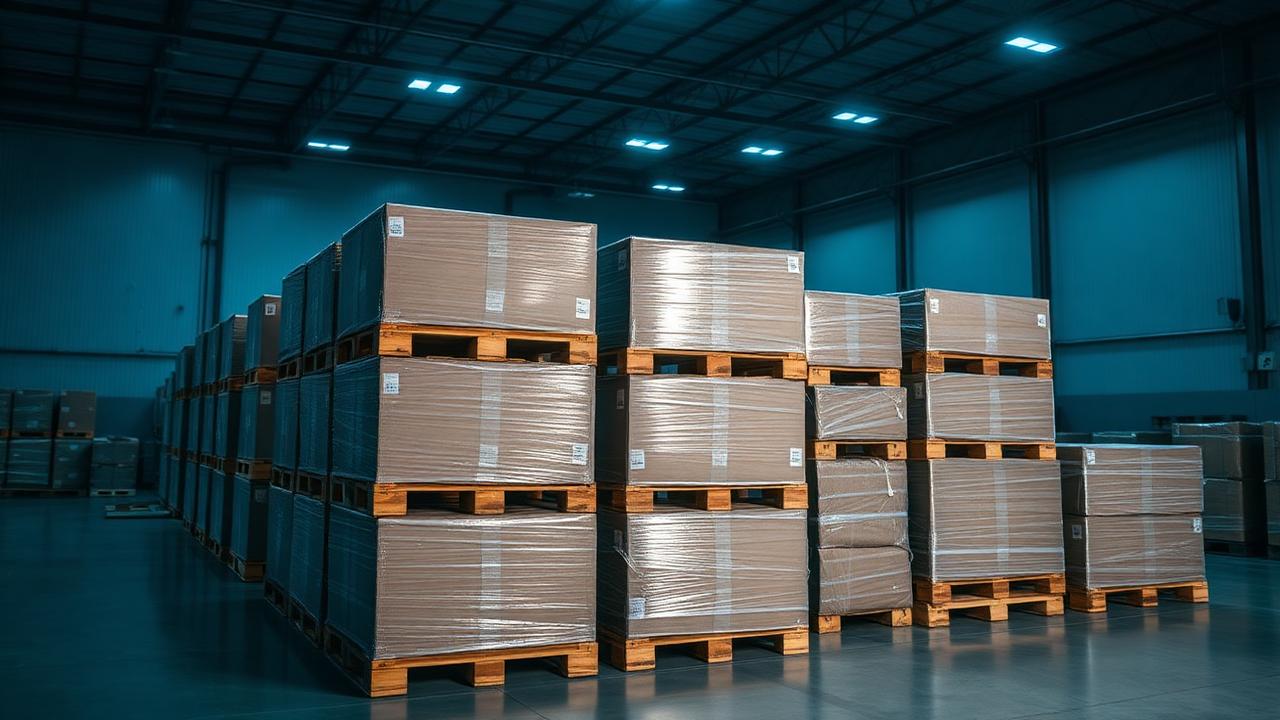
When a 53-foot trailer or a 2-pallet LTL shipment lands at your warehouse or garage, your sorting process determines your hourly wage. Do not list items one by one as you pull them off the skid. Establish a strict four-pile sorting system on day one.
First, pull the high-value national brand electronics and small appliances. Clean them, test them for basic power and functionality, and stage them for eBay. eBay is where you capture top dollar for working Ninja air fryers or Instant Pots because of national buyer traffic. Keep in mind that eBay takes roughly 13.25% plus $0.30 per transaction, and shipping heavy kitchenware across zones will eat your margins if you do not charge calculated shipping.
Second, group the private-label apparel by size and brand. Single-listing a Croft & Barrow polo for $8 free shipping guarantees you lose money. Put five Croft & Barrow men's large shirts into a single lot on Mercari or Poshmark for $28. Poshmark charges a flat 20% fee on sales over $20, but the buyer pays flat-rate priority shipping up to 5 lbs, saving you from complex shipping calculations.
Third, isolate bulky soft goods, bedding sets, St. Nicholas Square holiday trim, and large cookware sets. These are expensive to ship nationally due to dimensional weight rules. Move these on Facebook Marketplace or OfferUp for cash local pickup. You bypass platform fees entirely, making a $35 local sale on a comforter set more profitable than a $50 sale on eBay that costs $18 to ship.
Fourth, set aside the salvage. Do not throw away broken appliances immediately. Strip the glass pitchers, lid inserts, crisping trays, and power cables. Selling a Ninja blender lid on eBay for $14 free shipping costs $4.50 in a bubble mailer and turns pure scrap into cash flow.
| Sales Channel | Ideal Kohl's Inventory Type | Average Marketplace Fee | Shipping Strategy | Expected Recovery Rate |
|---|---|---|---|---|
| eBay | Working small appliances, power tool returns, replacement parts | ~13.25% + $0.30 | Calculated shipping (Buyer pays) | 30% - 45% MSRP |
| Poshmark | Bundled private-label apparel (Sonoma, LC Lauren Conrad) | 20% flat (over $20) | Buyer pays flat $7.97 up to 5 lbs | 10% - 18% MSRP |
| Mercari | Mid-tier decor, shoes, small home goods | 10% cash-out/service fees | Prepaid labels or local delivery | 15% - 25% MSRP |
| Facebook Local | Bulky comforters, cookware sets, holiday decor | 0% (Cash / Local) | Local pickup only | 20% - 35% MSRP |
The Real Math: A Complete P&L on a 2-Pallet Kohl's Load
To understand whether a lot is worth bidding on, you have to work backwards from net recovery, not forward from retail value. Let's look at the actual numbers from a 2-pallet mixed housewares and soft goods lot originating out of an Indiana regional distribution center.
Cost Basis & Freight
- Winning Bid: $550.00
- Buyer's Premium (10%): $55.00
- Base LTL Freight (320 miles): $240.00
- Liftgate Fee (Accessorial): $65.00
- Residential Delivery Fee: $50.00
- Total Delivered Cost Basis: $960.00
Inventory Breakdown & Realized Sales
Manifest listed 160 total items with a cumulative MSRP of $5,200. After testing and sorting, here is where those 160 items actually went:
- High-Tier Kitchen (22 items, e.g., Ninja, Shark, Keurig) - 17 units fully working -> Sold on eBay for $810.00 gross. - 3 units missing parts -> Sold parts on eBay for $65.00 gross. - 2 units dead/salvage -> $0.00.
- Apparel & Shoes (65 items, mostly Sonoma & Croft & Barrow) - Grouped into 12 multi-item bundles on Poshmark/Mercari -> Sold for $290.00 gross. - 10 unsellable (stained/torn) -> $0.00.
- Home Goods & Bedding (45 items) - Sold locally via Facebook Marketplace over 3 weeks -> Sold for $520.00 gross. - 5 items damaged packaging/unsellable -> $0.00.
- Small Electrics & Miscellaneous (28 items, e.g., Toastmaster) - 15 units sold at a local yard sale/flea market -> Sold for $110.00 gross. - 13 units trashed -> $0.00.
Gross Revenue
- eBay Sales: $875.00
- Poshmark/Mercari Sales: $290.00
- Facebook Local Cash: $520.00
- Flea Market Cash: $110.00
- Total Gross Revenue: $1,795.00
Fees & Shipping Expenses
- eBay Platform Fees & Ad Rates (~15% total): -$131.25
- eBay Shipping Costs (Net out-of-pocket after buyer payments): -$42.00
- Poshmark Fees (20%): -$58.00
- Bubble Wrap, Tape, & Boxes: -$35.00
- Total Selling Expenses: -$266.25
Net Profit Calculation
- Gross Revenue: $1,795.00
- Less Selling Expenses: -$266.25
- Net Revenue: $1,528.75
- Less Total Delivered Cost Basis: -$960.00
- Net Profit: $568.75
- Return on Investment (ROI): 59.2%
This load was a solid double. It was not a home run. It took roughly 14 hours of total labor across sorting, testing, listing, packaging, and meeting local buyers. That yields an effective wage of roughly $40.62 per hour.
If that LTL freight had run $400 higher because the lot was located three states further away, the profit margin would have withered to almost nothing.
How to Resell Kohls Liquidation Pallets Without Freight Traps
Freight is where new liquidation buyers lose their shirts. When you are calculating your max bid on a Kohl's lot, the bid price is often less than half of your final invoice.
LTL (Less-Than-Truckload) shipping costs scale based on distance, weight, freight class, and accessorial fees. Accessorials are extra services provided by the logistics carrier. If you do not have a commercial warehouse with a loading dock and a forklift, you will trigger these fees every single time:
- Liftgate Fee: The driver uses a hydraulic platform on the back of the truck to lower the pallet to the ground. This costs $50 to $75 per delivery.
- Residential Delivery Fee: Freight carriers charge extra to maneuver a 53-foot sleeper rig through a residential neighborhood. Expect $50 to $100 added to the bill.
- Limited Access Fee: If you are operating out of a storage unit facility, school, or rural farm, carriers classify this as limited access, adding another $30 to $60.
Before you bid on a manifest, use a manifest analysis tool like Pallet IQ or run a manual spreadsheet to calculate your landed cost per unit. Landed cost equals your winning bid, plus buyer's premium, plus full freight, divided by the total number of manifest units.
If a Kohl's lot has 100 units, a winning bid of $300, and freight of $350, your landed cost is $6.50 per unit. If half those units are Toastmaster can openers that sell for $8 on eBay, you are losing money on every single sale after platform fees and packing supplies.
Where Kohl's Liquidation Loads Go Sideways
The biggest failure mode in Kohl's liquidation is the Seasonal Lag Trap.
Kohl's processes store returns and seasonal shelf pulls in massive waves. Winter coats, Christmas decor, and heavy flannel bedding enter the liquidation pipeline in late February and March. If you buy a 2-pallet customer return lot of St. Nicholas Square holiday items in April, that inventory will sit in your garage until November.
Capital tied up in off-season stock kills your cash flow. Unless you have cheap storage space and the financial runway to hold inventory for six months, avoid buying seasonal loads at the tail end of the season.
Another major pitfall is unmanifested footwear. Kohl's shoe returns often arrive in single, mismatched boxes, or with heavy street wear on the soles. Unlike clothes, where a loose thread can be trimmed, a pair of worn-down Nike sneakers with missing insoles is essentially worthless online. Always discount the footwear category on a customer return manifest by at least 40% to account for unsellable pairs.
Finally, watch out for missing power cables on kitchen electronics. Customers frequently return an upgraded Air Fryer to the store and leave the power cord, crisping tray, or basket at home. Before listing an open-box appliance, double-check that every removable component is present. Selling an incomplete kitchen unit on eBay leads to item-not-as-described returns, which cost you two-way shipping fees and penalize your seller metrics.
Frequently Asked Questions
Where are Kohl's liquidation pallets officially auctioned?
Kohl's primary official liquidation channel is the Kohl's Liquidation Auctions marketplace powered by B-Stock Solutions. They clear truckloads and LTL lots directly from regional fulfillment centers. You can also find processed Kohl's pallets through third-party liquidators like Direct Liquidation or regional wholesale liquidators, though third-party brokers usually mark up the price.
What is the average recovery rate on Kohl's customer returns?
Real-world gross recovery generally runs between 20% and 35% of original MSRP across a mixed lot. Small electrics and national brand appliances yield higher percentages (30% to 45%), while private-label apparel and low-end housewares pull significantly lower yields (8% to 18%).
Can I sell Kohl's private-label brands on Amazon?
No. Selling Kohl's private-label brands (such as Sonoma Goods for Life, Croft & Barrow, or Apt. 9) on Amazon is extremely risky. You do not have valid invoices from the brand owner, leaving you vulnerable to IP complaints and account suspension. Stick to eBay, Poshmark, Mercari, and local sales channels for these brands.
Do I need a resale certificate to buy Kohl's liquidation pallets?
Yes, if you buy directly from official primary portals like B-Stock, you must upload a valid state resale certificate to exempt your purchases from sales tax. Some third-party liquidators allow guest purchases without a tax ID, but they will charge local sales tax on the transaction, which instantly eats into your profit margins.
Final Takeaway for Resellers
Once you learn how to resell kohls liquidation pallets with a strict mathematical process, you stop treating manifests like lottery tickets. Factor in your LTL freight accessorials, discount private-label apparel aggressively, and sell bulky items locally to eliminate shipping costs. That is how you turn store returns into a consistent, predictable reselling business.
Pallet IQ Editorial Team
We buy, grade and resell liquidation pallets, then turn what we learn into the tools on Pallet IQ. Every guide here comes from real manifests, real bids and real sell through numbers.
Written August 25, 2026, last reviewed October 19, 2026