7 Common Mistakes Buying Customer Return Pallets
A veteran reseller breaks down real manifest losses, hidden freight accessorials, fee math, and how to avoid getting burned on customer return pallets.
By Pallet IQ Editorial Team
Published · Updated
 Resale Strategy
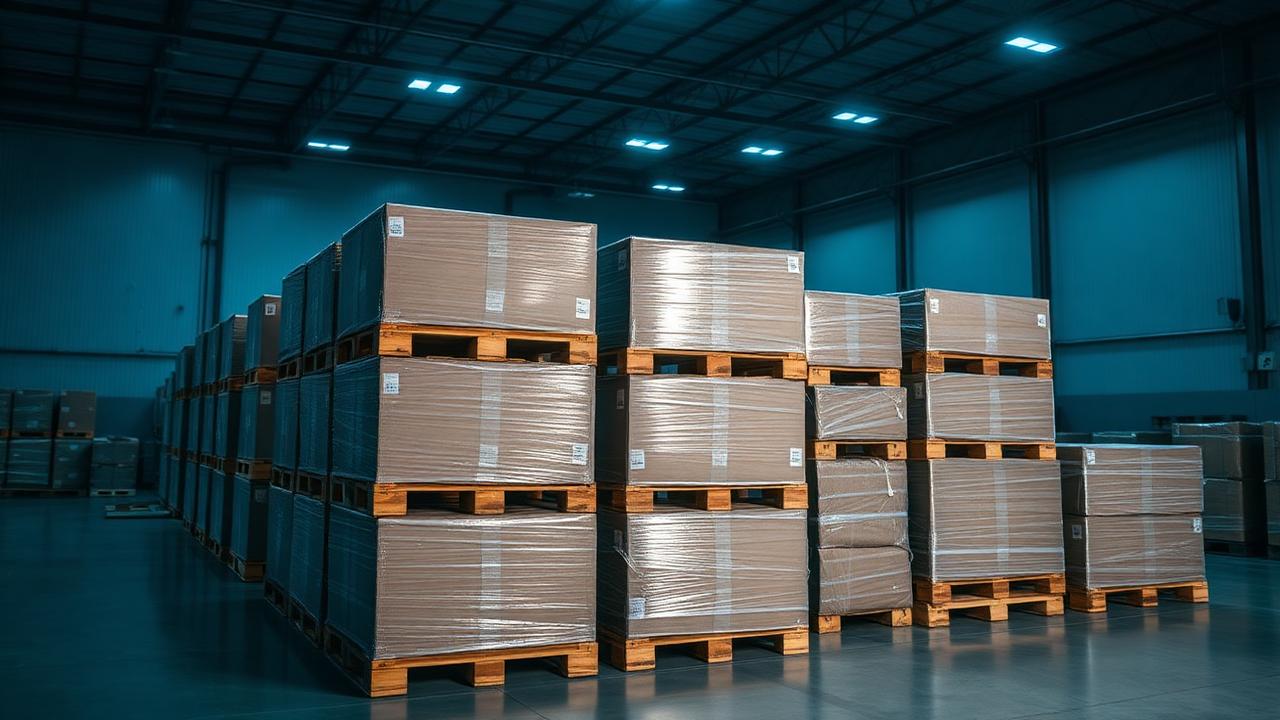
Three years ago, I paid $1,420 for a 48-unit home goods lot out of an Indiana distribution center. The manifest listed espresso machines and cordless vacuums with an original retail value over $8,000. I thought I had struck gold. Then the semi-truck pulled up to my driveway without a liftgate, and the driver politely explained that unloading a 400-pound shrink-wrapped pallet off a four-foot trailer deck was entirely my problem. That was just the first bill. By the time I tested the units, cleaned out caked coffee grounds, paid eBay commissions, and threw away twelve unsalable carcasses, I ended up losing $310 and forty hours of my life.
We have all eaten this loss at least once. Bidding on liquidation stock looks simple when you look only at manifest MSRPs, but the real margin lives in the boring logistics. Understanding the most common mistakes buying customer return pallets is what separates long-term resellers who clear six figures from buyers who quit after three lots.
Let us walk through where buyers get burned, how the real math works, and how to protect your cash before you click bid.
Overestimating Recovery Rates on Uninspected Loads
Retailers classify liquidations into broad categories, but customer returns are a complete gamble compared to clean overstock. A customer might return a Ninja air fryer because they did not like the color, or because they plugged it into a 220V outlet and melted the motherboard.
If you expect every item on a manifest to sell at 70% of retail, your business model will collapse fast. Real category recovery rates vary dramatically across retail channels. According to data tracked on auctions at B-Stock, electronics typically recover between 25% and 40% of original retail value once defect rates are factored in. Apparel yields a dismal 8% to 15% due to missing tags, stains, and size skew. Power tools and hardware perform better, pulling 30% to 45% because buyers on local platforms are happy to buy a scuffed drill if the motor spins.
In the trade, items fall into four distinct grades. Grade A units look new and include original packaging. Grade B units show light cosmetic wear or missing manuals. Grade C items need minor repairs or parts replacement. Grade D items are scrap. If your bid assumes an 80% Grade A yield on a returns truckload, you are committing one of the classic mistakes buying customer return pallets. Assume 30% of the load requires work, and 15% belongs in the dumpster.
Freight Surprises and Accessorial Traps
Winning a pallet for $300 feels great until the freight bill arrives at $450. Less-Than-Truckload (LTL) freight rates currently run between $0.80 and $2.50 per mile depending on fuel surcharges, lane density, and freight class. But the base linehaul rate is rarely where buyers get blind-sided.
Accessorial fees are extra charges carriers bill when a delivery requires special handling. If you ship to a home instead of a commercial dock, carriers charge a residential delivery fee ranging from $50 to $100. If you do not have a forklift or loading dock, you need a liftgate truck, which adds another $50 to $75. If your warehouse is in a rural area or a location with restricted truck access, expect a limited-access accessorial of $30 to $60.
Before placing any bid, run the lane through a shipping cost calculator to know your true landed cost. Carriers like FedEx Freight strictly enforce dimensional weight rules. If a pallet is light but bulky, you pay for the space it occupies in the trailer, not its physical weight on the scale.
The Biggest Common Mistakes Buying Customer Return Pallets: Math Errors on Fees
A manifest displaying $5,000 in MSRP for $600 looks like an instant 800% return. It is not. After freight, your next largest cost center is marketplace transaction fees.
Every platform takes a bite out of your gross revenue. Standard eBay seller fees average 13.25% plus $0.30 per order for most categories, and category-specific rates can push higher. Amazon referral fees sit right around 15%. Mercari charges around 10% when accounting for payment processing, while Facebook Marketplace takes 5% or a flat fee on lower-priced items.
When you calculate prospective profit, use a marketplace fee calculator on the projected resale price, not the original retail MSRP. Selling an item originally priced at $100 for $45 means your $6 platform fee represents 13.3% of your cash inflow, not 6% of the original box sticker.
Real-World P&L: A 32-Unit Small Appliance Lot
To see how these costs stack up in practice, examine a real lot scenario. This was a 32-unit mixed small-appliance lot sourced out of a Georgia regional distribution center.
| Line Item | Amount |
|---|---|
| Manifest Original MSRP | $4,200.00 |
| Winning Auction Bid | $550.00 |
| LTL Linehaul Freight | $220.00 |
| Residential + Liftgate Fees | $125.00 |
| Total Landed Cost Basis | $895.00 |
| Total Units Received | 32 |
| Grade A/B Salable Units (18) | $1,620.00 gross |
| Grade C Parts/Repair Units (8) | $280.00 gross |
| Grade D Unsalable Trash (6) | $0.00 |
| Gross Realized Revenue | $1,900.00 |
| Marketplace Fees (eBay ~13.25% + $0.30/order) | $267.35 |
| Shipping Supplies & Box Costs | $208.00 |
| Net Operating Profit | $529.65 |
The raw math looks decent on paper: $529.65 net profit on an $895 outlay yields a 59.1% return on investment. You can verify your own projections with a pallet ROI calculator. But consider the labor involved. Testing 32 appliances, cleaning 26 salable units, sourcing boxes, taking photos, writing descriptions, and packing orders took roughly 18 hours. That brings the real labor return to about $29.42 per hour. If freight had cost $150 more, or if four additional units had been trash, the hourly return would have dipped below minimum wage.
Comparing Lot Types: Customer Returns vs Other Inventory
Knowing which lot type matches your storage capacity and labor budget prevents expensive buying mistakes.
| Lot Type | Typical Defect Rate | Prep Labor Required | Realized Recovery % | Best Sales Channels |
|---|---|---|---|---|
| Customer Returns | 15% to 40% | High (Testing, Cleaning) | 20% to 40% of MSRP | eBay, Local Pickups, Whatnot |
| Overstock | Under 5% | Low (Inspect & List) | 40% to 65% of MSRP | Amazon FBA, eBay, Poshmark |
| Shelf Pulls | 5% to 15% | Medium (Remove Retail Tags) | 30% to 50% of MSRP | Mercari, eBay, Flea Markets |
| Salvage / Damaged | Over 50% | Extreme (Parts Harvesting) | 10% to 20% of MSRP | Specialized Parts Out, Local Scrap |
Ignoring Cash Flow Velocity and Holding Costs
According to NRF returns research, retailers processed over $740 billion in returns in a single year. That massive volume floods liquidation markets, meaning buyers often purchase more inventory than their workspace can process.
Inventory sitting on a pallet in your garage generates zero return. If a lot takes six months to liquidate, your capital is trapped. Plug your expected velocity numbers into a sell-through calculator before placing bids. A lot that nets $400 in two weeks is vastly superior to a lot that nets $700 over eight months, because you can reinvest that initial capital six times over the same timeframe.
How This Goes Wrong: The Dead Weight Failure Mode
The classic death spiral for new liquidators follows a predictable pattern. A buyer wins two consecutive customer return pallets filled with bulky items like lawn mowers, portable air conditioners, or pressure washers. They pay $1,200 total landed cost.
When the shipment arrives, eight of the heavy units have cracked plastic housings or seized motors. The buyer lacks the technical skill or replacement parts to fix them. Because heavy items cost $40 to $80 each to ship individually, listing them online with free shipping wipes out all profit margin. The buyer refuses to sell them at a loss locally, so the un-repaired units sit in their workspace for months.
Meanwhile, the buyer spent their remaining operating cash on those two lots. They cannot afford to bid on fresh, high-velocity stock. Their storage space is blocked by un-salable bulk, their cash flow stops dead, and they eventually dump the remaining units on Craigslist for pennies on the dollar just to clear the floor.
Avoiding Common Mistakes Buying Customer Return Pallets
You do not need to learn every lesson by losing money. Developing a rigorous pre-bid evaluation routine keeps your capital safe.
First, never bid on an unmanifested load unless the price per unit is low enough that you can break even on scrap value alone. Second, when analyzing a manifest, filter out top-line MSRP figures immediately. Look at the specific model numbers, search recent completed listings on sales platforms, and discount the current market price by at least 20% to account for open-box condition.
Running manifests through an automated tool like a manifest analyzer strips out inflating MSRP claims and calculates realistic expected yields based on historical sales data. Pair that analysis with a comprehensive buying decision guide to establish strict bid ceilings. If the auction bidding surpasses your target limit, walk away. There is always another truck coming down the line.
What is the average defect rate on customer return pallets?
Defect rates on customer return pallets generally range between 15% and 40%, depending heavily on the product category. Electronics and small kitchen appliances sit on the higher end of that scale, while simple items like home decor or basic hand tools show lower defect rates. Always factor a 25% average defect rate into your financial modeling before placing a bid.
Is it better to buy customer returns or overstock pallets?
Overstock pallets are significantly safer for beginners because items are brand new, fully functional, and require minimal testing or cleaning labor. However, overstock pallets command higher auction bids, which compresses gross profit margins. Customer return pallets offer lower purchase prices and higher potential profit margins, but they require technical skills, testing equipment, and willingness to handle broken items.
How do I accurately estimate shipping costs before winning an auction?
Calculate freight costs before bidding by obtaining the origin zip code from the auction listing and using your warehouse or delivery address. Calculate dimensional weight based on standard pallet dimensions (48x40 inches) and estimated height. Be sure to check boxes for residential delivery, liftgate service, or limited access fees during checkout to avoid unexpected charges after the auction closes.
Buying wholesale liquidation lots can build a highly lucrative business, provided you respect the underlying logistics and fees. By recognizing the common mistakes buying customer return pallets, keeping your bid limits firm, and executing smart manifest math, you protect your working capital and secure real net profit on every shipment that lands at your door.
Pallet IQ Editorial Team
We buy, grade and resell liquidation pallets, then turn what we learn into the tools on Pallet IQ. Every guide here comes from real manifests, real bids and real sell through numbers.
Written September 4, 2026, last reviewed October 19, 2026