How to Resell Shelf Pull Pallets for Profit
Shelf pulls look like easy money until you are stuck picking 400 yellow clearance stickers off toothpaste boxes. Here is how working resellers actually process and flip these loads.
By Pallet IQ Editorial Team
Published · Updated
 Pallet Sourcing
A box truck dropped four pallets of drugstore shelf pulls on my driveway three Tuesdays ago. My liftgate driver grunted, popped his pallet jack over the threshold of my garage, and left me standing next to 1,800 pounds of shrink-wrapped cardboard. Inside were 2,400 units of shampoo, mascara, deodorants, and OTC allergy medicine from a major pharmacy chain.
On paper, the manifest showed $18,400 in original retail value. I paid $1,350 for the lot plus $420 in freight. If you calculate margin like a rookie, you see $16,630 in clear sky. If you calculate margin like someone who has paid tax on real inventory, you know learning how to resell shelf pull pallets comes down to two brutal variables: labor hours per unit and listing channel fees.
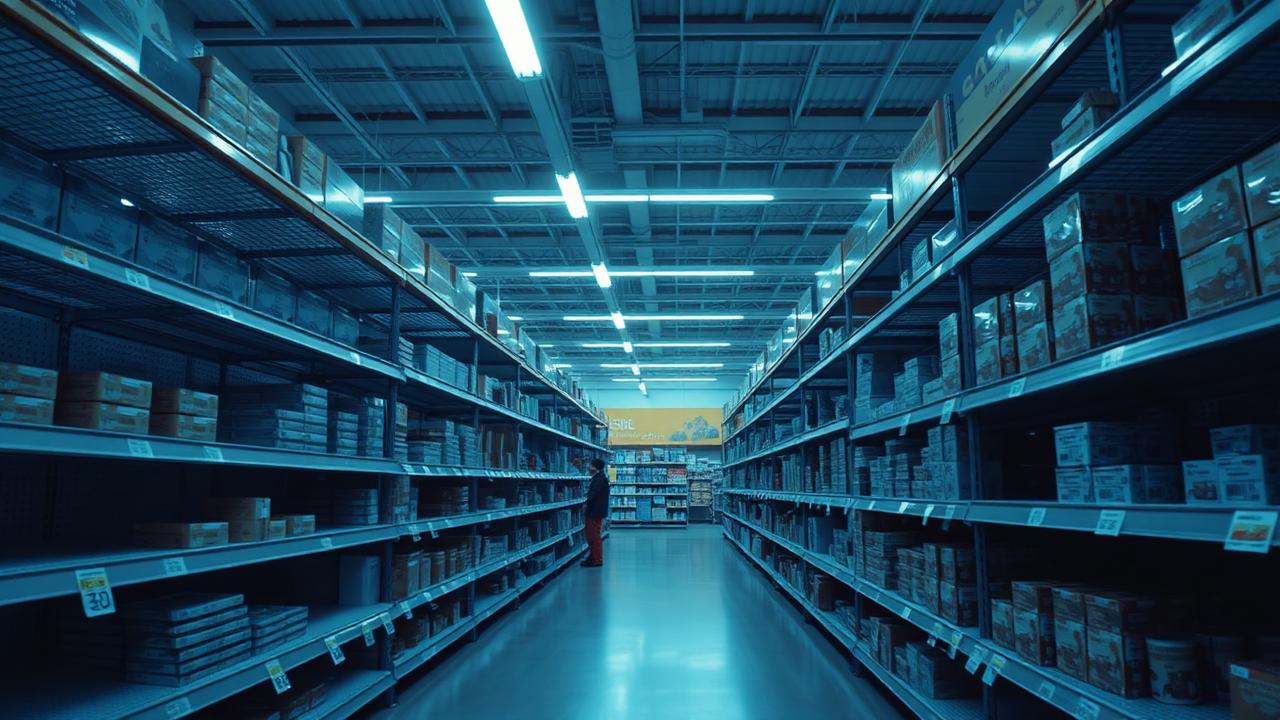
Shelf pulls are not salvaged returns. They are surplus retail stock pulled from store shelves to make room for seasonal resets, refreshed packaging, or discontinued SKU runs. They are usually functional, clean, and complete. But they carry subtle, expensive headaches that destroy inexperienced sellers.
What Shelf Pull Pallets Actually Are
Resellers confuse overstock, customer returns, and shelf pulls constantly. That confusion burns cash.
Overstock comes straight out of a distribution center (DC). It never touched a store shelf, never saw a retail customer, and usually arrives in original master cartons. Customer returns were bought, taken home, opened, handled, and dragged back to a customer service desk. Quality varies wildly from brand-new to smashed trash.
Shelf pulls sit squarely in the middle. Store employees physically handled these items. Store shoppers touched them, moved them, and occasionally dropped them back onto the wrong peg. They were scanned out of store inventory, thrown into heavy gaylords (those giant corrugated boxes strapped to wooden pallets), and trucked to a liquidation hub.
Expect Grade A/B condition. The product works, but the box might have a crumpled corner. You will find bright red clearance tags stuck directly over product barcodes. You will find security labels that set off store alarms if you do not deactivate them. Sometimes you find price-tag residue that turns into sticky dark velvet after two days in a hot warehouse.
Sourcing and Freight Realities for Shelf Pull Lots
Buying shelf pulls requires realistic freight arithmetic. You cannot analyze a pallet bid without locking down your landed cost.
LTL (Less-Than-Truckload) freight rates currently run between $0.80 and $2.50 per mile depending on fuel surcharges and regional lane density. If you do not operate out of a commercial building with a loading dock or a forklift, add accessorial fees immediately:
- Residential delivery fee: $50 to $100
- Liftgate service fee: $50 to $75
- Limited access fee (farms, storage units, residential quarters): $30 to $60
That $300 single-pallet bid on B-Stock or Direct Liquidation turns into a $525 landed cost before you split a single piece of tape. If the manifest has 200 items, your cost basis is $2.62 per item, not $1.50.
Category recovery rates differ dramatically. Do not expect eBay trending prices across an entire mixed manifest. Real-world gross recovery rates against original MSRP usually hit these ranges:
- Health & Beauty (HBA): 30% to 50% of MSRP
- Small Household Appliances: 35% to 45% of MSRP
- Tools & Hardware: 30% to 45% of MSRP
- General Merchandise: 20% to 35% of MSRP
- Apparel & Accessories: 8% to 15% of MSRP
If a shelf pull manifest claims $10,000 MSRP in mixed apparel, expect to gross $800 to $1,500 before fees. If that same $10,000 is high-end skin care, you might touch $4,000. Plan your bids around net recovery, not raw original tag values.
How to Resell Shelf Pull Pallets by Category
To keep labor costs down, you need a strict processing system. Sorting a 500-unit lot item by item without a workflow will eat your week alive.
First, break the pallet down into three speed buckets:
- Multi-pack bundles: Identical low-value SKUs (like shampoo or toothbrushes) grouped into 3-packs or 6-packs for eBay or Amazon fulfillment.
- High-value singles: Items worth $25 or more that warrant individual photos and separate listings.
- Local lot sales: Dented boxes, open-box items, or heavy low-margin goods dumped on Facebook Marketplace, OfferUp, or a local flea market table.
Deal with retail stickers fast. Do not use your fingernails. Buy Scotty Peeler plastic blades and bottles of lighter fluid or Heptane-based adhesive removers. Lighter fluid melts retail clearance glue off glossy cardboard without soaking through or ruining the print underlying the finish. Heat guns work wonders on plastic shells, but they shrink blister packs if you hold them in place one second too long.
Matching channel to product category dictates your survival:
- eBay: Best for long-tail items, specialized SKUs, repair parts, cosmetics, and bundled HBA goods. Standard seller fees sit around 13.25% plus $0.30 per transaction.
- Mercari: Great for lightweight beauty, footwear, and small electronics. Lower friction, 10% flat fee structure, but slower velocity on obscure items.
- Facebook Marketplace: Ideal for heavy household goods, cleaning products, dangled box sets, and bulk lots. Zero shipping fee headaches when sold locally for cash.
- Amazon FBA/FBM: High volume, high fees (~15%), strict condition requirements. Gating and IP (Intellectual Property) complaints will wipe out new sellers attempting to drop unmanifested shelf pulls into FBA inventory.
Shelf Pull vs Customer Return Pallets
Understanding the operational differences between stock types keeps your warehouse moving.
| Attribute | Shelf Pull Pallets | Customer Return Pallets |
|---|---|---|
| Average Unit Condition | 85-95% complete and functional | 50-70% complete and functional |
| Packaging State | Original boxes, shelf wear, price stickers | Opened packages, missing parts, torn plastic |
| Processing Speed | Fast (sort, clean sticker, list) | Slow (test, inspect, clean, repair, build sets) |
| Testing Required | Rare (visual box check only) | Mandatory on all electronics/appliances |
| Freight Efficiency | High (predictable stacking, dense loads) | Variable (loose items, mixed gaylords, crushed boxes) |
| Average Margin Yield | Lower gross margin percentage, higher volume velocity | Higher potential gross margin, heavy shrink loss |
Complete P&L Breakdown: A 4-Pallet Health & Beauty Load
Here is an actual ledger breakdown from a Target shelf pull lot bought through a midwest broker.
Acquisition Costs
- Pallet Purchase Price (4 Gaylords, 2,100 units): $1,250.00
- LTL Freight (380 miles): $380.00
- Residential + Liftgate Accessorials: $110.00
- Processing Supplies (Boxes, poly bags, adhesive remover): $45.00
- Total Landed Cost Basis: $1,785.00 ($0.85 per unit average)
Inventory Manifest Breakout
- Bucket A (High Value Singles, 180 units): Listed on eBay, avg sale price $22.00
- Bucket B (Bundled 3-Packs, 450 total units / 150 bundles): Listed on eBay/Mercari, avg bundle price $18.50
- Bucket C (Local Clearance Lots, 1,100 units): Sold in bulk to local flea market vendor
- Bucket D (Trash / Expired / Damaged, 370 units): $0 recovery (17.6% shrink rate)
Gross Revenue Realized
- Bucket A Sales (180 x $22.00): $3,960.00
- Bucket B Sales (150 x $18.50): $2,775.00
- Bucket C Local Bulk Sale: $850.00
- Total Gross Receipts: $7,585.00
Fees and Out-of-Pocket Expense
- Marketplace Selling Fees (Avg 13.5% on $6,735 online sales): $909.22
- Shipping Costs Paid Out (Net after buyer shipping charges): $840.00
- Total Direct Expense: $1,749.22
Net Financial Result
- Gross Revenue ($7,585.00) minus Direct Expense ($1,749.22): $5,835.78 Net Realization
- Net Realization ($5,835.78) minus Cost Basis ($1,785.00): $4,050.78 Net Profit
- Processing Time: 28 total hours (sorting, wiping stickers, packing, listing)
- Effective Hourly Wage: $144.67/hour
This load worked because the initial unit count was high and shrink stayed under 20%. If that shrink percentage crept to 40% due to expired date codes, the numbers would have flattened fast.
How to Resell Shelf Pull Pallets Without Losing Margin
Every reseller gets burned eventually. On shelf pull manifests, the burns rarely come from broken items. They come from administrative quiet killers.
Expiration dates top the list. Pharmacy, grocery, and cosmetic shelf pulls often end up liquidating precisely because they hit six months before their expiration date. Amazon will pull your listings or ban your account if you ship items within 90 days of expiration. eBay buyers will open Item Not As Described (INAD) cases if you sell them sunscreen that expired two months ago.
Always demand manufacture batch codes or expiration reports on health and beauty manifests. If the broker cannot provide dates, bid assuming 25% of the pallet is expired scrap.
Inner-pack discrepancies are another silent trap. A manifest line item might read "L'Oreal Mascara Black - Retail $10.99 - Qty 12". You think you are getting 12 individual pieces worth $131 total. In reality, the store pulled one display tray that held 12 mascara tubes, but the warehouse manifest generator logged the single master tray box as 1 count. When you open the gaylord, you find one tray, not 12 separate units.
Finally, watch out for Brand Protection software and IP takedowns. Brands like OtterBox, Beachbody, and major professional salon hair lines aggressively monitor online marketplaces. They throw Brand Registry IP claims against accounts reselling their items, even if those items are genuine shelf pulls. A single Rights Owner complaint on eBay can restrict your account for 30 days. Running manifests through a manifest analysis tool like PalletIQ helps flag high-risk brands and blocked UPCs before you drop two grand on an unreturnable load.
Final Checklist Before Bidding
Knowing how to resell shelf pull pallets is about risk management, not raw volume. Before hitting the submit bid button on any lot, run this mental audit:
- Have you factored accessorial freight costs into your maximum bid price?
- Did you cross-check category-specific recovery rates against real eBay completed listings?
- Do you have the labor capacity to process 500+ units within 72 hours of arrival?
- Is there an exit plan for low-value singles that cannot bear individual shipping fees?
If the math holds after taking those hits, buy the truckload. Process it fast, bundle the small stuff, list clean, and roll the capital straight into the next lot.
Are shelf pulls always unmanifested?
No. Most tier-one retail shelf pull lots come with detailed manifests listing UPCs, descriptions, and estimated MSRP. However, lower-tier regional brokers occasionally bundle loose store shelf clearouts into unmanifested gaylords sold purely by pallet weight or item count.
How do you deal with clearance stickers on retail packages?
Plastic razor scrapers paired with small amounts of lighter fluid or Heptane remove adhesive cleanly from glossy paper packaging without lifting print. For heat-resistant plastic clamshells, a short pass with a heat gun loosens the glue instantly.
What is a safe recovery rate to assume for shelf pull cosmetics?
Assume a realistic net recovery of 30% to 40% of retail MSRP across a mixed cosmetics lot. Account for roughly 15% to 20% total shrink driven by open seals, tester units mixed into stock, and past-date inventory.
Pallet IQ Editorial Team
We buy, grade and resell liquidation pallets, then turn what we learn into the tools on Pallet IQ. Every guide here comes from real manifests, real bids and real sell through numbers.
Written August 17, 2026, last reviewed October 19, 2026