How Pallet Shipping Costs Can Kill Resale Margins
A $400 winning bid easily turns into an $800 invoice when freight accessorials hit. Here is how to calculate landed costs before bidding.
By Pallet IQ Editorial Team
Published
 Pallet Sourcing
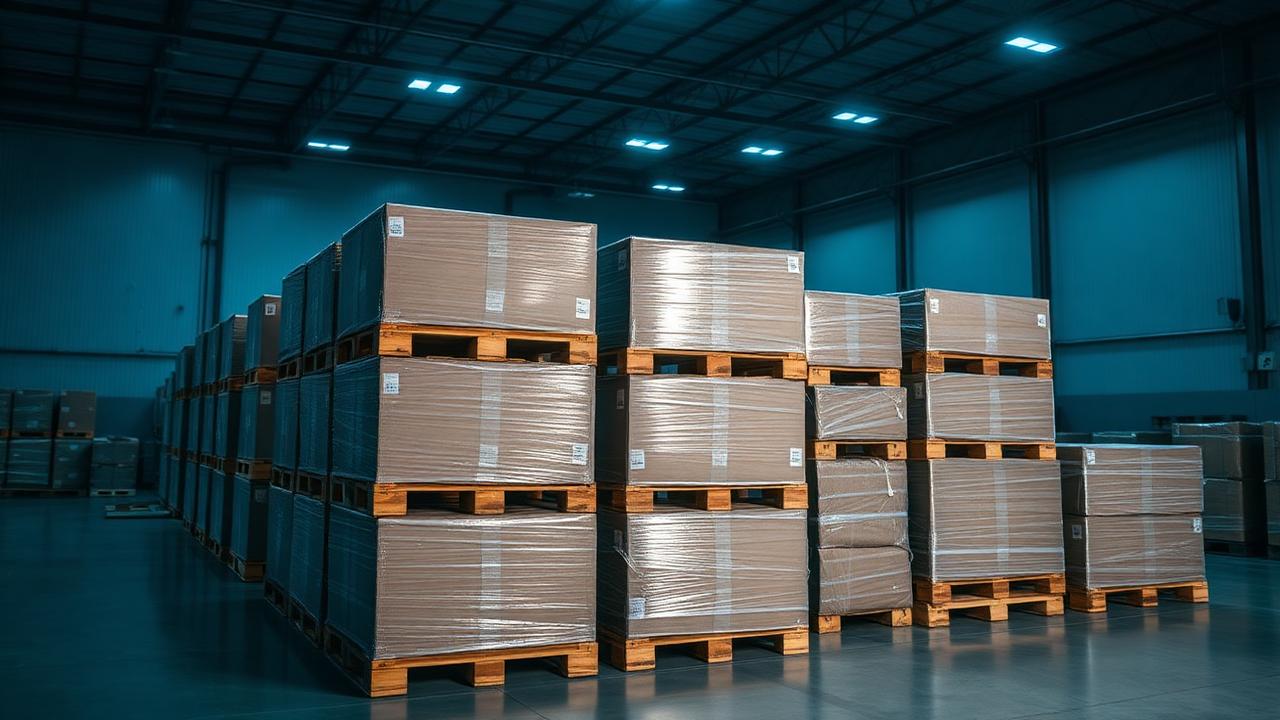
Three years ago, I put in a $380 winning bid on a 420-pound lot of small power tools sitting in an Indiana regional distribution center. On paper, the manifest showed $2,400 in estimated retail value. I felt like a genius for about fifteen minutes. Then the shipping invoice hit. Base freight was $190, which felt manageable, but the carrier tacked on a $65 residential delivery fee, a $75 liftgate charge, and a $45 limited-access surcharge because my shop sits down a narrow alley. Add in the buyer premium and my $380 steal became an $815 commitment before the pallet even touched my concrete floor.
That single invoice completely wiped out my margin on the lot. If you want to survive buying return lots on B-Stock or direct retail liquidation channels, you have to run the math before you click bid. Winning an auction is easy. Getting the freight home without bleeding cash requires a repeatable freight calculation process.
The Anatomy of Landed Cost
Most novice buyers look at the hammer price on an auction screen and treat that as their cost basis. That is a fast track to bankruptcy. Your actual cost is your landed cost, which includes four distinct charges:
- Winning auction bid price
- Liquidator buyer fee or auction house premium (typically 7% to 10%)
- Base LTL freight charge based on weight, distance, and freight class
- Accessorial fees charged by the freight carrier for specific drop-off services
If you skip any of these four pieces, your profit margin drops instantly. A reliable pallet shipping calculator lets you plug in these variables before you bid so you know your break-even point in advance.
Deciphering Freight Rates and Accessorial Charges
Less-than-truckload freight, commonly abbreviated in the liquidation glossary as LTL freight, does not run like standard ground delivery. Carriers like FedEx Freight price their lane rates on distance, weight density, and handling difficulty. LTL rates currently range from $0.80 to $2.50 per mile for standard single-pallet shipments depending on fuel surcharges and regional capacity.
Density determines your freight class, ranging from Class 50 (dense items like cast iron weights or packed hardware) up to Class 500 (lightweight, bulky items like un-assembled plastic outdoor furniture). Carriers calculate this using UPS dimensional weight rules. If you buy a pallet of air fryers, the box takes up physical room in the trailer even if it only weighs 200 pounds. You will pay a higher class rate because the carrier loses volumetric space.
Accessorial fees are where carriers make their money on small buyers. Here are the common charges you will face if you ship to a home or a small warehouse without a loading dock:
- Residential Delivery Fee: $50 to $100. Carriers charge this whenever a semi-truck must leave standard commercial routes.
- Liftgate Service Fee: $50 to $75. Required if your delivery location does not have a dedicated loading dock or forklift.
- Limited Access Fee: $30 to $60. Charged for deliveries to storage units, farms, strip malls, or downtown storefronts.
- Re-consignment or Re-delivery: $75 to $150+. Charged if the carrier tries to drop off the load and nobody is available to sign.
A Fully Worked Pallet P&L Example
Let us run through a concrete scenario. Suppose you are looking at a 32-unit mixed power tool pallet coming out of a Georgia facility. The manifest claims $3,100 in retail value. Historical data from our recovery rate report shows that tool lots in tested/working or unchecked customer return condition typically recover around 35% of retail value on open sales channels.
Expected Gross Revenue: $3,100 x 0.35 = $1,085
Now let us build two P&L columns. Column A assumes residential delivery with all accessorials. Column B assumes local service terminal pickup using your own truck or trailer.
| Expense / Income Item | Column A (Residential Delivery) | Column B (Terminal Pickup) |
|---|---|---|
| Winning Auction Bid | $400.00 | $400.00 |
| Marketplace Premium (10%) | $40.00 | $40.00 |
| Base LTL Freight Cost | $210.00 | $210.00 |
| Residential Delivery Fee | $65.00 | $0.00 |
| Liftgate Service Fee | $60.00 | $0.00 |
| Total Landed Cost Basis | $775.00 | $650.00 |
| Expected Gross Resale | $1,085.00 | $1,085.00 |
| Selling Fees (eBay ~13.25% + $0.30/item) | $153.42 | $153.42 |
| Estimated Outbound Shipping to Buyers | $110.00 | $110.00 |
| Net Profit / (Loss) | $46.58 | $171.58 |
In Column A, you work for hours processing 32 units to clear less than fifty dollars. One broken item or missing battery converts that slim profit into a direct loss. In Column B, by driving 30 minutes to pick up the pallet at the freight dock, you eliminate $125 in accessorials and triple your net take.
Plugging these variables into a maximum bid calculator before bidding keeps you from over-paying. If you analyze manifests using a tool like Pallet IQ, you can quickly overlay expected recovery against these freight hurdles to establish your ceiling.
Comparing Sourcing Logistics Options
Where and how you source changes your freight drag dramatically. Here is a realistic look at how freight methods impact landed margins:
| Logistics Route | Typical Freight Cost Range | Best For | Main Risk |
|---|---|---|---|
| Direct LTL Residential | $300 - $550 per pallet | Buyers without trucks or trailers | Excessive accessorial fees eating all margin |
| Dock-to-Dock Freight | $150 - $300 per pallet | Commercial warehouses with forklifts | Re-weigh surcharges if pallet dimensions differ |
| Freight Terminal Pickup | $150 - $300 per pallet | Experienced side-hustlers with pickups | Time spent driving and loading manually |
| Regional Local Pickup | $0 - $50 (Fuel/Time) | Local buyers buying direct closeouts | Limited local inventory selection |
| Full Truckload (FTL) | $1,800 - $4,500 (24-26 pallets) | High-volume processing operations | Massive initial cash outlay and space requirements |
How Freight Calculations Go Terribly Wrong
Even smart buyers get blindsided by carrier billing surprises. Here are the three most common ways freight math fails on a liquidation lot:
First, carriers re-weigh and re-measure pallets at their sorting hubs. If a liquidators manifest lists a pallet as 48x40x48 inches at 350 pounds, but overhang pushes the dimensions to 52x44x50 inches, the carrier will re-class the shipment. A re-classification changes your rate from Class 85 to Class 125, adding $80 to $150 to your invoice after the pallet has already been delivered.
Second, residential delivery assumptions bite non-commercial buyers. If you run your operation out of a home garage, do not try to trick the carrier into thinking you are a commercial address just because you registered an LLC. If the delivery driver arrives in a sleeper truck and cannot turn around easily, they will mark the load as residential, drop it back at the terminal, and charge you both a residential fee and a re-delivery fee.
Third, failing to calculate outgoing marketplace friction ruins incoming freight estimates. When you calculate landed margins with a pallet ROI calculator, you must account for marketplace platforms taking their cut. According to published schedules for eBay seller fees, final value charges average around 13.25% plus processing fees. You can cross-check platform cuts using a marketplace fee calculator to ensure your outbound costs do not crush what was left after incoming freight.
Practical Rules for Protecting Your Margin
To keep freight from eating your profits, establish non-negotiable bidding rules:
- Always set your hard ceiling bid based on landed cost, never auction price.
- If a pallet holds heavy, low-value goods like ceramic tile, bed pillows, or basic return plastics, cap your bid at 10% to 15% of estimated retail.
- Keep a working relationship with two or three regional freight terminals so you can opt for dock pickup whenever possible.
- Calculate outgoing fees and shipping before finalizing your bid limits.
Reselling returns is a logistics business masquerading as a retail business. Master the freight math, protect your downside, and never let an unexpected accessorial charge catch you off guard again.
Frequently Asked Questions
How do I calculate LTL freight before placing a bid?
Most liquidation marketplaces provide a shipping estimator tool on the auction listing page. Enter your delivery ZIP code, select your location type, and check whether you need a liftgate. If no estimator is available, get the estimated weight and origin ZIP code from the listing and request a quote from an LTL freight broker using a standard 48x40 pallet footprint assumption.
Why did my carrier charge me a re-class fee after delivery?
Carriers pass every pallet through automated laser scanners at sorting hubs. If your pallet has items hanging over the edge of the wooden skid, the scanner calculates dimensional weight based on the widest point. That extra volume shifts the shipment into a higher freight class, generating an automated post-delivery invoice adjustment.
Is terminal pickup really worth the extra drive time?
If you live within 45 minutes of a major freight terminal, dock pickup is almost always worth it for single-pallet buyers. It routinely saves $100 to $175 per shipment by eliminating residential and liftgate accessorial charges, which directly increases your net margin on every lot.
Pallet IQ Editorial Team
We buy, grade and resell liquidation pallets, then turn what we learn into the tools on Pallet IQ. Every guide here comes from real manifests, real bids and real sell through numbers.
Written September 24, 2026