How to Resell Amazon Return Pallets: Real Math & Strategy
We broke down real Amazon return pallet manifests to show true recovery rates, hidden LTL freight costs, and exact net profit calculations.
By Pallet IQ Editorial Team
Published · Updated
 Resale Strategy
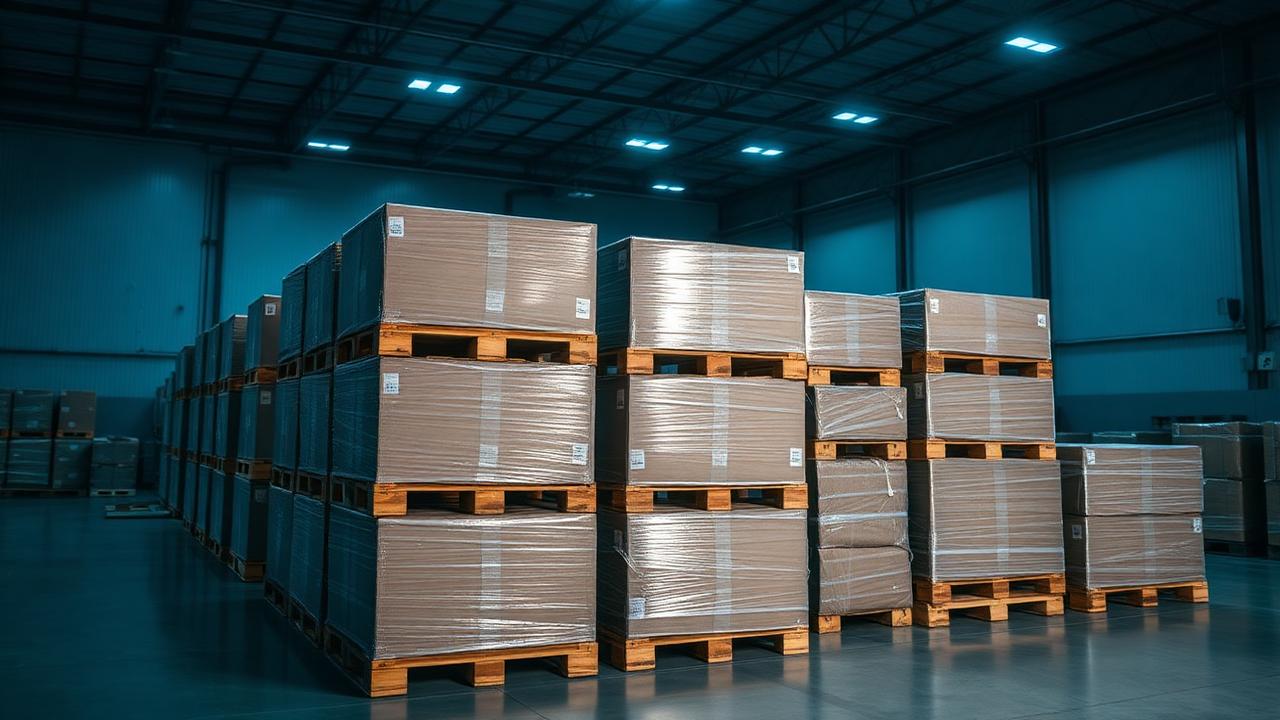
We took delivery of three pallets out of a Whitestown, Indiana Amazon fulfillment center last March, paying $1,850 plus $420 in LTL freight. On paper, the manifest claimed $14,200 in original retail value. By week three, after scrubbing air fryers, testing cordless vacuums, and tossing four smashed desktop monitors into an e-waste bin, we pulled in $4,100 gross revenue.
After eBay fees, shipping expenses, and our initial inventory cost, we netted roughly $900 for 35 hours of manual labor.
That is standard work. If you came into this expecting 80% net margins on shiny refurbished laptops, you are about to get a very expensive education. Learning how to resell amazon return pallets isn't about finding secret treasure chests. It is a labor-heavy process of sorting garbage from gold, pricing for secondary markets, and controlling your freight overhead.
Understanding Grades and Category Recovery Rates
Not all Amazon returns are built equal. On auction platforms, you will see listings tagged anywhere from Overstock down to Customer Returns - Salvage.
Overstock and shelf pulls are your safest bet. These items never reached a customer's hands. The boxes might have warehouse scars or yellowed inventory stickers, but the goods inside work. Category recovery rates here stay healthy: expect 40% to 50% of original MSRP on secondary marketplaces like eBay or Mercari.
Customer returns are where the waters get murky. Someone bought an espresso machine, couldn't figure out how to prime the pump, used it for two weeks, and threw it back in the box wet. Or worse, swapped their broken three-year-old model for a new one and shipped the dead unit back.
Real recovery rates vary wildly depending on the product line:
- Electronics: Expect 25% to 40% recovery. High returns, fraud, account locks, and missing power bricks plague this category.
- Tools and Hardware: Expect 30% to 45% recovery. These items are durable and often returned simply because a weekend project finished.
- Small Appliances: Expect 30% to 40% recovery. They require cleaning, but yield steady sales if complete in the original box.
- Apparel and Softlines: Expect 8% to 15% recovery. Missing tags, wrong sizes, stains, and heavy listing labor eat margins fast.
The Freight and Accessorial Tax
The hammer price on B-Stock or Liquidation.com is only half the check. If you win a pallet for $450, you are nowhere near done spending.
Less-Than-Truckload (LTL) freight ranges from $0.80 to $2.50 per mile depending on fuel surcharges and lane density. But the real margin killers are accessorial fees added at checkout:
- Residential Delivery Fee: $50 to $100 extra if you do not have a commercial dock.
- Liftgate Service: $50 to $75 if you lack a forklift or loading dock.
- Limited Access Charge: $30 to $60 for farms, storage units, or tight residential streets.
If you pay $400 for a pallet and $220 to get it dropped on your driveway, your cost basis is $620. If that lot yields $1,000 gross on eBay, marketplace fees (roughly 13.25% plus $0.30 per order) knock off $133. Outbound shipping eats another $150. Your actual net profit drops from an imagined $600 down to $97.
Comparing Amazon Pallet Lot Types
Let us look at how different Amazon return lots stack up when you run them through a realistic processing workflow.
| Lot Type | Risk Profile | Average Recovery | Primary Resell Channels | Labor Intensity |
|---|---|---|---|---|
| Overstock / Shelf Pulls | Low | 40% - 50% | Amazon FBM, eBay, Poshmark | Low (Inspection only) |
| Manifested Small Domestic | Medium | 30% - 40% | eBay, Mercari, Facebook | Moderate (Clean & test) |
| Unmanifested Raw Returns | High | 15% - 25% | Local Yard Sale, Flea Market, FB | Extreme (Full sorting required) |
| Heavy Equipment / Tools | Medium-Low | 35% - 50% | Local Pickup, OfferUp, eBay | High (Heavy lifting, cleaning) |
A Worked P&L: A 42-Unit Kitchen & Home Lot
To figure out if a lot is worth bidding on, you need to run the math before placing your max bid. Never guess. Drop your manifest data into a spreadsheet or run it through a manifest analysis tool like PalletIQ to pull historical resale prices rather than original retail prices.
Here is an actual P&L from a 42-unit kitchen appliance lot sourced from a midwest Amazon RDC:
Cost Basis Breakdown:
- Winning Bid: $520.00
- Buyer's Premium (10%): $52.00
- LTL Freight: $185.00
- Liftgate & Residential Fees: $110.00
- Total Landed Cost: $867.00
Inventory Audit & Sales Outcome:
- 24 units tested complete, listed on eBay (Total Gross: $1,280.00)
- 8 units sold locally on FB Marketplace for cash (Total Gross: $260.00)
- 6 units sold for parts/repair on eBay (Total Gross: $110.00)
- 4 units scrapped / e-waste ($0.00)
- Total Gross Revenue: $1,650.00
Expenses & Net Profit:
- eBay Marketplace Fees (13.25% + fixed fees): $184.20
- Outbound Shipping Costs (Subsidized/seller paid): $215.00
- Packing Supplies (Boxes, bubble wrap, tape): $35.00
- Realized Receipts ($1,650.00 minus $434.20 expenses): $1,215.80
- Net Profit ($1,215.80 minus $867.00 landed cost): $348.80
That is a 40.2% return on invested capital. Is $348.80 good for 12 hours of total sorting, testing, listing, and shipping work? That comes out to roughly $29 an hour. That is resale reality, not YouTube fantasy land.
How This Goes Wrong: Account Locks and Missing Parts
The quickest way to burn cash on Amazon returns is buying consumer tech without a strategy for locks and missing components.
Amazon customers return smart home hubs, tablets, security cameras, and GPS watches constantly. Half the time, the original user logged into their Google, Apple, or Ring account and never removed the device from their profile before sending it back.
When you plug in an iPad or a Ring floodlight and hit an activation lock screen, your resale value drops 80% instantly. You cannot bypass factory reset protection on modern devices legally or reliably. That $200 smart watch just turned into a $30 "parts only" listing.
Missing power supplies are the second tax. A high-end soundbar without its proprietary 24V power brick requires you to buy a $25 replacement off Amazon just to test if the board works. Do that four times on a single lot, and you wipe out your entire net margin.
If you are starting out, avoid high-end locked tech. Stick to mechanical items, cookware, corded power tools, and basic home goods where complete functionality can be verified with a simple wall outlet.
Processing Your Pallet for Fast Velocity
When you bring a single pallet back to your shop, speed dictates your monthly return on capital.
Do a raw sorting pass immediately. Break items into three distinct piles:
- Ready to List: New in box, sealed overstock. List on eBay or Mercari within 24 hours.
- Test & Clean: Needs plugged in, wiped down, or repacked. Schedule these in batches during one dedicated afternoon.
- Trash or Local Scrap: Broken plastics, unrepairable electronics, low-value items under $15. Pack these into a local yard sale box or list as a cheap bundle on Facebook Marketplace for local pickup to recover your box cost fast.
Never store dead stock expecting to fix it someday. If you haven't fixed a broken blender within 14 days, sell it for parts or bin it. Floor space in your shop is cash.
How do I start reselling Amazon pallets with a small budget?
Start with regional liquidators where you can pick up pallets with a pickup truck or utility trailer. Eliminating the $200 to $300 LTL freight cost on your first three purchases preserves your capital while you learn testing, grading, and realistic market pricing.
Do I need a reseller license to buy Amazon return pallets?
Yes. For most official liquidation platforms like B-Stock, Liquidation.com, or direct wholesale portals, you need a state resale certificate (sales tax exemption certificate). This allows you to purchase inventory without paying sales tax upfront, as long as you collect tax when selling to the end consumer.
What is the average profit margin on Amazon return pallets?
Realistic net profit margins after freight, platform fees, junk loss, and shipping range from 15% to 35% of landed cost. While gross recovery might hit 40% to 50% of retail, hidden fees and unsellable units pull real net returns into the 20% range.
Mastering how to resell amazon return pallets comes down to ruthless expense tracking and brutal honesty about product condition. Treat it like an industrial processing line, manage your shipping costs down to the dime, and you can build a sustainable, repeatable resale business.
Pallet IQ Editorial Team
We buy, grade and resell liquidation pallets, then turn what we learn into the tools on Pallet IQ. Every guide here comes from real manifests, real bids and real sell through numbers.
Written August 8, 2026, last reviewed October 19, 2026