How to Make Money with Shoe Liquidation Pallets
We spent $1,365 on 120 pairs of returned sneakers to break down actual freight costs, defect rates, platform fees, and real net profit.
By Pallet IQ Editorial Team
Published · Updated
 Liquidation Sourcing
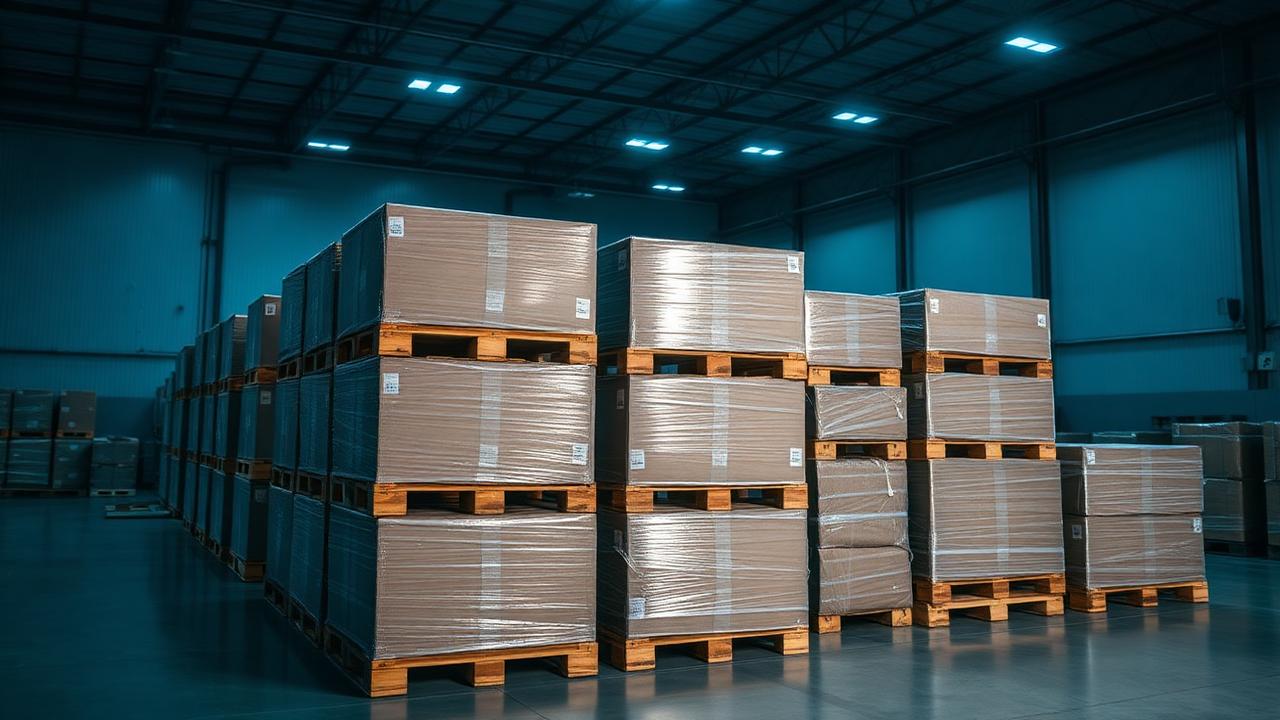
Three years ago, I unloaded a 48-inch wooden skid off the back of an LTL trailer in my driveway and spent the next six hours weeping over 140 individual shoes that lacked matching mates. It was an unmanifested customer return lot from a major midwestern department store chain. Half the box lids were missing, one boot had drywall dust ground into the suede, and four pairs were two different sizes, a left 8.5 and a right 10. That pallet taught me a $1,400 lesson in how brutal this niche can be if you buy blind.
If you want to know how to make money with shoe liquidation pallets, you have to throw out the fantasy of flipping pristine Jordans all day. You are essentially buying someone else’s logistical headaches at a steep discount, triaging the damage, and matching the right footwear with the right sales channel. When done right, footwear yields some of the highest dollar-per-pound margins in liquidation reselling. When done wrong, you end up with a garage full of single left shoes and size 5 high heels that take two years to clear.
Understanding Shoe Liquidation Grades and Sourcing
Footwear liquidation isn't a monolith. A pallet of target shelf pulls behaves completely differently than a box of customer returns from Nordstrom Rack or Amazon. Retailers categorize lots into four distinct condition tiers, and your resale strategy needs to match what is inside the shrinkwrap.
Grade A (Overstock and Shelf Pulls): These are shoes that never left the store or were tried on once on a carpeted sales floor. Boxes are generally intact, though they might have clearance stickers or black sharpie marks across the UPCs to prevent in-store returns. Expect an 80% to 90% yield of listable shoes on eBay or Poshmark.
Grade B (Light Customer Returns): These are 30-day consumer returns. They usually show minor outsole dirt, creasing on leather toe boxes, or light scuffs. Boxes may be damaged or replaced with generic brown shoe boxes. You can usually recover 65% to 75% of these for online reselling after a quick scrub with a magic eraser.
Grade C (Heavy Returns & Salvage): Deep heel drag, missing insoles, heavy foot smells, or structural damage. You will need to repair, deep clean, or sell these locally on Facebook Marketplace or at a swap meet. Yield for premium online channels drops below 40%.
Grade D (Trash & Mismatched Mates): Single shoes, broken heels, dry-rotted vintage soles, or counterfeit items sneaked into return boxes by dishonest retail customers. Your recovery here is zero. Always factor a 10% to 15% Grade D loss into your initial bidding calculations on any return lot.
Sourcing Channels and Logistics Costs
Before you place a bid on liquidator auction platforms, you need to account for freight accessorial fees. Freight isn't just distance; it's delivery complexity. Less-Than-Truckload (LTL) shipping rates currently run between $0.80 and $2.50 per mile, but the surcharges are what break a new reseller’s budget.
If you do not have a commercial warehouse with a loading dock, carriers will charge you a residential delivery fee ($50 to $100) plus a liftgate fee ($50 to $75) to drop the pallet on your driveway. If your location is flagged as a limited-access zone (like a farm or storage unit facility), tack on another $30 to $60. A $300 pallet bid quickly becomes a $600 landed cost basis before you even cut the shrinkwrap.
Once you process the shoes, platform fees dictate where you list each grade:
- eBay: 13.25% final value fee on most footwear categories plus $0.30 per order. Excellent for specific models, work boots, and hard-to-find athletic sizes.
- Poshmark: Flat 20% commission on sales over $15 (or a flat $2.95 under $15). Great for women's fashion shoes, sandals, and mid-tier designer brands because the buyer pays flat-rate shipping up to 5 lbs.
- Mercari: 10% selling fee plus payment processing fees. Good for fast-moving casual shoes and kids' footwear lots.
- Facebook Marketplace / Local Cash: 0% fee for local pickups. This is where you dump Grade C inventory, boxless shoes, and lower-tier brands without eating shipping costs.
| Inventory Condition Tier | Typical Cost (% of Retail MSRP) | Online Yield Rate | Primary Sales Channel | Average Processing Labor |
|---|---|---|---|---|
| Store Overstock / Shelf Pulls | 20% - 30% | 85% - 95% | eBay / Poshmark | 5 mins / pair |
| Light Customer Returns | 12% - 18% | 65% - 75% | Poshmark / Mercari | 12 mins / pair |
| Heavy Returns / Mixed Unmanifested | 5% - 10% | 30% - 40% | Local Cash / Flea Market | 20+ mins / pair |
| Salvage / Customer Fraud | 1% - 4% | < 10% | Parts / Scrap / Trash | 2 mins / pair |
The Real Math on How to Make Money with Shoe Liquidation Pallets
Let's look at a real, fully worked profit and loss statement from a recent 120-pair manifested department store footwear lot shipped out of a distribution center in Indiana.
Cost Basis Breakdown
- Winning Pallet Bid: $1,200.00
- LTL Freight Base Rate: $250.00
- Residential Delivery Accessorial: $65.00
- Liftgate Fee: $50.00
- Total Landed Cost Basis: $1,365.00 ($11.38 per pair across 120 pairs)
Inventory Yield & Revenue Realization
After unboxing, sorting, and cleaning the inventory, here is how the 120 pairs broke down across sales channels:
- Grade A (50 pairs): High-demand brand-name sneakers and boots with intact boxes. Listed on eBay and Poshmark. Sold at an average of $46.00/pair. Gross: $2,300.00
- Grade B (40 pairs): Cleaned returns and boxless shelf pulls. Listed on Poshmark and Mercari. Sold at an average of $28.00/pair. Gross: $1,120.00
- Grade C (15 pairs): Worn condition or minor flaws. Sold in bulk lots on Facebook Marketplace locally at $12.00/pair cash. Gross: $180.00
- Grade D (15 pairs): Unusable singles, severe damage, and one pair of fake Hokas. Gross: $0.00
Total Gross Revenue: $3,600.00
Fees & Operating Expenses
- Poshmark Fees (20% on $2,100 gross): $420.00
- eBay Fees (13.25% + $0.30 x 30 transactions on $1,320 gross): $183.90
- Poly mailers, tissue, magic erasers, and shipping boxes: $75.00
- Total Selling Expenses: $678.90
Final Profit Statement
- Gross Revenue: $3,600.00
- Less Landed Cost Basis: -$1,365.00
- Less Platform Fees & Supplies: -$678.90
- Net Cash Profit: $1,556.10
- Net Return on Investment: 114%
Notice that 15 pairs were complete write-offs. If your margin is so paper-thin that losing 12% of the inventory breaks your business model, do not buy that lot.
Where Buying Shoe Pallets Goes Wrong
The single fastest way to destroy your margin on shoe pallets is falling into the size spectrum trap.
When a store manifests a lot of footwear overstock, ask yourself *why* those shoes didn't sell at retail. Frequently, it is because they are extreme sizes: men’s size 14 EEEE, women’s size 5 narrow, or absurdly niche colorways like neon-yellow faux-snakeskin loafers. These shoes can take 12 to 18 months to sell online. When you run a manifest through a manifest analysis tool like Pallet IQ, you can immediately filter out lot bids where the size distribution is skewed heavily toward extreme sizes that eat up your storage space and drag down velocity.
Another common failure point is the boxless shipping nightmare. Shipping shoes in original boxes is easy, you put the shoe box inside a poly mailer. Shipping shoes *without* boxes requires polybagging, bubble wrap, or buying custom corrugated shoe boxes ($1.50 to $2.25 each). If you buy a 100-pair boxless lot and have to purchase 100 shipping boxes, you just burned $200 of your net profit before taking a single photo.
Finally, watch out for customer-return fraud on designer brands. Retail shoppers will buy an authentic pair of $300 designer sneakers, swap them with a beaten-up knockoff from a discount store, and return the box to the retail store for a full refund. The retail clerk rarely checks under the tissue paper. When that pallet reaches you, you end up taking the hit.
Processing and Listing Strategy for Maximum Recovery
Do not treat liquidation shoes like standard retail arbitrage. Your intake process determines your hourly earnings rate.
- The Mate Match: First thing out of the shrinkwrap, pair every left shoe with its right shoe. Check sizes inside both tongues. Retail shoppers constantly put a size 9 right shoe back in a size 8.5 left shoe box.
- The Clean Station: Keep a tub of leather conditioner, suede brushes, Magic Erasers, and disinfectant spray at your processing table. Spending 90 seconds wiping down an outsole can move a shoe from a $15 Grade C local sale to a $35 Grade B Poshmark listing.
- Batch Photographing: Shoot shoes in standardized angles: side profile, top-down view, soles showing tread wear, and a close-up of the size tag. If the box tag is missing, measure the insole length and put it directly in the description to prevent item-not-as-described returns.
Final Verdict: How to Make Money with Shoe Liquidation Pallets
Learning how to make money with shoe liquidation pallets isn't about finding a secret supplier who sells brand-new Jordans for $5 a pair. It comes down to disciplined manifest analysis, realistic accounting for LTL freight accessorials, and aggressive triage during processing. Focus on manifested shelf pulls or Grade A/B department store lots when starting out. Avoid unmanifested mystery Gaylords until you have local sales channels built out to absorb the inevitable 20% junk rate. If you keep your landed cost under $15 per pair on solid mid-tier brand manifests, you can build a predictable, repeatable reselling engine.
What is a realistic recovery rate on shoe liquidation returns?
On manifested shelf pulls, expect an 80% to 90% listable yield. On raw customer returns, realistic listable yield drops to 60%-70% for online marketplaces like eBay or Poshmark, with 15%-20% sold cheap locally and 10%-15% written off as un-sellable trash or mismatched singles.
Is Poshmark or eBay better for liquidated shoes?
Poshmark is generally superior for women's fashion shoes, boots, and mid-range retail brands because the flat-rate 5-lb shipping fee keeps buyer costs low on heavy items. eBay is better for high-end athletic sneakers, men's work boots, specialized outdoor footwear, and listings where exact size or style numbers drive targeted search traffic.
Should I buy unmanifested shoe Gaylords?
Only if your landed cost per unit is below $3 to $5 and you have a low-overhead local outlet, such as a flea market booth, garage sales, or Facebook Marketplace setup. Selling unmanifested return shoes online individually takes too much labor per dollar earned when defect rates hit 30% or higher.
Pallet IQ Editorial Team
We buy, grade and resell liquidation pallets, then turn what we learn into the tools on Pallet IQ. Every guide here comes from real manifests, real bids and real sell through numbers.
Written August 24, 2026, last reviewed October 19, 2026