Common Mistakes Buying B-Stock Pallets
I once paid $1,450 for a pallet of Georgia returns that yielded $320 in working inventory. Here is how to avoid making the same expensive mistakes on B-Stock auctions.
By Pallet IQ Editorial Team
Published
 Liquidation Sourcing
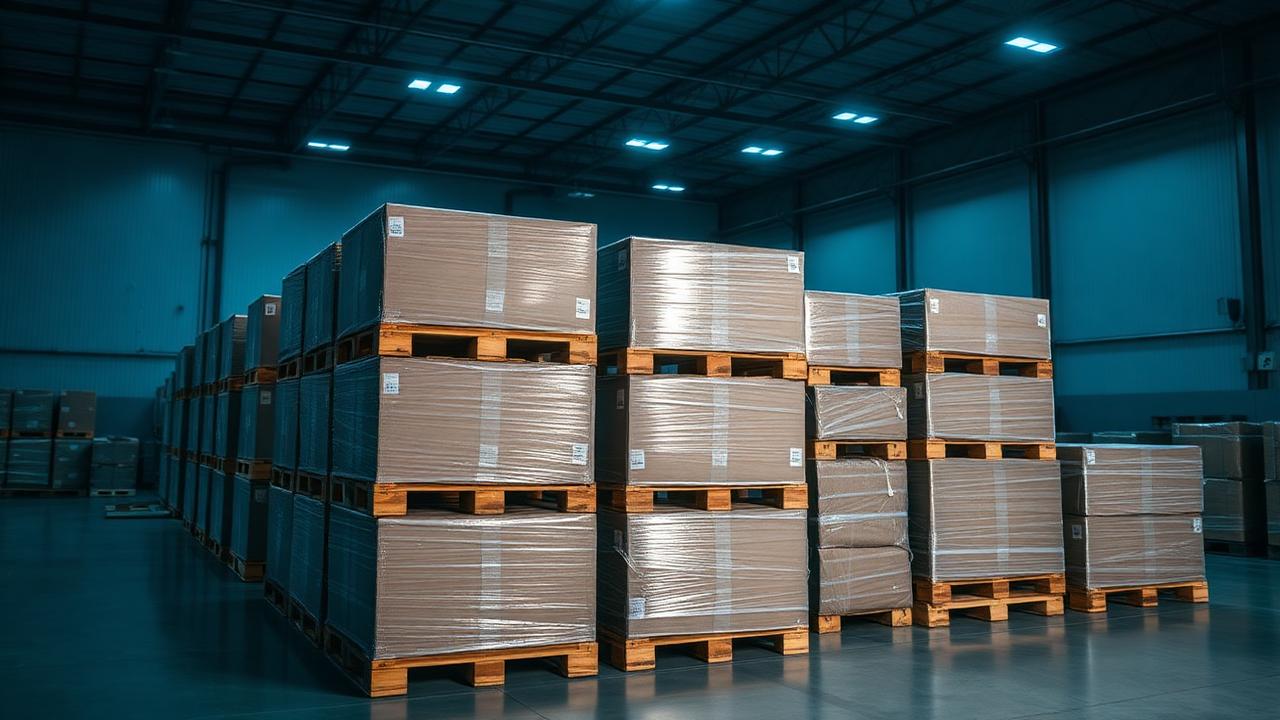
Four years ago, I won a 32-unit mixed small-appliance lot originating out of a Georgia regional distribution center (RDC). My winning bid on B-Stock was $620. By the time the freight truck pulled up to my driveway, I was in for $1,140. When I finally cut the shrink wrap, sixteen units were missing their power cords, eight had shattered glass lids, and four were covered in stale marinara sauce. I lost $780 on that lot after selling what remained on Facebook Marketplace. That brutal lesson taught me that the most common mistakes buying b-stock pallets happen long before you pay the invoice.
According to NRF returns research, retailers absorbed hundreds of billions in customer returns last year. Most of that inventory gets funneled straight into secondary channels. B-Stock operates auctions for major retailers like Target, Walmart, Home Depot, and Wayfair. Because anyone with a resale certificate can bid, competition is fierce. Beginners see an estimated MSRP of $8,000 on a screen and assume they are buying gold for ten cents on the dollar. They are usually buying work. If you do not know how to read between the lines of a manifest, your cash flow will evaporate fast.
The Core Common Mistakes Buying B-Stock Pallets
The first major blunder is taking manifest MSRP at face value. Retail original prices mean nothing on secondary marketplaces. A cordless vacuum that retailed for $299 three years ago might sell for $85 brand new on eBay today. If it is a Grade C customer return, your actual gross sell price is closer to $45. When you estimate your revenue, always look up sold listings on active channels rather than relying on historical retail prices. Our category recovery report shows that consumer electronics typical recovery ranges between 25% and 40% of original retail, while apparel drops down to 8-15%. Bidding based on sticker price is a fast way to run out of operating capital.
The second mistake is ignoring freight accessorials. Winning a bid for $400 feels great until LTL freight adds $450, plus a $75 liftgate charge, a $60 residential delivery fee, and a $40 limited-access fee because your shop is in a light commercial zone. LTL carrier rules outlined by FedEx Freight specify that any service outside a standard commercial loading dock incurs additional billing. If you do not calculate your landed cost beforehand with a shipping cost calculator, that quick flip instantly turns into a net loss.
The third trap is ignoring the scrap rate. Every returned lot carries broken goods, incomplete items, or flat-out garbage. Beginners assume 100% of the manifest will be resellable. Experienced buyers budget for a 15-30% scrap rate on Grade B and Grade C lots. If a box has 50 items and 12 end up in the dumpster, your per-unit cost basis spikes significantly across the remaining 38 units.
Real-World P&L Breakdown: Target Appliance Lot
Let us walk through a real mathematical scenario to see how small errors compound into massive losses. Suppose you are evaluating a 45-unit kitchen appliance lot listed on a major retailer network. The manifest lists total original MSRP at $5,400. The current top bid sits at $450 with two hours left on the auction clock.
Here is how an inexperienced buyer projects the numbers:
- Manifest MSRP: $5,400
- Winning Bid: $500
- Estimated Freight: $250
- Total Spent: $750
- Projected Resale (50% MSRP): $2,700
- Naive Estimated Profit: $1,950
Here is how a battle-tested reseller calculates the actual P&L before dropping a bid:
Itemized Cost Basis:
- Winning Bid: $500
- Buyer Premium (10%): $50
- Freight Quote: $310
- Residential Fee: $55
- Liftgate Fee: $65
- Total Landed Cost: $980
Realistic Recovery and Fees:
- Expected Resellable Units (75% yield, 34 units): 11 units broken or missing critical parts (scrap)
- Actual Secondary Value (average $48 per working unit): $1,632 gross revenue
- Estimated Marketplace Fees (eBay seller fees at 13.25% + $0.30 per sale): $226
- Packing Materials and Outbound Shipping Subsidies ($4 per unit): $136
- Net Revenue After Fees and Supplies: $1,270
- Net Profit ($1,270 net revenue minus $980 landed cost): $290
That yields a 29.5% return on invested capital across 40 hours of testing, cleaning, listing, and packing. If the bidding had crept up to $750, your net profit would have been negative $10. Plugging these variables into a pallet ROI calculator keeps you from burning cash on lots that only look good on paper.
Comparing B-Stock Lot Grades and Risk Profiles
Understanding manifest grading is critical. Retailers do not grade uniformly, but most B-Stock supply falls into four broad buckets. Below is how you should evaluate lot conditions before bidding.
| Lot Grade | Typical Origin | Average Yield | Recovery Rate (% MSRP) | Primary Channel |
|---|---|---|---|---|
| Grade A Overstock | Warehouse shelf pull, factory sealed | 95-100% | 35-50% | Amazon, eBay, Shopify |
| Grade B Customer Return | Opened box, minor cosmetic flaws, complete | 75-80% | 25-35% | eBay, Whatnot, Mercari |
| Grade C Salvage / Defective | Field returns, missing parts, heavy wear | 40-60% | 10-20% | Local cash, parts repair |
| Grade D Scrap / Raw Returns | Unchecked store returns, unmanifested bulk | 20-40% | 5-15% | Bin stores, flea markets |
When reviewing a lot, never assume Grade B means like-new retail packaging. A customer return lot will contain retail stickers, torn boxes, and occasionally swapped items where a buyer returned an old model inside a new box. Before committing funds, plug the manifest data into a manifest analyzer to strip out low-value clutter and identify high-value anchor items.
How This Goes Wrong: The $2,400 Georgia RDC Disaster
Let me share a specific story of how everything can blow up on a single truckload shipment. Two summers ago, I spotted a 4-pallet lot of mixed outdoor power equipment out of a Georgia facility. The manifest listed 68 units including pressure washers, string trimmers, and leaf blowers. Total MSRP was over $14,000. The bid was stuck at $1,200.
I got greedy. I bid $1,650 and won. I neglected to check the shipping origin zip code against my delivery location, assuming standard freight rates applied. Because the warehouse was in a rural RDC hub and my workshop had no loading dock, the carrier hit me with a $780 LTL shipping bill, including a $110 limited-access fee and a $90 re-consignment fee because the driver could not fit his 53-foot sleeper tractor down my street.
When the pallets arrived, the driver dropped them at the end of the driveway in a rainstorm. Upon unshrinking the pallets, I discovered that 40% of the engines had been drained of oil, stripped of carburetors, and returned by customers who used them for single DIY projects before claiming defects. I spent three weeks sourcing replacement parts, scrubbing oil stains, and selling rebuilt units on local marketplaces. My total profit after 90 days was $84 for over 60 hours of manual labor.
The failure mode was clear:
- Bidding emotionally under time pressure without checking shipping accessorials.
- Relying on MSRP on a category with high customer fraud rates.
- Lacking a clear outlet for bulk, heavy items that could not be shipped economically via postal services.
Walking away from bad lots requires strict rules and objective tooling.
Avoiding Common Mistakes Buying B-Stock Pallets on Your Next Auction
To consistently hit your target margins, build a systematic bidding protocol. Never enter an auction without a hard stop price.
First, normalize the manifest data. Export the CSV from the auction site and calculate the true market value of the top 20% of items. Those anchor items usually represent 80% of the total lot value. If the anchor items do not cover your landed cost and minimum target profit, the rest of the lot will not save you.
Second, get your freight quote before you place your opening bid. Call the carrier or use the integrated shipping estimator, then add a 15% buffer for fuel surcharges and accessorials. If you are picking up locally, factor in your fuel, trailer rental, and labor hours.
Third, plan your listing strategy before the pallet arrives. High-value items should be processed immediately and posted across multiple channels.
Fourth, understand the vocabulary of liquidation. If a listing says non-functional, assume it belongs in a scrapper bin. If a manifest lists raw returns, prepare for a higher scrap rate. Take time to read our liquidation glossary so you never misinterpret condition codes on vendor portals.
Avoiding common mistakes buying b-stock pallets is not about finding secret tricks. It comes down to disciplined math, realistic condition expectations, and ruthless operational control.
What is the acceptable scrap rate for B-Stock pallets?
An acceptable scrap rate depends heavily on the condition grade. For Grade A overstock, scrap should be under 3%. For Grade B customer returns, plan for a 15-20% scrap or missing parts rate. On Grade C or salvage lots, expect 40-50% of the manifest to require repair, parts harvesting, or disposal.
How do freight accessorial fees work on residential deliveries?
Freight carriers charge accessorial fees for services beyond standard dock-to-dock transport. If you do not have a commercial loading dock or forklift, you will be billed for a liftgate ($50-$75), residential delivery ($50-$100), and potentially limited-access fees ($30-$60). Always include these charges in your initial landed cost calculation before bidding on B-Stock auctions.
Should I focus on unmanifested or manifested liquidation lots?
Beginners should stick strictly to fully manifested lots. Manifested lots provide SKU details, item counts, and historical retail values that allow you to calculate risk and resale margins accurately. Unmanifested lots are essentially gamble boxes best left to high-volume processors with dedicated brick-and-mortar discount stores or bin operations.
Pallet IQ Editorial Team
We buy, grade and resell liquidation pallets, then turn what we learn into the tools on Pallet IQ. Every guide here comes from real manifests, real bids and real sell through numbers.
Written October 20, 2026