How to Make Money with Salvage Pallets
Salvage pallets look like pure junk to outsiders. If you know how to harvest parts, manage freight accessorials, and run realistic P&Ls, they can be ridiculously profitable.
By Pallet IQ Editorial Team
Published · Updated
 Liquidation Sourcing
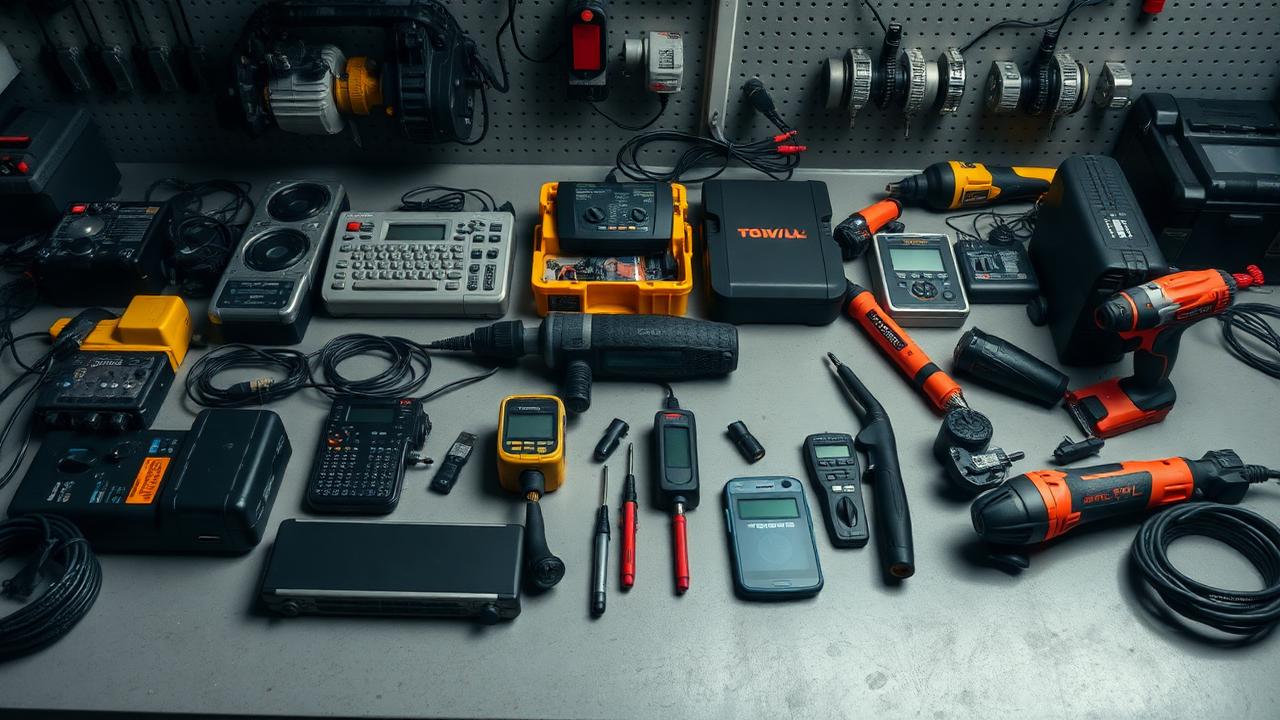
Two summers ago, a semi-truck backed down my driveway and dropped four crushed, shrink-wrapped pallets from an Indiana distribution center onto my broken concrete. The manifest listed "mixed power tools," but the smell was burning lithium grease and wet cardboard. I paid $1,150 for the lot and another $340 in freight. By the time I sorted through the melted casings, missing batteries, and bent circular saw guards, my wife thought I had lost my mind.
She was not totally wrong. Yet, three weeks later, after testing motors, parting out Dewalt switches, and bundling bare tools on eBay, I walked away with $2,890 in net profit.
If you want to know how to make money with salvage pallets, you have to throw away the dream of flipping pristine boxes for quick retail cash. Salvage is the bottom of the liquidation barrel. It is D-grade inventory: customer returns that are smashed, incomplete, heavily worn, or missing critical internal parts. But because most buyers run away from this tier, the purchase price drops through the floor. That gap between a throwaway purchase price and smart component recovery is where experienced resellers build margins.
Understanding Salvage Grades and Industry Recovery Rates
Before putting a dollar on an auction platform like B-Stock or Direct Liquidation, understand what you are bidding on. Liquidation lots fall into four broad tiers:
- Grade A (Shelf Pulls / Overstock): Unopened, retail-ready items with pristine packaging and zero wear.
- Grade B (Customer Returns - Like New): Open-box items with minimal outer box damage. Around 80% to 90% are fully functional straight off the pallet.
- Grade C (Used / Untested Returns): Visible wear, missing manuals or charging cords, and a defect rate around 30% to 40%.
- Grade D (Salvage): Broken, non-working, missing core components, or raw unsorted store-level write-offs.
Salvage is not a fit for every category. If you buy a salvage pallet of fast fashion or cheap mall apparel, you will lose money. Apparel recovery sits at a miserable 8% to 15% because stained or ripped fast-fashion jeans belong in a textile recycling bin, not on Poshmark.
Tools and heavy hardgoods are completely different. A cracked Milwaukee angle grinder with a blown motor still has a housing, switch, spindle, and gear head worth $35 to $50 to DIY repair techs on eBay.
Here is what realistic category recovery rates look like on D-grade salvage inventory:
- Power Tools and Equipment: 30% to 45% recovery of original retail value.
- Consumer Electronics: 25% to 40% recovery (largely through parts, cracked-screen assemblies, and power boards).
- Home Goods and Appliances: 15% to 25% recovery (heavily dinged by missing small parts and bulky shipping costs).
- Apparel and Footwear: 8% to 15% recovery (mostly unsalvageable unless higher-end workwear or leather goods).
Breaking Down Freight, Fees, and True Cost Basis
The fastest way to go broke on salvage pallets is ignoring line-item logistics expenses. Beginners calculate profit by subtracting the bid price from estimated eBay sold prices. That math will destroy your business inside of sixty days.
LTL (Less-Than-Truckload) freight rates fluctuate wildly. Expect to pay between $0.80 and $2.50 per mile depending on diesel prices and lane density. But the linehaul rate is only half the expense. If you lack a commercial loading dock or a forklift, carrier accessorial charges stack up fast:
- Residential Delivery Fee: $50 to $100 per shipment.
- Liftgate Service: $50 to $75 per load.
- Limited-Access Fee (farms, storage units, residential locations): $30 to $60.
If a 2-pallet salvage lot costs $400 at auction, but freight carries a $250 linehaul plus $75 liftgate and $50 residential fees, your true cost basis is not $400, it is $775.
Next, build platform fees into your equations. eBay takes roughly 13.25% plus $0.30 per transaction. Amazon seller fees hover around 15%. Mercari charges 10% on sales, while Facebook Marketplace charges 5% for shipped items (local cash pickups cost zero). Factor in 3% for payment processing and another 5% for cardboard boxes, bubble wrap, and void fill.
How to Make Money with Salvage Pallets: The Real Math
Let us look at a real-world unit-level breakdown. Imagine bidding on a 32-unit mixed small-appliance and power-tool salvage lot originating out of a Georgia regional distribution center (RDC).
Original Retail Value (MSRP): $4,200 Winning Bid: $520 Buyer Premium (10%): $52 LTL Freight (Georgia to Ohio, Liftgate + Residential): $310 Total Cost Basis: $882 ($27.56 per unit across 32 units)
Once the pallet lands, you inspect and grade every item. Out of 32 units:
- 10 items are fully working after a quick wipe down or plug replacement (Reselling at 50% MSRP = $850 total).
- 12 items need partial repairs, missing attachments, or are parted out individually (Yielding $620 net on parts and "for parts only" listings).
- 6 items are broken beyond recovery, stripped for small hardware, and scrapped ($30 scrap metal yield).
- 4 items are pure landfill waste ($0 yield).
Total Gross Resale Value: $1,500 Platform Fees (eBay average ~13.25% + shipping supplies): $225 Outbound Shipping Subsidies/Costs: $110 Total Net Revenue: $1,165
Net Profit Calculation: $1,165 (Net Revenue) - $882 (Total Cost Basis) = $283 Net Profit.
That is a 32% return on capital invested over a two-week processing window. If you had valued that pallet at 100% working condition or failed to account for freight accessorials, you would have overbid by $300 and taken a cash loss.
Salvage Pallet Sourcing vs. Grade A Customer Returns
Choosing between clean inventory and salvage requires comparing cash outlay, labor hours, and risk.
| Inventory Metric | Salvage Pallets (Grade D) | Grade A / Shelf Pulls |
|---|---|---|
| Average Cost vs MSRP | 5% to 12% | 25% to 45% |
| Functional Out of Box | 20% to 40% | 90% to 98% |
| Labor Hours Needed per Lot | High (Testing, cleaning, teardown) | Low (Inspect, photo, list) |
| Primary Resale Outlets | eBay Parts, Local Marketplace, Scrap | Amazon FBA, eBay, Poshmark |
| Margin Potential on Capital | High percentage, lower dollar cap | Lower percentage, higher scale |
How to Process Salvage Pallets Without Losing Your Mind
When you buy salvage, you are running a micro repair and teardown facility. Without a rigid process, your workspace will turn into a dump inside a month.
Build a dedicated bench with basic diagnostic gear: a digital multimeter, a variable power supply, basic hand tools, contact cleaner, and a small bench grinder.
Run a triage system immediately upon breaking down a pallet. Mark every item with colored tape:
- Green: Fully functional, ready to list immediately.
- Yellow: Needs minor repair, missing power cord, or needs cleaning.
- Blue: Non-functional, prime candidate for teardown and component parts sales.
- Red: Trash or raw metal scrap.
Sell the high-value working inventory first to recover your freight and lot costs. Once your initial capital is back in your checking account, every dollar earned from yellow and blue tagged inventory is pure profit.
How This Goes Wrong (and Why Reseller Operations Fail)
The main failure mode in salvage reselling is not getting bad inventory, salvage is supposed to be bad. The real failure mode is death by inventory stagnation.
A reseller gets a pallet of dead lawnmowers. They see that a working carburetor or starter coil sells for $25 on eBay. They spend two hours carefully removing screws, cleaning grease, taking six photos, writing a detailed listing, and packing the item. They make $18 after fees. Their effective rate ends up around $9 an hour, and 80% of the dead machine is still sitting in their driveway taking up room.
Trash fees will also eat you alive if you ignore them. Municipal waste services will not haul six broken plastic pressure washer housings for free. If you accumulate 400 pounds of unsellable plastic every month, a commercial dumpster rental or landfill drop fee ($40 to $80 per trip) deletes your profit margin on smaller lots.
If an item cannot be tested in under five minutes or broken down into a high-demand sub-assembly in under ten, dump it into a local scrap pile or toss it. Do not fall in love with dead inventory.
Sourcing Tactics to Make Money with Salvage Pallets
To stay consistently profitable, analyze manifests before placing a bid. Never bid blind on unmanifested salvage unless the purchase price is practically zero and shipping is local.
Look for specific high-value components on manifests: high-voltage brushless motors, heavy cast-iron power tool bases, and recognizable brand names like Dewalt, Milwaukee, Ryobi, KitchenAid, or Dyson. Avoid off-brand white-label items. Nobody buys replacement armatures for a $20 unbranded Amazon hammer drill.
A manifest analysis tool like PalletIQ can help you cross-reference salvage manifest line items against live eBay sold data and extract realistic component values before the auction clock runs out.
If you keep your freight expenses tightly controlled, run a disciplined workbench, and strip components ruthlessly, learning how to make money with salvage pallets becomes one of the most reliable high-return strategies in the liquidation space.
What tools do I need to test salvage tools and electronics?
A basic setup requires a digital multimeter for checking voltage and continuity, a variable power supply with multi-adapter heads, isopropyl alcohol, contact cleaner, and a cordless driver set. Keep spare power cords and universal lithium battery adapters on hand so you can power up bare tools quickly.
Is buying unmanifested salvage pallets worth the risk?
Only if you buy them locally with no freight costs and pay scrap-level prices under $150 per pallet. Unmanifested salvage lots often contain store-level dumpings that have already been picked through by store staff or primary liquidators for working items.
How do I handle trash disposal costs on broken salvage inventory?
Separate items into metal, clean cardboard, and landfill waste during initial triage. Metal scrap can be accumulated and taken to a local yard for cash payouts, offsetting landfill tipping fees for non-recyclable plastics and broken casings.
Pallet IQ Editorial Team
We buy, grade and resell liquidation pallets, then turn what we learn into the tools on Pallet IQ. Every guide here comes from real manifests, real bids and real sell through numbers.
Written August 8, 2026, last reviewed October 19, 2026