How to Make Money with QuickLotz Pallets: Reseller Guide
QuickLotz offers cheap mystery boxes and heavy truckloads. Here is the realistic math, category recovery rates, and freight traps you need to survive.
By Pallet IQ Editorial Team
Published · Updated
 Liquidation Sourcing
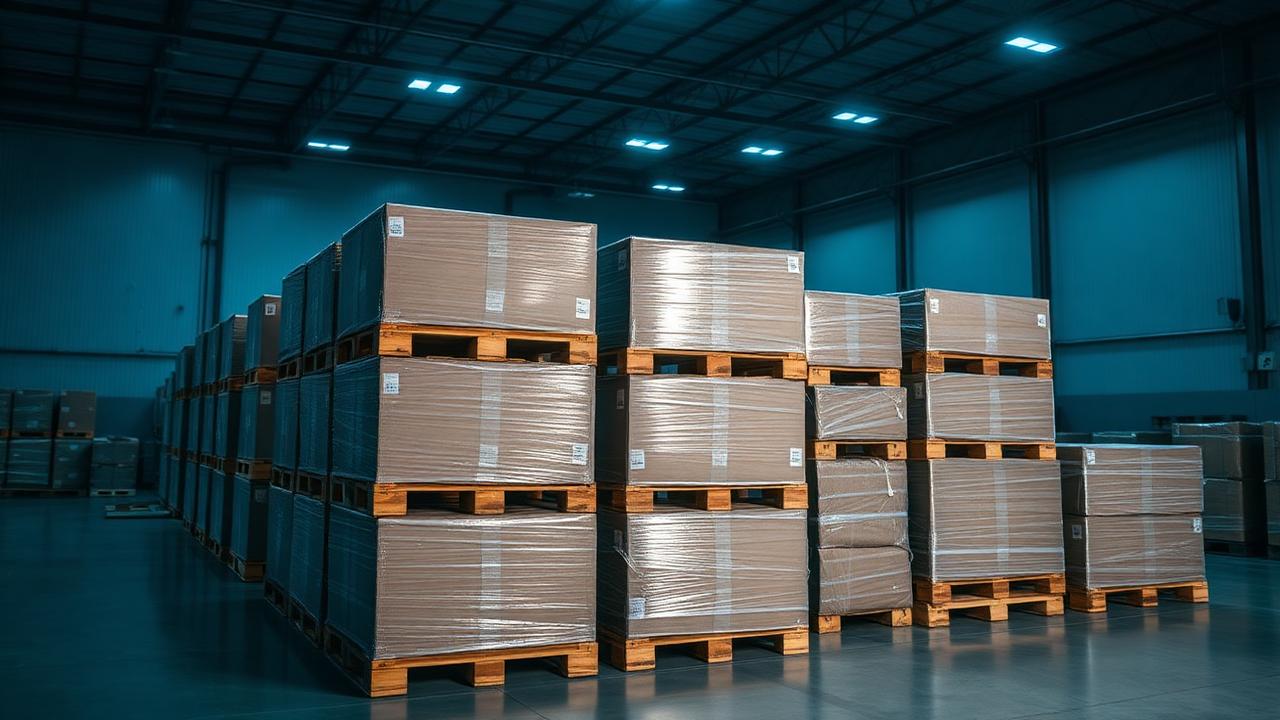
Three winters ago, a liftgate truck dropped a 48x48 customer-returns pallet from QuickLotz onto my driveway in freezing rain. The listing called it "Target Overstock Appliances," but what I pulled out was three cracked soundbars, six pairs of worn knockoff earbuds, and forty-two untested espresso machines missing their water reservoirs. We paid $1,150 including freight. We recouped $620 after 40 hours of cleaning, testing, and listing. We ate a $530 loss.
Learning how to make money with quicklotz pallets isn't about buying blindly and hoping for retail-ready stock. QuickLotz runs a massive operation out of Shelby, North Carolina, and Arlington, Texas, shipping everything from $50 mystery boxes to $15,000 unmanifested truckloads. Some buys will yield solid 40% net margins. Others leave you holding dozens of crushed brown boxes you cannot give away at a yard sale.
If you want to survive sourcing from this liquidator, you need cold math, a realistic channel strategy, and zero illusions about what customer returns actually look like.
Understanding the QuickLotz Inventory Model
QuickLotz operates differently than platforms like B-Stock or BULQ. While B-Stock hosts direct retailer auctions, QuickLotz acts as a massive aggregator and broker. They buy contract truckloads directly from big-box retailers, pull out specific high-value items, and repackage the rest into different tiers for resellers.
They sell across four main formats:
- Mystery Boxes: Small 10 to 30 lb boxes of loose shelf-pulls or returns. Designed for beginners or small-scale Mercari sellers.
- Single Pallets: Categorized lots (appliances, apparel, general merchandise) usually sold out of their North Carolina or Texas facilities.
- Case Packs: Unopened factory cases of single SKUs. High recovery, higher upfront cost.
- Unmanifested Truckloads: 24 to 26 pallets shipped direct from retailer regional distribution centers (RDCs).
The further down the chain you buy, the less control you have over individual item condition. Here is how those formats compare in practice.
| Format | Average Cost Basis | Manifest Accuracy | Best Resale Channel | Real Recovery Rate |
|---|---|---|---|---|
| Mystery Box | $50 - $150 | None | Mercari / Whatnot | 15% - 25% |
| Categorized Pallet | $600 - $1,400 | Low / None | eBay / Facebook Local | 25% - 35% |
| Overstock Case Packs | $800 - $2,500 | High (95%+) | Amazon / eBay | 45% - 65% |
| Unmanifested Truckload | $7,500 - $18,000 | None | Flea Market / Bin Store | 10% - 20% |
How to Make Money with QuickLotz Pallets: Sourcing Strategy
If you want to generate real profit from QuickLotz, forget mystery boxes. Mystery boxes are built for social media unboxing videos, not sustainable businesses. The margin gets eaten immediately by single-item shipping costs and low recovery rates.
Focus on categorized single pallets or case packs. To actually make money, you must factor in realistic recovery rates based on product type before hitting the buy button.
In the liquidation world, recovery rate is the percentage of total estimated retail value (MSRP) you will actually collect in gross sales. For customer return inventory, standard industry benchmarks look like this:
- Small Electronics: Expect 25% to 40% recovery. High defect rates, missing power cords, and heavy testing labor drag this down.
- Apparel: Expect 8% to 15% recovery. Fast fashion returns are frequently torn, missing tags, or stained.
- Power Tools and Hardware: Expect 30% to 45% recovery. Tool buyers are tolerant of cosmetic scratches if the motor runs.
- Home Goods & General Merchandise: Expect 20% to 30% recovery. Large items cost too much to ship, forcing you into lower-margin local sales.
Before bidding on an unmanifested lot, run a manifest analysis tool like PalletIQ if a basic manifest is provided, or build a historical projection table based on these recovery rates. If a pallet has $5,000 in nominal retail value in small appliances, do not calculate your profit on $5,000. Calculate it on $1,250 gross revenue.
Running the Math: A Real QuickLotz P&L Breakdown
Let's walk through an actual single-pallet transaction. This lot was purchased out of the QuickLotz Shelby, NC facility: a 48x48 pallet listed as "Small Kitchen Appliances Returns."
Purchase and Freight Costs
- Pallet Purchase Price: $850.00
- Base LTL Freight (320 miles): $215.00
- Residential Delivery Accessorial: $60.00
- Liftgate Accessorial Fee: $65.00
- Total Cost Basis: $1,190.00
Inventory Audit and Grading
The pallet arrived containing 38 total units. Here is how the inventory broken down after 8 hours of sorting, testing, and cleaning:
- Grade A (New/Open Box): 12 units (Ninja blenders, Instant Pots). Total estimated resale: $840.00.
- Grade B (Used/Working): 14 units (Keurigs, air fryers with minor scuffs). Total estimated resale: $560.00.
- Grade C (For Parts/Repair): 6 units (Food processors missing blades, broken bases). Total estimated resale on eBay: $150.00.
- Grade D (Trash/Scrap): 6 units (Cracked housings, burnt-out motors). Total resale: $0.00.
Total Gross Realized Sales: $1,550.00
Selling Fees and Outbound Shipping
We sold 20 items on eBay and 12 items locally via Facebook Marketplace for cash. On eBay, marketplace fees average ~13.25% plus a $0.30 fixed fee per order. Outbound shipping was subsidized by buyers on eBay, but shipping supplies cost an average of $2.20 per boxed item.
- Gross Resale Revenue: $1,550.00
- Less eBay Platform Fees: -$142.00
- Less Shipping Box/Bubble Wrap Supplies (20 shipped items): -$44.00
- Net Sales Revenue Collected: $1,364.00
Net Profit and Labor Calculation
- Net Revenue ($1,364.00) minus Total Cost Basis ($1,190.00) = $174.00 Net Profit
- Total Labor Hours (pickup, unboxing, cleaning, testing, listing, packing): 12 hours
- Effective Hourly Rate: $14.50 per hour
A $174 net profit on a $1,190 investment is roughly a 14.6% ROI. That is the cold reality of customer returns. If you don't screen your lots carefully or if freight spikes by $100, that margin turns into a loss instantly.
How to Make Money with QuickLotz Pallets Without Getting Burned
To raise that $14.50 hourly rate to $40 or $50 an hour, you must optimize your operations. You cannot process liquidation stock the same way you process clean retail arbitrage inventory.
Harvest Accessories Before Scrappers Get Them
Never throw away a Grade D broken appliance until you strip it. A broken Ninja blender base is worth $0. The lid, pitcher, and blade set sold separately on eBay will fetch $25 to $35. A Keurig with a dead heating element still holds a $12 water reservoir and a $10 K-cup holder pod. Harvesting parts transforms dead scrap into high-margin profit.
Match Items to the Right Channel
Do not list heavy, low-value items on eBay. Shipping a $25 toaster across country costs $14 in freight. By the time eBay takes its 13.25% cut, you made $4 for 20 minutes of work.
Use this simple channel routing model:
- High-value / Light weight (Electronics, handheld power tools): eBay or Mercari.
- Heavy / Low-value (Microwaves, air fryers, furniture): Local cash sales via Facebook Marketplace or OfferUp.
- New-In-Box Single SKUs (Case packs): Amazon FBA or eBay.
- Grade C / Damaged: eBay (listed specifically under "For Parts or Not Working").
Self-Pick Up Whenever Possible
If you live within a three-hour drive of Shelby, NC, or Arlington, TX, rent or buy a trailer. LTL freight with residential and liftgate accessorials adds $150 to $350 per pallet. Eliminating freight charges turns the worked P&L above from a $174 net profit into a $534 net profit on the exact same lot.
Where Resellers Lose Their Shirts
Understanding how this business fails saves more money than finding a great deal. Resellers go broke buying QuickLotz inventory for three specific reasons.
Freight Accessorial Shock
First-time buyers see a $600 pallet price tag and hit checkout. Then the freight carrier calls. If you live in a residential neighborhood and don't have a forklift or a loading dock, the carrier adds a residential delivery fee ($50-$100) and a liftgate fee ($50-$75). If your street is too narrow for a 53-foot sleeper, they tack on a limited-access charge ($30-$60). Suddenly your $600 pallet costs $950 before it even hits your driveway.
The Manifest Fallacy
QuickLotz offers both manifested and unmanifested inventory. Do not assume a manifest is an absolute guarantee. Manifests on liquidation lots are snapshots taken at retail distribution centers. They frequently contain item discrepancies, wrong model numbers, or miscounted quantities. Always build a 15% error margin into your initial purchase calculation.
Sunk Labor on Low-Value Testing
Spending two hours troubleshooting a $20 coffee maker is financial suicide. Set a strict 8-minute limit per unit. Plug it in. Does it power on? Does it heat up? If yes, wipe it down and list it as Grade B. If no, strip the removable parts and drop the chassis in the recycling bin. Your time is worth more than a refurbished $15 coffee pot.
Are QuickLotz mystery boxes worth buying for small resellers?
No. Mystery boxes are composed of residual inventory that couldn't be easily categorized or built into larger wholesale lots. High individual shipping costs and low resale values mean you will struggle to break even after marketplace fees. Stick to categorized pallets or local pickups.
How does QuickLotz handle shipping and freight costs?
QuickLotz ships via standard Less-Than-Truckload (LTL) carriers or flat-rate parcel depending on the lot size. Freight is calculated at checkout, but buyers are responsible for all additional accessorial fees like liftgates, residential delivery charges, and limited-access fees assessed by the carrier.
What is the average recovery rate on QuickLotz customer returns?
Across general merchandise and kitchen appliances, expect a real recovery rate of 25% to 35% of MSRP. Electronics average 25% to 40% due to higher parts value, while apparel yields much lower returns, often between 8% and 15% due to damage and missing tags.
The Final Math
Learning how to make money with quicklotz pallets requires shifting your mindset from retail seller to processing manager. You are not buying mint inventory; you are buying raw materials that require sorting, grading, and channel allocation. Protect your freight costs, harvest parts from broken units, route heavy goods to local buyers, and treat every manifest as a rough guide rather than absolute truth. That is how you turn distressed inventory into actual cash.
Pallet IQ Editorial Team
We buy, grade and resell liquidation pallets, then turn what we learn into the tools on Pallet IQ. Every guide here comes from real manifests, real bids and real sell through numbers.
Written August 8, 2026, last reviewed October 19, 2026