How to Make Money With Kohls Liquidation Pallets
Kohl's manifests look great on paper until you get hit with private-label apparel and heavy LTL fees. Here is how we break down lots and protect our profit margin.
By Pallet IQ Editorial Team
Published · Updated
 Resale Strategy
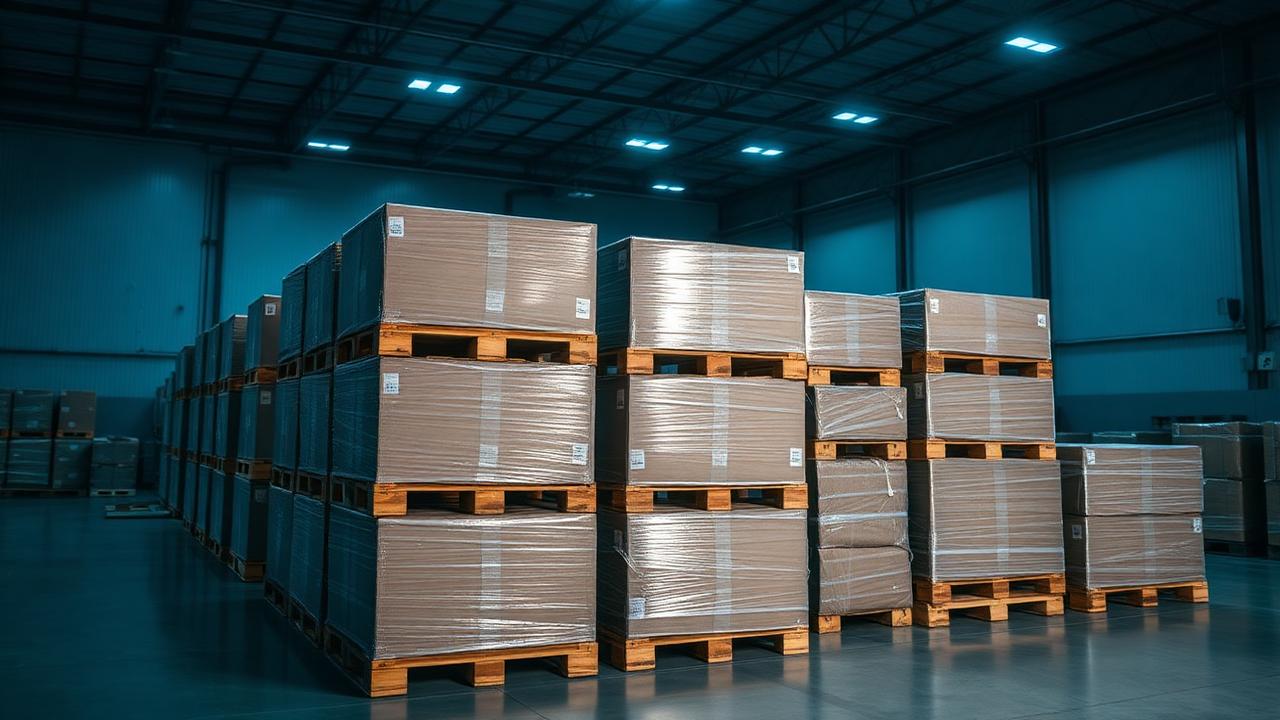
We unloaded three wooden skids off a box truck outside our garage back in November, smelling faintly of warehouse dust and crushed cardboard. The manifest claimed $14,200 in original store value. We paid $1,150 at auction plus $340 in LTL freight. Five hours into sorting, we realized half the load consisted of Sonoma polo shirts and worn-down Croft & Barrow slacks returned by customers after a full season of wear.
If you want to know how to make money with kohls liquidation pallets, you have to throw the store's original sticker prices out the window before your bid even registers on the portal.
Kohl's loads come in three main flavors: store returns, customer dot-com returns, and store clearance overstock. The mix dictates your recovery rate. Customer returns from Kohl's online store are often Grade A or B, items opened, looked at, and thrown back in the mail. Store returns, on the other hand, often border on Grade C or D. People return stained dresses, shoes with gravel stuck in the tread, and air fryers missing their crisping trays.
Small electrics like Ninja blenders, Keurig coffee makers, and Shark vacuums carry recovery rates between 30% and 45% of retail if intact. Apparel recovery drops off a cliff, usually landing between 8% and 15%. Why? Because Kohl's private-label brands like Apt. 9, Lauren Conrad, and Croft & Barrow hold almost zero resale value on secondhand marketplaces. Nobody is searching eBay for a pre-owned $12 Sonoma t-shirt. They are searching for Nike hoodies, Levi's jeans, and Columbia outerwear. If your pallet is heavy on store apparel brands, your effective yield will hover near thrift store wholesale pricing.
How to Make Money With Kohls Liquidation Pallets via Manifests
Never buy an unmanifested Kohl's pallet unless you are paying absolute scrap prices, under $150 per skid. When reviewing a manifest, ignore the retail MSRP column entirely. Create a new column in your spreadsheet titled True Market Value.
Take a 400-item manifest. Group items by category. For national brands, look up the active completed sales on eBay, filtering by used or open-box condition. A Keurig K-Mini that Kohl's lists at $99.99 regularly sells open-box on eBay for $38 to $44 with free shipping. For clothing, filter out the house brands and calculate apparel strictly on a flat per-piece basis, usually $2.00 to $3.50 per piece for soft goods if selling locally or in bulk bundles.
Using a manifest analysis tool like Pallet IQ helps automate this process by stripping out store-brand inflation and pulling real-time market data across multiple resale channels. If your calculated net market value does not exceed your total landed cost by at least 2.5x, walk away from the auction.
Freight, Accessorials, and Real Landed Costs
Your profit dies on the liftgate if you do not calculate shipping properly. LTL freight rates currently run anywhere from $0.80 to $2.50 per mile depending on fuel surcharges and lane density. But the base linehaul price is rarely what hits your credit card statement.
Liquidation platforms push accessorial charges onto small buyers. If your delivery spot is a residential garage rather than a commercial warehouse with a loading dock, add a $50 to $100 residential delivery fee. Need the driver to lower the pallet to the street? That liftgate fee costs another $50 to $75. If your facility sits in an area designated as limited access, like a farm, storage unit, or downtown alleyway, tack on an extra $30 to $60.
On a single pallet won for $600 out of a regional distribution center 400 miles away, freight fees can easily top $400. That bumps your true cost basis to $1,000 before you cut the shrink wrap.
Full P&L Breakdown: A 480-Piece Kohl's Mixed Lot
Let's walk through an actual manifest evaluation for a 480-piece mixed home and apparel lot originating from an Ohio distribution hub.
Landed Cost Structure:
- Winning Auction Bid: $850.00
- Buyer's Premium (10%): $85.00
- LTL Freight Linehaul: $210.00
- Residential & Liftgate Accessorials: $125.00
- Total Landed Cost Basis: $1,270.00
Manifest Yield Realities:
- 480 total units on manifest.
- 60 units (12.5%) are trash, heavily stained apparel, or broken appliances (Grade D).
- 220 units are private-label apparel (Sonoma, Apt 9). Sold in bulk lots on Mercari/Poshmark: $2.50 avg gross per piece = $550.00.
- 140 units are national brand apparel (Nike, Levi's, Under Armour). Sold individually on eBay: $14.00 avg gross per piece = $1,960.00.
- 60 units are small home/kitchen items (Ninja, Cuisinart, Toastmaster). Sold open-box on FB Marketplace/eBay: $22.00 avg gross per item = $1,320.00.
Gross Revenue Realized: $3,830.00
Marketplace Selling Fees & Logistics:
- eBay / Poshmark platform fees (~13.25% + $0.30 per order across 180 orders): $560.00
- Outbound shipping costs (where subsidized or included): $420.00
- Packaging supplies (boxes, tape, polymailers): $75.00
- Net Revenue After Selling Expenses: $2,775.00
Final P&L Calculation:
- Net Revenue: $2,775.00
- Total Landed Cost: -$1,270.00
- Net Profit: $1,505.00
- Return on Investment (ROI): 118.5%
Decision: Buy. The high ratio of national brand apparel and intact small electrics compensates for the high private-label garment count.
Kohl's Pallet Manifest Types Compared
| Inventory Condition | Typical Recovery Rate | Sorting Labor Required | Primary Resale Channels |
|---|---|---|---|
| Customer Returns (Dot-Com) | 30% - 45% | Low to Moderate | eBay, Mercari, Poshmark |
| Store Returns (RDC Mixed) | 15% - 25% | High | Local Flea Market, FB Marketplace, Whatnot |
| Shelf Pulls / Overstock | 35% - 50% | Low | Poshmark, FB Marketplace, Yard Sales |
How to Make Money With Kohls Liquidation Pallets Across Channels
You cannot dump an entire Kohl's skid onto a single marketplace and expect high margins. Tailor your channel to the goods.
Put small appliances on Facebook Marketplace for cash pick-up. You skip shipping headaches, avoid the 13.25% eBay fee, and eliminate return threats from buyers who claim an air fryer smells like old fries. Price items at 50% of current Kohl's retail for quick movement.
Move national brand apparel to Poshmark and eBay. Take clear photos of brand tags, care tags, and any flaws. Cross-list Nike and Levi's items using listing software to double your surface area.
Group house-brand garments into mystery boxes or size-specific bundles. A lot of five women's medium Sonoma long-sleeve tops listed for $20 on Mercari moves significantly faster than single listings while keeping per-order shipping labels manageable.
How This Goes Wrong: The Kohl's Store Return Trap
The biggest failure mode in Kohl's liquidation is the labor trap.
You buy a pallet containing 500 clothing items for $500. It feels like a steal at $1 a piece. Then you open the boxes. Every sweater requires a 5-minute inspection for snags, deodorant stains, and missing buttons. Each piece needs steam cleaning, photo staging, measurements, and draft creation.
If your total labor cost is $15 an hour and you spend 40 hours processing low-margin Sonoma tops that sell for $6 each on Poshmark, yielding $2 net after fees and shipping, you are paying yourself less than $2 an hour for backbreaking work. The pallet turns a paper profit while burning out your operations. If a lot requires 20 hours of garment processing to yield $300 in profit, you are losing money compared to taking on higher-ticket kitchen items.
When learning how to make money with kohls liquidation pallets, treat every truckload like a raw material buy rather than a treasure chest. Calculate freight down to the penny, discount house brands to zero, and price your labor into every listing. That is how you turn crushed boxes into real bank deposits.
What grade are most Kohl's liquidation pallets?
Most uninspected Kohl's return loads are Grade B/C. You should expect around 10% to 15% unsellable or heavily damaged goods, 50% functional store-brand items with low resale value, and 35% high-margin national brands or operational small appliances.
Can I sell liquidated Kohl's items on Amazon?
Selling liquidated goods on Amazon as brand new is extremely risky due to strict ungating requirements, brand authorization rules, and authentic invoice checks. Most Kohl's return inventory is best listed as Used - Like New or Open Box on eBay, Mercari, or local marketplaces.
Where do buyers source official Kohl's liquidation lots?
Official Kohl's liquidation lots appear on major liquidation auction platforms such as B-Stock, Direct Liquidation, and Liquidation.com. Always verify seller ratings, manifest details, and ship-from locations before placing a bid.
Pallet IQ Editorial Team
We buy, grade and resell liquidation pallets, then turn what we learn into the tools on Pallet IQ. Every guide here comes from real manifests, real bids and real sell through numbers.
Written August 23, 2026, last reviewed October 19, 2026