How to Make Money with Electronics Liquidation Pallets
A veteran reseller breaks down real P&L math, testing workflows, freight traps, and how to avoid buying expensive electronic trash.
By Pallet IQ Editorial Team
Published · Updated
 Reseller Strategy
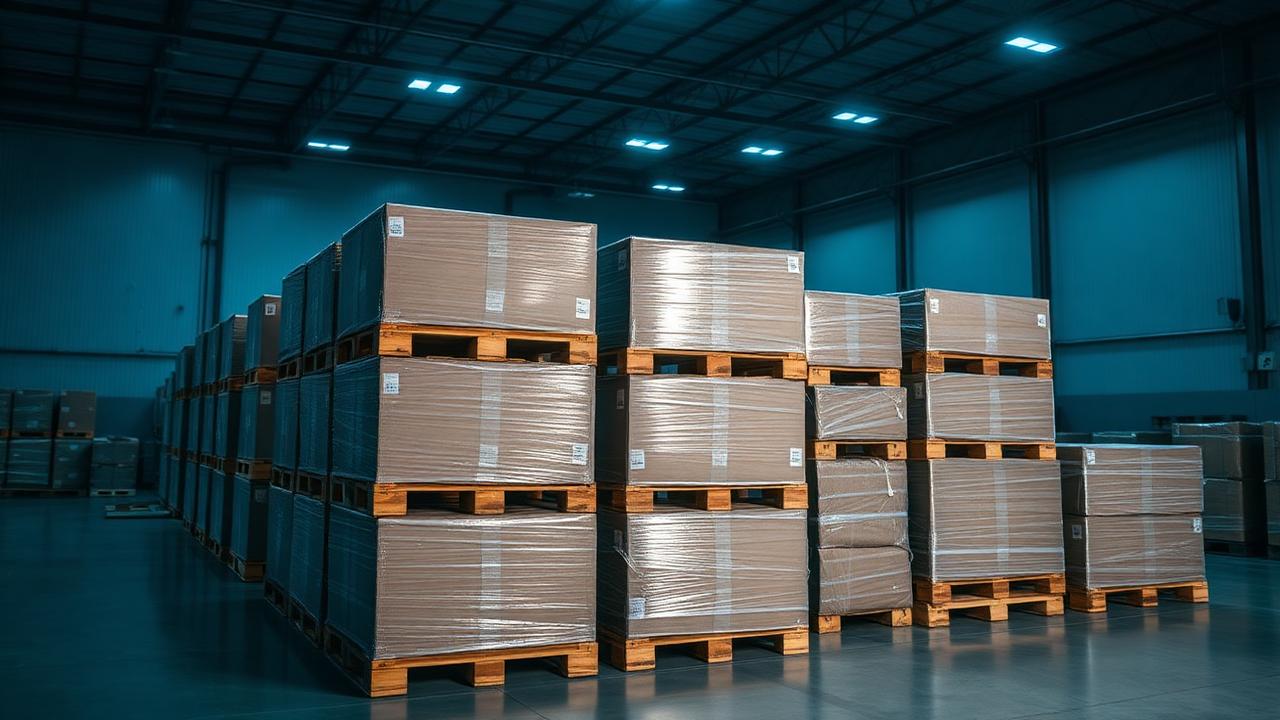
The driver backed his 53-foot trailer down my driveway at 7:30 AM on a humid Tuesday, blocking neighborhood traffic while his air brakes hissed. On his pallet jack sat a 700-pound stack of black stretch wrap labeled "Mixed Audio & Portable Tech, Target Return RDC Charlotte." I paid $1,120 at auction plus $355 in freight and accessorials. Inside were 38 consumer electronics items that someone else decided were broken, unwanted, or missing a cord. If you want to know how to make money with electronics liquidation pallets, you have to love this exact moment: standing over a wooden skid with a box cutter, knowing half of what you bought might be junk, but the remaining half holds a four-figure net profit if you test fast and price accurately.
Electronics aren't apparel. A t-shirt missing its tag is still a t-shirt. A $400 Vizio soundbar missing its proprietary wireless subwoofer card is an expensive doorstop.
The Hard Numbers of Tech Returns
The baseline math for customer return tech is strict. Across major retailer contracts, think Target, Amazon, Best Buy, and Walmart, recovery rates for consumer electronics sit between 25% and 40% of original retail MSRP when sold across secondary channels like eBay, Mercari, or local Facebook Marketplace. If a pallet has a total retail value of $10,000, you will rarely collect more than $2,500 to $4,000 in gross revenue, regardless of what the manifest claims.
That means your landed cost basis, purchase price plus every dime of shipping, cannot exceed 12% to 18% of the manifest MSRP if you want a healthy margin.
Let's break down the shipping costs that quietly eat resellers alive:
- Base LTL Freight: Expect $0.80 to $2.50 per mile depending on fuel surcharges and lane density.
- Residential Delivery Fee: Carriers charge $50 to $100 just to pull a full-size rig into a residential neighborhood.
- Liftgate Accessorial: If you do not have a commercial loading dock or forklift, tack on another $50 to $75 for the hydraulic gate.
- Limited Access Charge: $30 to $60 extra if your spot is classified as a home business or rural route.
If you win a lot for $600 thinking you got a steal, but freight lands at $420, your cost basis just jumped by 70%.
Condition grading determines your speed to cash:
- Grade A/B (Open Box / Shelf Pull): Unit powers on, retains original packaging or clean generic packaging, all accessories present. Expect 50% to 65% of current street price on eBay.
- Grade C (Used / Cosmetic Flaws): Scratched housing, missing generic power cord, functional but heavily worn. Expect 30% to 45% of street price.
- Grade D (Salvage / Parts Only): Cracked LCD screen, dead logic board, or account locked. Value sits at 10% to 15% to hobbyist repair techs.
The Math of How to Make Money with Electronics Liquidation Pallets
Let's run through an actual manifest cleared out of a Charlotte regional distribution center.
Here is the exact financial breakdown of a 38-unit consumer tech pallet:
Landed Cost Basis
- Auction Hammer Price: $1,120.00
- Base LTL Freight (320 miles): $240.00
- Residential Accessorial: $65.00
- Liftgate Service: $50.00
- Total Landed Cost: $1,475.00
Inventory Audit & Testing Yield
- 22 units Grade A/B (Fully functional Nintendo Switch consoles, Sony headphones, JBL speakers): Sold for $2,850.00 gross.
- 9 units Grade C (Soundbars missing remotes, tablet with micro-scratches, router needing factory reset): Sold for $680.00 gross.
- 7 units Grade D (Two iCloud locked iPads, three dead power-supply AV receivers, two smashed earbuds): Grouped into a single "For Parts" lot on eBay, sold for $190.00 gross.
Gross Resale Total: $3,720.00
Fees & Outbound Logistics
- Marketplace Fees (eBay ~13.25% + $0.30 per order, Mercari 10% mix): $502.20
- Outbound Shipping Subsidies & Packing Supplies: $280.00
- Net Payout from Platforms: $2,937.80
Final Profit Calculation
- Net Payout ($2,937.80) minus Total Landed Cost ($1,475.00) = $1,462.80 Net Profit
- Return on Investment (ROI): 99.1%
- Processing Time: 14 total hours (manifest audit, bench testing, cleaning, listing, packing).
- Effective Hourly Wage: ~$104.48/hour.
Notice what made this lot work. It wasn't the seven dead units. It was pricing the lot so that the 22 fully functional units paid off the landed freight and purchase price twice over before a single Grade C item shipped out.
Manifest Red Flags When Learning How to Make Money with Electronics Liquidation Pallets
Not all manifests are honest. Retailers use "Original MSRP" from three years ago to pad manifest totals. A smart buyer runs every manifest through a manifest analysis tool like Pallet IQ or builds a strict validation spreadsheet before putting down a deposit.
Look out for these four manifest tricks:
- Phantom MSRPs: A 2019 mesh Wi-Fi router listed with a $399 original MSRP might sell new on Amazon right now for $89. Always pull current eBay sold comps, not historic MSRP.
- High-Value Accessory Stripping: A drone listed at $800 retail without its controller or battery pack is worth $120 max. If the manifest says "Unit Only," drop your valuation by 70%.
- Software Locks: Modern tech returns are littered with Apple ID, Google FRP (Factory Reset Protection), and Amazon Sidewalk locks. Liquidators do not test for these. Assume 15% to 20% of tablets and smartwatches are account locked.
- Heavy Unmanifested Batches: If a listing reads "Mixed Electronics Pallet - Unmanifested," you aren't buying retail returns. You are buying the stuff three other resellers already sorted through and rejected.
| Sourcing Channel | Average Cost (% MSRP) | Testing Labor Required | Risk Level |
|---|---|---|---|
| Direct Retail Auctions (B-Stock Direct) | 15% - 25% | Moderate (Fully Manifested) | Medium |
| Wholesale Brokers / Middlemen | 20% - 35% | High (Often Pre-Sorted) | High |
| Local Warehouse / Unmanifested Skids | 8% - 15% | Extreme (High Salvage Ratio) | Very High |
Direct auctions require a resale certificate and quick cash reserves, but you get un-manipulated loads straight from distribution centers. Wholesale brokers often buy those same truckloads, pull the high-margin iPhones or gaming laptops out for themselves, and re-strap the rest of the pallet for small buyers. Avoid brokers unless they offer ironclad manifest guarantees.
Bench Protocols: Testing Speed Is Your Defensive Moat
Speed is your only defensive moat when flipping tech returns. If you spend 45 minutes diagnosing a $30 Bluetooth earbud, you are losing money every minute your soldering iron sits hot.
Build a standardized 10-minute bench testing station:
- Universal Power Supply: Keep adjustable DC power supplies, multi-tip AC adapters, USB-C power meters, and Lightning cables hooked up permanently.
- Thermal Camera / Power Meter: An inline USB power meter tells you instantly if a dead tablet is drawing amps or has a blown charging port circuit.
- Display & Audio Station: A test monitor with HDMI, Optical, and AUX inputs allows you to cycle through soundbars and streaming boxes in under two minutes.
- Factory Reset USB Drives: Keep flash drives loaded with clean OS installers for Windows 10/11 and macOS ready to plug in.
If an item requires more than a simple factory reset, port cleaning, or generic cable replacement, set it aside in the "Parts Lot" bin immediately. Do not get stuck in the repair hole unless you run a dedicated board-level repair shop.
The Failure Mode: The Missing Dongle Cascade
The most dangerous trap in consumer electronics liquidation is the missing dongle cascade.
It works like this: You buy a lot of 15 premium gaming headsets listed at $150 retail each. Total manifest value is $2,250. You land the lot for $350. You tear open the boxes and find all 15 headsets look pristine, zero scratches, original plastic intact. You think you just hit a 400% ROI.
Then you start testing. Every single headset requires a proprietary 2.4GHz USB wireless dongle to connect to a PC or console. None of the boxes contain the dongle.
You jump on eBay to buy replacement dongles. They cost $28 each on the secondary market because every liquidated unit is missing the exact same piece. Suddenly, you have to spend $420 in parts just to make your $350 pallet functional. Your profit vanishes, replaced by 15 individual shipping labels and negative feedback from buyers whose dongles fail to pair.
The lesson is brutal: never bid on wireless audio, specialized PC peripherals, or modular home theater systems assuming the box contains everything required to turn the device on. If the manifest doesn't explicitly state "Complete in Box," price every unit as if the proprietary accessories are gone.
Knowing how to make money with electronics liquidation pallets boils down to discipline over excitement. You cannot fall in love with the high MSRP numbers printed at the top of a manifest PDF. Treat every lot like a cold financial ledger: subtract 60% of the retail price immediately, deduct $350 for freight and accessorial fees, factor in a 20% dead-on-arrival rate, and then ask yourself if the remaining net payout gives you a real hourly rate. When the math checks out, hit bid. When it doesn't, let another reseller pay to haul away the retailer's trash.
What is the average recovery rate on electronics liquidation pallets?
Expect to net between 25% and 40% of original manifest MSRP in gross sales. High-demand items like current-gen video game consoles or Apple hardware can reach 50% to 60%, while obscure audio gear, landline phones, or legacy accessories often recover under 15%.
Do I need an electronics repair background to flip tech returns?
No. Around 70% of profitable tech flips require basic cleaning, factory resets, cord replacements, or generic box repackaging. For items requiring circuit board repair or screen replacements, most successful resellers sell them as "For Parts / Repair" in bundles rather than spending hours fixing them.
How do I handle locked devices like iPhones or iPads from liquidation?
If a device has an active iCloud lock, Google FRP lock, or BIOS password that cannot be cleared through official seller documentation, do not attempt bypass software that violates marketplace terms. Sell the unit clearly labeled as "Account Locked - For Parts Only" on eBay. Repair shops buy these for original housings, camera modules, and flex cables.
Pallet IQ Editorial Team
We buy, grade and resell liquidation pallets, then turn what we learn into the tools on Pallet IQ. Every guide here comes from real manifests, real bids and real sell through numbers.
Written August 22, 2026, last reviewed October 19, 2026