How to Inspect QuickLotz Pallets Before You Bid
Unmanifested mystery lots look tempting until you pay $200 in freight for broken air fryers. Here is the exact process I use to inspect QuickLotz inventory before making an offer.
By Pallet IQ Editorial Team
Published · Updated
 Liquidation Sourcing
Two years ago, I bought a mystery box lot out of North Carolina. Paid $450 base price plus $175 for freight. When the pallet hit the warehouse floor, half the shrink wrap was torn, two boxes were crushed corner-to-corner, and 40% of the payload turned out to be open-box tech with missing power cables. Knowing how to inspect quicklotz pallets before your capital leaves your account is the difference between clearing $600 net profit and paying $200 to haul trash to the dump.
QuickLotz is one of the most accessible suppliers in the secondary market, but accessibility is a double-edged sword. Unlike enterprise auction portals such as B-Stock where tier-one retail contracts come with full line-item manifests, QuickLotz mixes fully manifested lots with unmanifested mystery mystery boxes and store-closeout mystery pallets. If you bid blind on their platform, you are playing high-stakes poker against retail store return departments.
Here is how experienced buyers evaluate QuickLotz inventory, spot hidden damage through lot photos, run the actual unit economics, and protect cash flow on unmanifested inventory.
Manifested vs Mystery: How to Inspect QuickLotz Pallets by Lot Type
QuickLotz inventory generally falls into three buckets: fully manifested pallets, partially manifested mystery boxes, and completely unmanifested bulk loads. How you inspect a listing depends entirely on which bucket you are looking at.
For manifested lots, your job is verifying MSRP claims and checking unit density. Suppliers often list total retail value based on original sticker prices from two years ago, ignoring present market value. Before placing a bid, pull the raw CSV list and copy it into a automated manifest analyzer. You want to check three metrics immediately:
- Average item value across the lot.
- Heavy-to-light ratio (large appliances vs small shippable items).
- Brand concentration (high-demand recognizable labels vs generic import white-label goods).
If a $1,200 pallet contains 180 units of $6 phone cases, your per-item processing overhead will destroy your margin. If that same $1,200 pallet holds 14 working Ninja blenders and DeLonghi espresso machines, your inventory velocity will be high enough to make up for minor cosmetically damaged packaging.
When dealing with unmanifested mystery lots, standard line-item analysis disappears. You are forced to rely on visual inspection of the outer pallet photos, category descriptions, and warehouse origin points. According to NRF returns research, retail return rates hit nearly 14.5% across total sales, with electronics seeing higher defect rates than apparel. Assume every unmanifested box holds a baseline 25-30% unsellable rate, and bid accordingly.
Five Red Flags When You Inspect QuickLotz Pallets Online
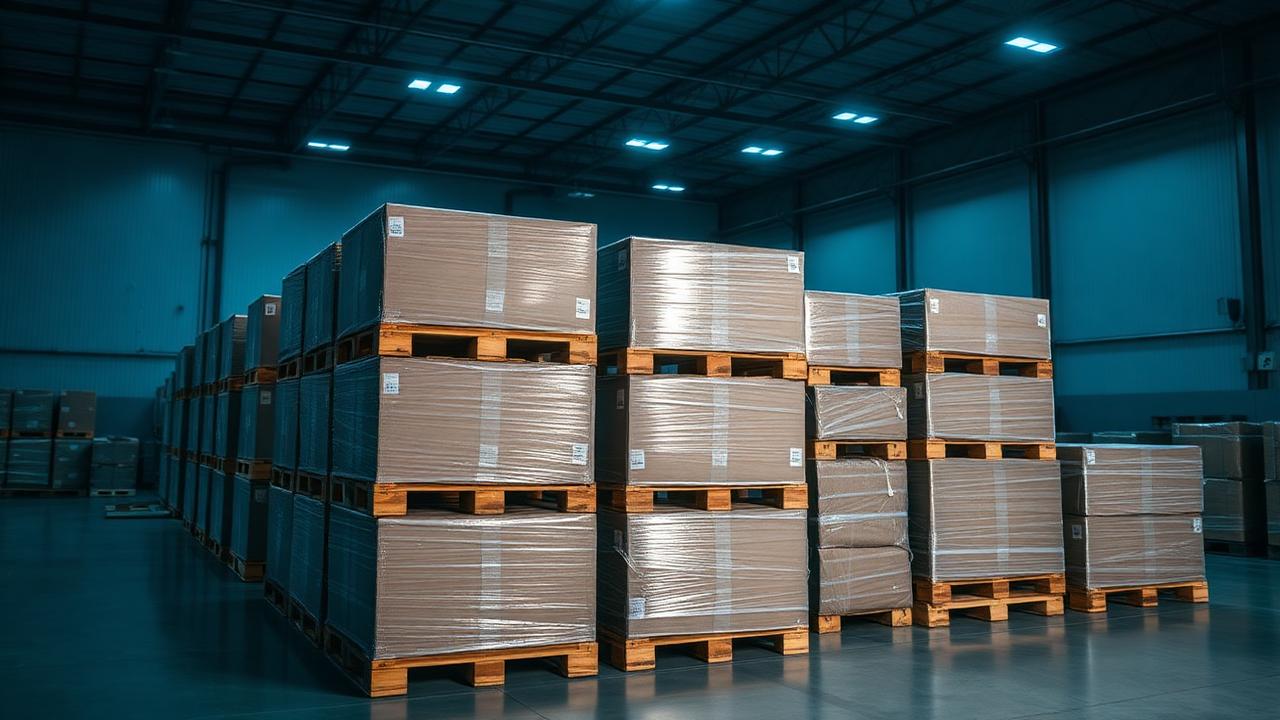
Photos are your primary diagnostic tool. Liquidation operations process hundreds of loads weekly, so their staging photography is fast and functional. That works to your advantage if you know what details to look for in the listing imagery.
1. Bulging or Soft Shrink Wrap
When shrink wrap looks slack, stretched, or doubled up with clear tape, someone has opened that pallet since it arrived from the retail return center. Loose wrapping often means loose items inside, which leads to shifting and breakage during transit across state lines.
2. Double-Taped Original Boxes
Look closely at the retail packaging shown on the outer edge of the pallet. A single strip of factory tape means new or overstock condition. Multiple layers of clear packing tape, yellowing retail inspection stickers, or torn security seals signal customer returns that have passed through at least one return processor already.
3. Missing Pallet Footprint Alignment
Boxes should sit flush within the perimeter of the wooden pallet base. When cartons overhang the wooden edge by more than an inch, freight carriers squeeze them together inside trailers. Overhanging edges mean crushed corners and broken internal plastic housings on small home appliances.
4. Vague Category Staging
If a listing is titled "Target Mixed Housewares" but the top visible layer consists entirely of generic pillows, bedding, and broken plastic storage bins, do not expect high-end kitchen electronics hidden in the center. Resellers call this top-stacking, where attractive or bulk items cover lower-value inventory inside.
5. Suspiciously Low Piece Counts
High total weight combined with low piece count on small items usually indicates heavy, low-margin freight. If a 450-pound mixed housewares pallet lists only 18 units, you are likely looking at heavy furniture components, exercise weights, or bulky ceramic goods that carry high parcel shipping costs relative to resale value. You can check expected shipping friction using a shipping cost calculator.
The Full Math: P&L on a $550 QuickLotz Appliance Load
Never bid based on the claimed estimated retail value listed on the lot page. Always calculate your maximum bid ceiling using real secondary market resale prices, marketplace fees, and incoming freight fees. Check the basic definitions in our liquidation glossary if you are unfamiliar with accessorial charges.
Here is a real P&L breakdown for a 36-unit small appliance lot purchased out of a regional facility.
- Winning Bid: $550.00
- LTL Freight (340 miles, residential delivery, liftgate service): $185.00
- Pallet Cost Basis: $735.00
- Average Cost Per Unit ($735 / 36 units): $20.41
Now look at expected yield after grading and testing:
- 22 units test working, Grade A/B (listed on eBay/Mercari): average resale $48.00 = $1,056.00 gross revenue
- 6 units test working, Grade C/D (cosmetic damage, sold on Facebook Marketplace): average resale $25.00 = $150.00 gross revenue
- 4 units missing parts/sold for repair: average resale $15.00 = $60.00 gross revenue
- 4 units scrapped/completely dead: $0.00 revenue
- Total Gross Revenue: $1,266.00
Subtract operating expenses:
- Gross Revenue: $1,266.00
- Marketplace fees (using an average 13.25% take rate via eBay seller fees): -$167.25
- Outbound shipping subsidies (offering competitive rates to buyers): -$140.00
- Total Net Revenue: $958.75
- Total Cost Basis (Pallet + Freight): -$735.00
- Net Profit: $223.75
- Net ROI: 30.4%
Plug your own lot numbers into a pallet ROI calculator to see your exact break-even point before entering the auction. If that incoming freight cost rose by $75 due to limited-access surcharges, your profit on this load drops below $150, making 20-30 hours of testing and listing work questionable.
QuickLotz Pallet Grade Comparison
Understanding how different condition tiers yield capital recovery keeps your expectations grounded before bidding.
| Grade Tier | Expected Working Rate | Primary Resale Channels | Typical Recovery Rate | Recommended Bid Ceiling |
|---|---|---|---|---|
| Brand New Overstock | 95-98% | Amazon, eBay, Shopify | 40-55% of MSRP | Up to 25% MSRP |
| Customer Returns (Manifested) | 65-75% | eBay, Mercari, Local | 25-35% of MSRP | Up to 12% MSRP |
| Unmanifested Mystery Boxes | 50-65% | Facebook Marketplace, Poshmark | 15-25% of MSRP | Up to 8% MSRP |
| Scratch & Dent / Salvage | 30-40% | Local Cash-and-Carry, Parts Resale | 10-18% of MSRP | Up to 5% MSRP |
If you sell heavily through local channels like Facebook Marketplace, your fee burden drops, but your customer footprint stays tied to your local population. For national shipping, run every candidate lot through a marketplace fee calculator so platform fees do not wipe out your margin on heavy items.
Where QuickLotz Inspections Fail: The Blind Box Trap
The single biggest mistake new buyers make on QuickLotz is treating unmanifested mystery mystery boxes like manifested overstock pallets. When you purchase an unmanifested lot, you take on 100% of the sorting risk.
A typical failure pattern looks like this: A reseller wins an unmanifested 500-piece apparel mystery lot for $600. Freight adds $200. Total cost basis sits at $1.60 per piece. Sounds great on paper. But upon opening, 200 items are plain unbranded tank tops worth $3 each, 150 items are out-of-season closeout stock in extreme sizes (3XL or XS), 100 items have pulled threads or missing tags, and only 50 items are high-demand name brands.
Processing 500 individual clothing items takes roughly 25 hours of measuring, photo prep, and listing time. If you use a tool like a listing generator, you cut listing friction in half, but you still must store and pick those low-margin items. The holding cost and labor drain kill your account velocity.
If you suspect an unmanifested lot contains low-tier apparel or dense general merchandise, step back and consult a comprehensive buying decision guide before placing a bid.
Final Checklist Before Placing a Bid
Run through this quick checklist right before committing your capital on any listing:
- Calculate freight cost first, including liftgate ($50-$75) and residential delivery ($50-$100) fees.
- Use a pallet calculator to set your absolute max bid ceiling and stick to it.
- Zoom in on high-resolution listing photos to spot crushed carton corners and loose shrink wrap.
- Divide total cost (bid + freight) by unit count to find your true per-unit cost basis.
- Deduct 25% of total units as unsellable trash or parts-only stock on customer return lots.
- Verify that your local market or online storefront has room for the inventory volume.
Learning how to inspect quicklotz pallets requires discipline over optimism. When you analyze the photos closely, calculate freight before bidding, and factor in mandatory defect rates, you build a repeatable liquidation business that turns surplus inventory into predictable cash flow.
Can you inspect QuickLotz pallets in person before buying?
Yes, if you visit one of their regional warehouse facilities or retail liquidator locations, you can conduct visual inspections of available lots. Inspect outer packaging integrity, check for intact seal tape, and verify box counts against the warehouse lot sheet before paying.
Are QuickLotz mystery boxes worth buying for new resellers?
Mystery boxes are high-risk for beginners because they lack manifest data. They work best for established resellers with local cash-and-carry retail outlets or yard sales where low-value items can sell fast for $2-$5 without shipping overhead and platform fees.
What is the average recovery rate on QuickLotz return pallets?
Customer return pallets generally yield a 25-35% recovery rate relative to original retail MSRP, depending heavily on product category. High-end tools and small appliances hit higher recovery rates, while generic unbranded apparel and open-box electronic accessories trend lower.
Pallet IQ Editorial Team
We buy, grade and resell liquidation pallets, then turn what we learn into the tools on Pallet IQ. Every guide here comes from real manifests, real bids and real sell through numbers.
Written November 3, 2026, last reviewed November 16, 2026