How to Inspect Liquidation.com Pallets Before Bidding
Manifests lie by omission. Here is how we dissect real Liquidation.com listings, calculate true lot recovery, and catch hidden salvage traps before spending a dime.
By Pallet IQ Editorial Team
Published
 Sourcing Strategy
Three years ago, I won a 48-unit home goods lot off Liquidation.com for $420 out of a regional warehouse in Garland, Texas. The photos showed neat boxes of pressure cookers and cordless vacuums. The listing cataloged them as standard customer returns. What arrived at my warehouse was a mess: smashed retail display units, four gutted stick vacuums missing motors, and six empty retail boxes packed with crumpled brown packing paper. After paying $285 in LTL freight plus a residential liftgate fee, I barely recovered $310 total after fees.
That loss taught me that learning how to inspect liquidation com pallets is not an optional skill. It is the single line between running a profitable resale operation and operating an expensive garbage disposal business.
How to Inspect Liquidation com Pallets by Spotting Manifest Red Flags
When you open an auction listing on Liquidation.com, the attached manifest CSV looks precise. It lists retail prices, model numbers, and quantity counts down to the exact unit. However, total declared retail prices (MSRP) are anchor numbers. They exist to make a $1,200 bid look like an obvious bargain on a $10,000 lot.
Start your inspection by auditing item descriptions. Watch out for vague line items such as "Assorted Electronics" or "Mixed Household Merchandise" that lack model numbers or UPC codes. When manifest rows omit specific part numbers, pass the raw data through a manifest analyzer to project true resale market values rather than trusting original MSRP tags.
Pay close attention to condition codes. Liquidation.com uses established grading labels, but warehouse workers interpret those labels with wide variance:
- Customer Returns (Grade C/D): Untested by definition. Expect 25-35% of the payload to be complete scrap, missing key accessories, or broken internally.
- Overstock and Shelf Pulls (Grade A/B): Retail excess, seasonal clearance, or packaging changes. Packaging may show sticker residue, but 85-95% of the items are immediately ready for resale.
- Salvage (Grade D/F): Heavily damaged, stripped for parts, or crushed during distribution transit. Only buy if you operate a repair shop or part-out business.
If you encounter unfamiliar lot shorthand like NRFB (Never Removed From Box) or BER (Beyond Economical Repair), check our liquidation glossary before committing your capital.
Core Steps on How to Inspect Liquidation com Pallets
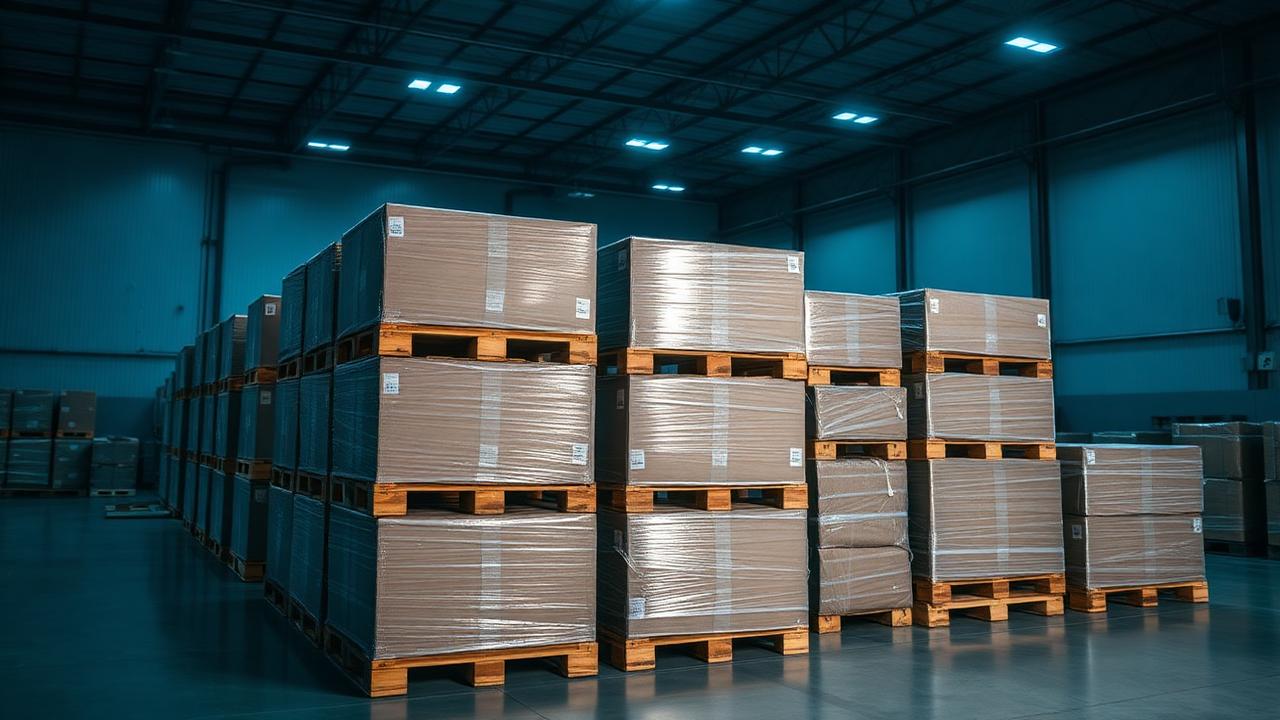
Photos reveal what manifests gloss over. Liquidation.com listings typically feature three to six high-resolution pictures of the wrapped pallet sitting on a warehouse floor.
First, examine the stretch wrap style and tightness. Clear, machine-applied stretch wrap with original retail security tape usually signals that the pallet was built at a store return center and left untouched. In contrast, loose hand-applied shrink wrap wrapped around multiple layers of bright yellow tape indicates local warehouse staff opened the pallet, picked out high-value items, and re-wrapped the remaining scrap.
Second, check box corner crushed states. Heavy boxes stacked directly on top of soft retail packaging mean broken internal components. Crushed boxes force you to downgrade item condition on channels like Mercari or Amazon from Like New to Used Acceptable, stripping 20-30% off your gross margin.
Third, calculate average piece weight. If a manifest lists 120 items but total lot shipping weight is recorded at 40 lbs, the average item weighs under six ounces. You are paying freight on tiny phone cables, cheap replacement filters, or low-margin accessories, not valuable small appliances.
Matching Lot Condition Grades to Resale Recovery Rates
Industry data demonstrates that recovery rates vary significantly across product categories. Consumer electronics generally recover 25-40% of original MSRP, apparel brings 8-15%, and power tools deliver 30-45%.
Evaluating how condition grades convert to cash on secondary channels requires a realistic recovery framework:
| Condition Grade | Expected Defect Rate | Average Recovery % | Primary Resale Channel |
|---|---|---|---|
| Brand New / Overstock | Under 5% | 45-65% | Amazon, eBay |
| Shelf Pulls | 5-15% | 35-50% | eBay, Poshmark |
| Customer Returns | 25-40% | 20-35% | eBay, Facebook Marketplace |
| Salvage / Damaged | 50-80% | 5-15% | Local Parts / Scrap |
Understanding lot conditions requires discounting the raw catalog value and projecting yield based on net sellable units.
Calculating True Delivered Cost with Freight and Marketplace Fees
Winning an auction bid at $350 does not mean your cost basis is $350. Liquidation.com calculates freight based on origin warehouse zip codes and your destination address.
Common freight accessorial charges that erode your profit:
- Base LTL line-haul rate: $0.80 to $2.50 per mile depending on regional fuel surcharges.
- Liftgate service charge: $50 to $75 if your delivery point lacks a dock or forklift.
- Residential delivery fee: $50 to $100 for non-commercial addresses.
- Limited access surcharge: $30 to $60 for storage units, rural sites, or downtown locations.
Before placing your bid, look up carrier baseline rates through services like FedEx Freight. Combine those freight estimates with platform selling costs like eBay seller fees (which average 13.25% plus $0.30 per sale) using a marketplace fee calculator to establish an absolute maximum bid limit.
Real-World P&L Analysis: 60-Unit Small Appliance Lot
Let's work through a full financial breakdown of a 60-unit customer return lot coming out of a facility in Plainfield, Indiana.
Lot Sourcing Costs:
- Winning Auction Bid: $450.00
- Liquidation.com Buyer's Premium (10% standard fee): $45.00
- LTL Line-Haul Freight (310 miles): $185.00
- Liftgate & Residential Accessorials: $110.00
- Total Delivered Cost Basis: $790.00
Product Yield & Revenue Breakdown:
- Total Manifested Units: 60 units
- Complete Trash / Unsellable (30% defect rate): 18 units ($0 revenue)
- Minor Defect / Parts Only (12 units sold at $15 average): $180.00
- Tested Working Good Condition (30 units sold at $38 average): $1,140.00
- Total Gross Resale Revenue: $1,320.00
Fees and Net Profit:
- Resale Channel Fees (eBay 13.25% + $0.30 across 42 sold orders): $187.50
- Outbound Customer Shipping Subsidies: $140.00
- Net Collected Revenue: $992.50
- Net Cash Profit ($992.50 net revenue minus $790.00 cost basis): $202.50
- Total Return on Investment: 25.6% ROI
Running these numbers through a pallet ROI calculator prior to bidding proves that even with 18 completely dead units, the lot makes money because the bid cap was fixed at $450. Bidding $650 under the assumption of zero defects would have resulted in an instant net loss.
The Accessories Inflation Trap and How Inspections Fail
The most frequent mistake buyers make when analyzing lots is falling for piece-count padding. Sellers sometimes inflate piece counts by listing individual items as multiple separate components.
For example, a single cordless power tool kit might be entered as six line items: tool body, primary battery, secondary battery, battery charger, plastic carrying case, and instruction manual. If the tool body is missing or broken, you are left holding five low-value accessories worth under $15 combined.
Always sort manifest data by estimated retail value before bidding. If 75% of the total lot value rests in five premium appliances out of an 80-item manifest, inspect those five items with extreme care. If photos show damage on those core units, treat the entire lot as low-grade salvage.
Final Checklist Before Placing Your Bid
Before hitting the submit bid button on Liquidation.com or reviewing competing lots on B-Stock, run through this four-step verification process:
- Confirm warehouse origin distance to prevent runaway LTL freight charges.
- Apply a mandatory 30% yield reduction to all untested customer return manifests.
- Calculate your absolute maximum bid cap with a maximum bid calculator.
- Walk away the second bidding exceeds your calculated cap.
Mastering how to inspect liquidation com pallets requires discipline, realistic scrap expectations, and strict financial math.
Frequently Asked Questions
How do I know if a Liquidation.com lot is fully manifested?
Review the listing details tab. Fully manifested lots list individual item descriptions, UPCs, quantities, and original retail prices. Unmanifested lots only show generic category descriptions, broad lot weights, and photo samples.
What is the typical defect rate on customer return pallets from Liquidation.com?
Expect a 25% to 40% defect rate on untested customer return lots. Complex items like audio equipment and small kitchen appliances lean toward 35-40% defect rates, while hard goods and basic housewares run closer to 15-25%.
Can buyers inspect Liquidation.com pallets in person before bidding?
No. Liquidation.com warehouses do not allow on-site physical inspections prior to auction close. Buyers must rely on high-resolution manifest analysis, photo verification, condition codes, and warehouse origin historical performance.
Pallet IQ Editorial Team
We buy, grade and resell liquidation pallets, then turn what we learn into the tools on Pallet IQ. Every guide here comes from real manifests, real bids and real sell through numbers.
Written October 27, 2026