Flip 888 Lots Pallets: Real Margins and Rules
Sourcing from 888 Lots looks easy with calculated profit estimates. Here is how to analyze manifests, cover freight costs, and turn real profits.
By Pallet IQ Editorial Team
Published · Updated
 Sourcing Strategy
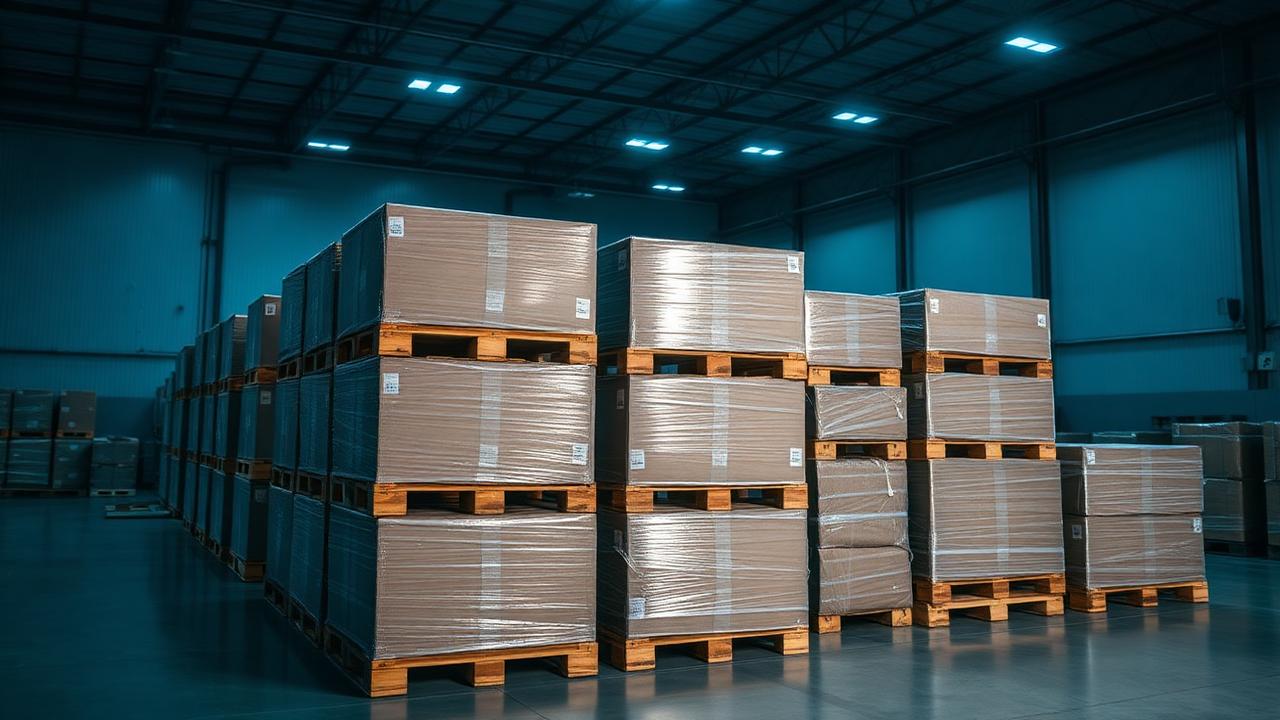
A freight driver backed a 48-foot trailer down my narrow residential driveway two years ago, handed me a clipboard, and left me with a 45-unit lot of small kitchen appliances. I paid $780 for the pallet, thinking I was sitting on $2,400 in easy retail value. By the time I tested the units, discarded three smashed toaster ovens, paid cross-country shipping on heavy air fryers, and handed standard cuts to online platforms, my profit was $62. That single painful lot taught me that learning how to flip 888 lots pallets requires looking past the green numbers on the screen and doing cold, unemotional math before placing a bid.
Sourcing liquidation inventory from 888Lots attracts both beginners and experienced resellers because of their detailed itemization. They give you individual Amazon ASINs, item descriptions, and pre-calculated estimated profits. However, if you rely entirely on those built-in software estimates, you will eventually eat a loss. Winning in this business means knowing how to re-calculate those estimates against real-world operational costs.
Manifest Breakdown: How to Flip 888 Lots Pallets Realistically
The biggest advantage of this platform is manifest visibility. A manifest is simply the itemized packing list showing what is inside a specific pallet or truckload. If you need a refresher on lot terminology, start with our liquidation glossary.
When you review a manifest on 888 Lots, you see estimated net profit columns. Those figures usually assume two things that might not apply to your business: that you can sell every item at the current Amazon Buy Box price, and that your fulfillment costs will be minimal. Experienced buyers know those assumptions break down quickly.
Before you bid on any lot, download the manifest and filter the item list yourself. You can plug the data into a manifest analyzer to spot red flags before committing capital. Here is how you should evaluate the numbers:
- Check the sales rank on key items. An item valued at $100 with a five-million sales rank in Home & Kitchen is not $100 in cash. It is dead warehouse space.
- Verify brand restrictions. If half the pallet consists of restricted consumer brands you cannot sell on major marketplaces, your addressable market shrinks instantly.
- Adjust for real condition grades. Factory sealed items perform as expected, but customer returns carry an average 15-30% defect rate.
- Group heavy items together. High-weight, low-value items eat up all your margin when shipping individual customer orders.
Category recovery rates vary wildly across the liquidation industry. According to our recovery rate report, expect consumer electronics to recover around 25-40% of original MSRP, while tools and hardware often fetch 30-45%. Apparel drops sharply to 8-15%. Keep those industry baselines in mind whenever a manifest claims high gross returns.
Step-by-Step P&L: How to Flip 888 Lots Pallets Profitably
To see how the numbers work in practice, let us walk through a real profit and loss projection for a single 60-item mixed home and tech lot sourced from 888 Lots.
In this scenario, the manifest lists total retail MSRP at $3,400. 888 Lots lists the pallet purchase price at $850. The screen estimates a profit of over $1,200. Let us run the actual balance sheet.
Purchase and Inbound Logistics
- Pallet Lot Cost: $850.00
- LTL Freight Charges: $210.00
- Residential Delivery Accessorial Fee: $60.00
- Liftgate Service Fee: $50.00
- Total Inbound Cost Basis: $1,170.00
Notice how inbound shipping shifted the cost per item from $14.16 up to $19.50 before we even opened the stretch wrap. Carrier fees add up fast. If you do not have a commercial dock, checking rates through FedEx Freight or similar carriers ahead of time is mandatory.
Processing and Outbound Sales Breakdown
Out of 60 items, testing reveals 50 items are fully functional and ready for resale. Five items require minor repairs or missing cable replacements, costing $25 total. Five items are broken beyond repair and tossed in the scrap bin.
- Expected Gross Resale (55 sellable units at realistic market value): $2,100.00
- Marketplace Selling Fees (~13.25% average based on eBay seller fees): $278.25
- Payment Processing Fees ($0.30 per transaction across 55 sales): $16.50
- Outbound Shipping Paid by Seller (flat-rate boxes and labels): $310.00
- Packaging Materials (boxes, bubble wrap, tape): $35.00
- Replacement Parts / Testing Costs: $25.00
- Total Selling & Processing Costs: $664.75
Bottom Line Calculation
- Total Gross Revenue: $2,100.00
- Minus Total Inbound Cost Basis: $1,170.00
- Minus Total Selling & Processing Costs: $664.75
- Net Realized Cash Profit: $265.25
Running this calculation through our pallet ROI calculator shows a net return on investment of roughly 22.6% on total capital spent. That is a viable, realistic flip. However, if you had relied on the platform's initial $1,200 profit estimate, you would be wondering where nearly a thousand dollars went. Math keeps you in business.
Comparing Sourcing Marketplaces
888 Lots occupies a specific niche between unmanifested mystery boxes and massive wholesale truckloads. Understanding where they fit helps you route your purchasing capital effectively.
| Marketplace | Primary Sourcing Type | Manifest Precision | Best Resale Channels |
|---|---|---|---|
| 888 Lots | Fixed-price and auction lots | High (ASINs provided) | eBay, Amazon, Mercari |
| B-Stock | Direct retailer auction lots | Varies by retailer | eBay, Whatnot, Local |
| Liquidation.com | Wholesale surplus and returns | Moderate to Low | Local, Flea Markets, Off-grid |
If you prefer fixed-price buying over the emotional stress of auction countdown timers, 888 Lots offers a straightforward catalog approach. But fixed pricing means you must be faster at analyzing manifest profitability than competing buyers.
How This Goes Wrong: The Amazon Buy Box Trap
The fastest way to lose money on these lots is assuming you can immediately list every item on Amazon. This failure mode catches intermediate resellers all the time.
You purchase a manifest full of high-end electronics. The 888 Lots profit calculator shows massive margins based on current Amazon pricing. The pallet arrives. You open your seller app to create listings, only to discover three critical hurdles:
First, the brand is gated on your Amazon seller account, requiring brand approval documents or invoices from authorized distributors that liquidation manifests cannot satisfy. Second, the item requires dangerous goods approval because it contains lithium-ion batteries. Third, five other resellers bought the exact same liquidation lot, jumped on the existing ASIN, and started a race-to-the-bottom price war that wiped out all remaining profit margin.
To avoid this trap, do not buy a manifest until you cross-reference restricted brands on your preferred sales channels. If you are locked out of Amazon for specific categories, calculate your projected resale prices using recent completed listings on alternative platforms instead. For a broader framework on making these choices, review our buying decision guide.
Operational Execution: Processing Your Pallet
Once the freight truck departs, speed matters. Your capital is trapped in stretch wrap until those units transform into live listings. Work through your pallet in four distinct steps.
- Sort by condition instantly. Group pristine factory-sealed boxes away from opened customer returns. Do not waste time deep-cleaning items until you know they work.
- Test functional units systematically. Keep power cords, multi-meters, and test batteries at your processing bench. Tag defective items immediately so they do not mix into clean inventory.
- Clean and photo-prep. A quick wipe down with isopropyl alcohol increases conversion rates on open-box items. Photograph real defects clearly to prevent buyer returns later.
- Route to the right marketplace. List high-value, small electronics on fast-moving online marketplaces. Move bulky, low-margin items locally for cash to eliminate shipping overhead.
Once you master how to flip 888 lots pallets with clear mathematical boundaries, you can reliably turn surplus inventory into consistent cash flow without taking blind gambles.
How accurately do 888 Lots manifests reflect actual item conditions?
Item descriptions on 888 Lots are generally reliable for store overstock, but customer return lots always carry variability. Expect a baseline defect rate of 15% to 20% on return lots, meaning some items will be damaged, incomplete, or un-sellable. Always factor a shrink allowance directly into your purchase calculations.
Can I flip 888 Lots inventory if I only sell locally?
Yes, but your profit margins will differ from online estimates. Local selling on channels like cash-and-carry market apps eliminates online marketplace commissions and shipping label expenses. However, local buyers expect lower pricing than national marketplace buyers, so your average selling price per unit will typically drop by 20% to 35%.
What freight options should I choose if I do not have a loading dock?
When booking pallet freight to a non-commercial location, always select both residential delivery and liftgate service. A liftgate is a hydraulic platform on the back of the truck used to lower the pallet to ground level. Skipping these options when ordering will result in failed delivery attempts and extra accessorial fees from the carrier.
Pallet IQ Editorial Team
We buy, grade and resell liquidation pallets, then turn what we learn into the tools on Pallet IQ. Every guide here comes from real manifests, real bids and real sell through numbers.
Written September 16, 2026, last reviewed September 21, 2026