How to Flip Tool Liquidation Pallets for Real Profit
Power tools yield solid recovery rates, but broken armatures and missing batteries can crush your margins. Here is how working resellers test, grade, and turn tool lots into cash.
By Pallet IQ Editorial Team
Published · Updated
 Liquidation Sourcing
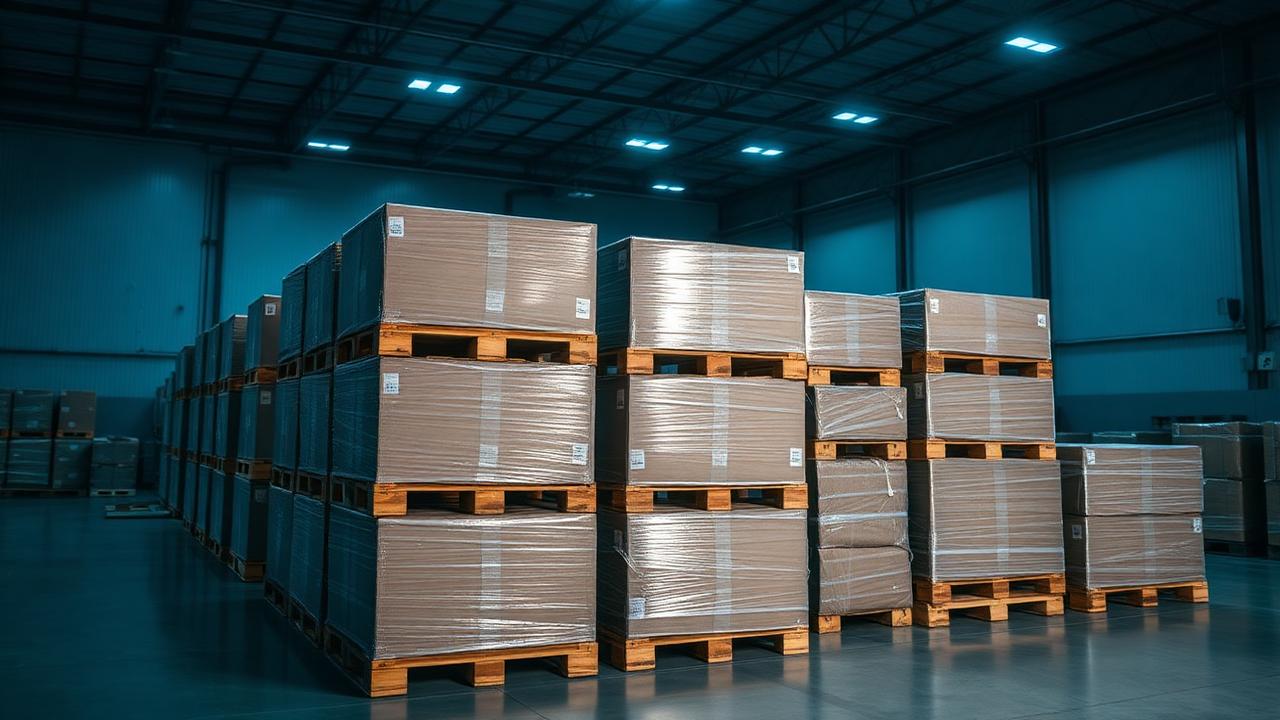
It smelled like scorched carbon brushes and wet pine. That was my third truck delivery out of a Charlotte regional distribution center back in 2021. I paid $850 for a 16-unit mixed power tool lot, expecting a garage full of mint DeWalt XR drills. Instead, I unwrapped three miter saws with severed power cords, four bare impact drivers with locked bearings, and a stack of battery chargers filled with dried mud.
Learning how to flip tool liquidation pallets requires getting past the flashy retail numbers printed on the manifest. Tools are among the highest-recovering categories in resale, often returning 30-45% of retail value compared to apparel at 8-15% or general merchandise at 15-25%. But tools also take physical abuse, attract parts-swapping fraudsters, and cost real money to transport.
If you want to survive three months in this business, you need to know how to calculate landed cost, test components fast, and price for realistic velocity.
The Four Tool Condition Grades Defined
Brokers love to throw around vague adjectives, but liquidation manifest codes generally boil down to four distinct tiers. Memorize these before placing a bid:
- Grade A (Overstock / Shelf Pulls): Factory-sealed or untouched box stock. The retailer had too many units or changed SKUs. Expect 60-75% functional recovery and clean boxes ready for FBA or eBay.
- Grade B (Open Box / Store Displays): Unused or lightly handled items returned because the buyer wanted a different model. Missing manual or plastic wrap is common, but 80% of these run perfectly out of the box.
- Grade C (Customer Returns): The wild west. These items were bought, used for a weekend project, and dragged back to the customer service desk. Some work fine; others were run until the motor smoked. Expect a 40-50% operational yield.
- Grade D (Salvage / Store Clearance Scrap): Store-level write-offs. Expect missing internal gearing, fried electronics, or physically cracked housings. You are buying this for scrap parts, armatures, and switches.
Never assume a Grade C customer return pallet is an open-box lot. If a customer returned a $350 cordless framing nailer, there is a 30% chance they pulled the internal driver blade or swapped their five-year-old broken tool into the brand-new box.
Evaluating Manifests: How to Flip Tool Liquidation Pallets Without Losing Your Shirt
Your profit is locked in when you buy, not when you sell. When you look at a manifest listing 25 SKUs from Home Depot or Lowe's, ignore the total original retail value column immediately.
First, scan for bare tools versus combo kits. Bare tools (sold without a battery or charger) carry lower resale values on secondary markets like eBay or Mercari. A DeWalt 20V XR Brushless Impact Driver bare tool might fetch $65 to $80 used, whereas the full kit with two 4.0Ah batteries, a charger, and a contractor bag commands $140 to $160.
Second, check the battery date codes if photos are available. Lithium-ion packs degrade. A Milwaukee M18 5.0Ah pack manufactured in 2018 that has been sitting discharged in an unconditioned warehouse for three years might be permanently dead. Budget zero dollars for unmanifested or unverified batteries.
Finally, calculate freight before placing a single bid. Less-Than-Truckload (LTL) shipping rates currently run between $0.80 and $2.50 per mile depending on fuel surcharges and lanes. If you lack a commercial warehouse with a loading dock and a forklift, accessorial charges will eat your margins alive:
- Liftgate Service: $50 to $75 per delivery.
- Residential Delivery Fee: $50 to $100.
- Limited Access Surcharge: $30 to $60 (applies to storage units, farms, or tight residential streets).
A $600 winning bid on a single tool pallet can quickly become a $1,150 landed cost once freight fees stack up.
Worked P&L: A Real 16-Unit Customer Return Lot
Let us break down a real lot purchased out of a North Carolina distribution hub to see how the math shakes out after platform fees and freight.
Cost Basis
- Winning Auction Bid: $650.00
- Buyer Premium (10%): $65.00
- LTL Freight (280 miles): $220.00
- Liftgate Fee: $50.00
- Residential Delivery Surcharge: $50.00
- Total Landed COGS: $1,035.00
Manifest Breakdown & Processing Yield
- 3x DeWalt 20V Max Hammer Drills (Tested Good): Sold on eBay for $90 each = $270.00
- 2x Milwaukee M18 Fuel Circular Saws (Tested Good): Sold on eBay for $115 each = $230.00
- 4x DeWalt 4.0Ah Lithium Batteries (Tested Good): Sold locally cash for $40 each = $160.00
- 2x Makita 18V Brushless Angle Grinders (Tested Good): Sold on eBay for $80 each = $160.00
- 2x Ridgid 18V Brad Nailers (1 Tested Good, 1 Parts Only): Sold Good for $85, Parts for $30 = $115.00
- 1x Ryobi 10-Inch Table Saw (Tested Good, missing miter gauge): Sold locally cash for $105.00
- 2x Defective Bare Drills (Smoked Motors): Sold as a local parts bundle for $35.00
Revenue, Fees, and Net Result
- Total Gross Revenue: $1,075.00
- eBay Marketplace Fees (13.25% + $0.30/order on $775 eBay sales): $104.20
- Local Cash Sales (Marketplace/OfferUp - No fees): $300.00
- Net Revenue: $970.80
- Net Loss: -$64.20
Look at those numbers closely. The manifest had an aggregate MSRP of $3,450. We recovered nearly 31% of retail gross, which hits the industry average for tools. Yet the lot lost $64.20.
Why? Because $320 in freight and accessorials sat on top of a small 16-unit payload. If this lot had been picked up locally in a pickup truck, or bundled onto a three-pallet shipment where freight costs averaged $110 per pallet, the lot would have yielded a $145 net profit. Freight density matters.
| Channel Type | Average Cost / Pallet | Grade Quality | Freight Risk | Best Resale Channels |
|---|---|---|---|---|
| Direct Retailer Portals | $700 - $1,500 | Grade B / C | High (LTL Carrier) | eBay, Mercari, Local Cash |
| Wholesale Brokers | $450 - $900 | Grade C / D | Very High (Marked up) | Local Cash, Flea Market |
| Local Liquidation Warehouses | $500 - $1,000 | Grade C | Zero (Self Pick-up) | Local Cash, Facebook, OfferUp |
| Regional Auctions (GovDeals/Local) | $300 - $800 | Grade C / D | Low (Self Pick-up) | eBay Parts, Local Cash |
Processing and Testing: The Operational Blueprint for How to Flip Tool Liquidation Pallets
Do not list a single power tool until you run it through a standard bench test. Selling a burnt tool on eBay leads to Payment Dispute claims, Item Not as Described (INAD) defects, and forced return shipping charges that eat your cash flow.
Setting up a testing station requires four basic items:
- A variable-voltage bench power supply or a stack of known-good OEM test batteries (DeWalt, Milwaukee, Makita, Ryobi).
- A digital multimeter to check battery pin output voltages.
- A container of electrical contact cleaner and WD-40 Specialist contact cleaner.
- A heavy workbench with a vise for testing high-torque tools safely.
When a tool comes off the pallet, execute this sequence:
First, inspect the housing for hairline stress fractures along the handle and gear case. Check the chuck on drills. If the chuck is frozen, soak it with penetrating oil and work it with a strap wrench.
Second, drop a fresh battery in and check for the smell of ozone or burning copper. Run the motor at full trigger squeeze for five seconds. Listen to the planetary gears. A high-pitched whine or grinding clatter means stripped nylon gears inside the housing. Mark that unit as Parts Only immediately.
Third, test the safety switches, direction selectors, and LED work lights. If a brushless tool clicks once and refuses to spin, the control board (ESC) is shorted. Do not waste three hours disassembling a $50 tool to replace a potted control module unless you sell parts for a living.
For lithium battery packs, test the terminal pins with your multimeter. A 20V Max pack reading under 12 volts usually has a tripped BMS (Battery Management System) or a dead cell. Some advanced buyers jump-start these with a bench power supply, but for basic flipping, list low-voltage packs as non-functional lots locally.
How This Goes Wrong: The Three Major Failure Modes
The most common failure mode in tool liquidation is The Bare Tool Trap. Beginners see 30 Milwaukee M18 Fuel items on a manifest, run price comparisons against full retail kit prices, and bid 40% of retail. When the pallet arrives, every tool is a bare unit missing its belt clip, side handle, battery, charger, and case. A bare tool fetching $70 used cannot support a $45 acquisition cost once fees and freight are factored in.
Another landmine is Serial Number Scraping. Dishonest contractors buy new tools at big-box stores, swap their old, dead units into the new boxes, and return them for cash refunds. Retail customer service clerks rarely cross-reference the tiny serial numbers stamped into the plastic housing against the box tag. You end up buying a box marked 2023 that contains a gutted 2014 shell.
Finally, beware of Counterfeit Lithium Packs. Fake Milwaukee and DeWalt batteries saturate the market. If a pallet contains ten brand-new batteries in unprinted poly bags, look at the casing fonts, terminal contacts, and weight. Fake packs weigh noticeably less, lack internal thermal protection, and get your seller accounts suspended fast if buyers report them.
Running manifest lines through a manifest analysis tool like Pallet IQ helps flag mismatched bare tool SKUs and baseline pricing before your bid goes live.
What tools do I need to test power tool liquidation lots?
You need a set of fully charged OEM test batteries for major brands (DeWalt 20V, Milwaukee M18, Makita 18V, Ryobi 18V One+), a digital multimeter, electrical contact cleaner, a basic hand tool set to remove housing screws, and a bench vise to test high-torque tools safely.
Is it better to sell liquidated tools on eBay or locally?
Sell high-value bare tools, specialty trade items (rotary hammers, press tools, threaders), and clean Grade A/B items on eBay to reach national buyers willing to pay top dollar. Sell heavy items (miter saws, table saws, compressors) and budget brands (Ryobi, Craftsman, Bauer) locally on Facebook Marketplace or OfferUp to eliminate shipping costs and marketplace fees.
Should I buy untested customer returns or stick to open-box tools?
If you are working alone out of a garage with limited cash flow, stick to Grade B open-box or shelf-pull lots. Only buy Grade C customer returns if you have testing equipment, basic mechanical repair skills, and enough capital to absorb lots where 25-30% of the inventory is non-functional scrap.
Knowing how to flip tool liquidation pallets comes down to operational discipline. Respect freight costs, run strict bench tests, cut your losses on dead units fast, and price your clean inventory for quick cash turnover. Do that consistently, and those dusty wood-scented pallets will build a solid, profitable resale operation.
Pallet IQ Editorial Team
We buy, grade and resell liquidation pallets, then turn what we learn into the tools on Pallet IQ. Every guide here comes from real manifests, real bids and real sell through numbers.
Written August 26, 2026, last reviewed October 19, 2026