How to Flip Costco Liquidation Pallets for Real Profit
A working reseller breaks down how to calculate landed freight, deal with missing parts, and flip Costco return lots without losing your shirt on fees.
By Pallet IQ Editorial Team
Published · Updated
 Liquidation Sourcing
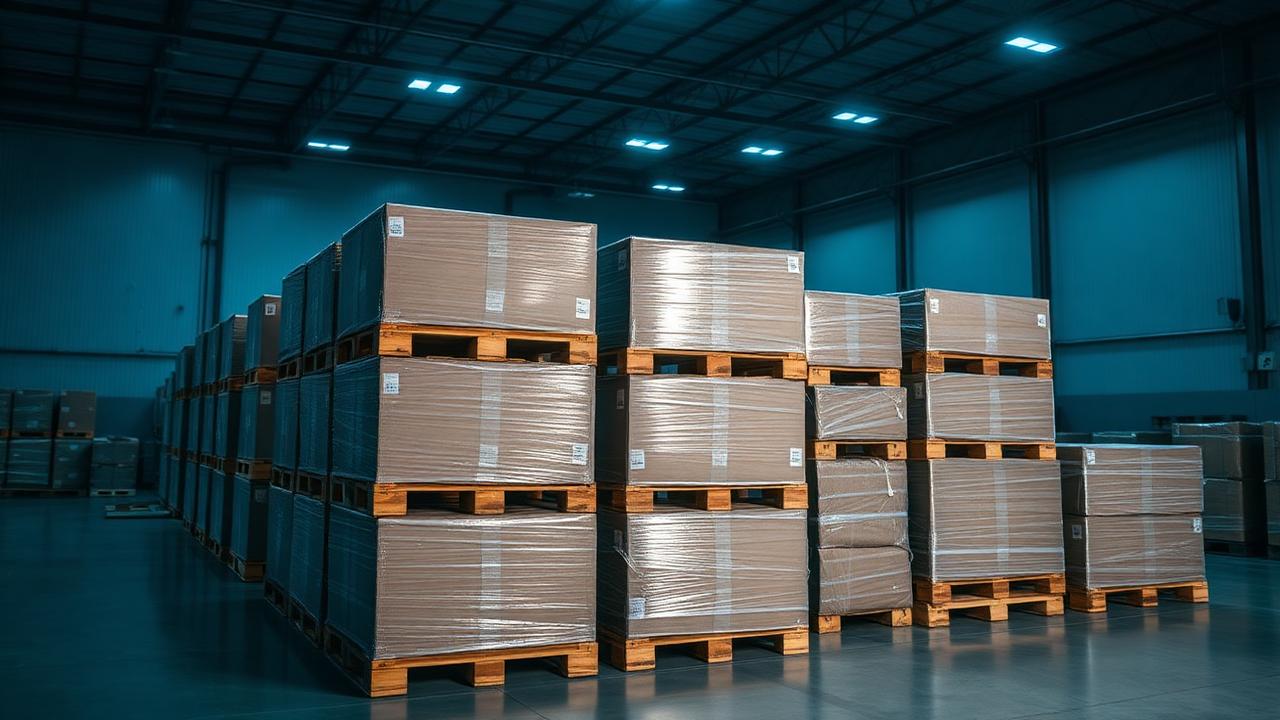
Three years ago, I won a 4-pallet lot of small kitchen electrics out of a regional distribution center in Dallas for $2,100. On paper, it had $14,000 original retail value in De'Longhi espresso machines, Dyson stick vacuums, and Gourmia air fryers. When the flatbed dropped it off at our warehouse bay, two of the boxes had literally been crushed by a forklift fork and half the espresso machines were missing their portafilters.
We still turned a $1,400 net profit on that load, but it took us 45 days of sourcing OEM parts on eBay just to make the inventory sellable. Learning how to flip costco liquidation pallets isn't about scoring cheap high-end goods. It is about knowing how much open-box damage you can repair, clean, and test before your hourly labor wipes out your gross profit.
Costco is a specific beast in the liquidation space. Their generous 90-day return policy means customers bring back items simply because they didn't like the color or couldn't figure out the settings. It also means buyers return items after using them heavily for an entire summer season. If you treat these manifests like pristine store overstock, you'll burn through your working capital fast.
The Reality of Sourcing Costco Return Manifests
Costco liquidates its returned and excess merchandise primarily through official liquidation marketplaces and contracted liquidation auction houses. Most of these lots ship out of major return distribution centers (RDCs) scattered across the country. You will rarely buy directly from a store manager at your local warehouse.
When you review a manifest from these auctions, you'll usually see items graded as store returns. In the liquidation industry, store returns land somewhere between B-Grade (open box, fully functional, minor package damage) and C-Grade (heavily used, cosmetic damage, missing accessories, or non-functional). Electronics usually hover around a 25% to 40% recovery rate against original retail price (MSRP), while general household merchandise sits around 20% to 35%.
If you buy a manifest listed at $10,000 MSRP for $2,000, you aren't getting $10,000 worth of cash value. Realistically, you hold roughly $3,000 to $3,500 in gross market resale value once you remove unsellable items. Subtract your freight, marketplace selling fees, and cleaning supplies, and your actual profit buffer is much narrower than the auction listing implies.
| Source Retailer | Expected Recovery Rate | Manifest Accuracy | Primary Inventory Mix |
|---|---|---|---|
| Costco Returns | 25% - 40% | 80% - 85% | Appliances, Tech, Seasonal, Home |
| Target Salvage | 15% - 30% | 75% - 85% | Apparel, Toys, Domestic Goods |
| Home Depot Returns | 30% - 45% | 70% - 80% | Power Tools, Hardware, Outdoor |
| Amazon Customer Returns | 10% - 25% | 50% - 65% | High-volume Unsorted Mixed Merchandise |
Notice that manifest accuracy sits around 80% to 85%. That means 15% to 20% of what is on that truck manifest might be miscounted, swapped for a different model by a dishonest retail customer, or missing entirely.
Calculating Your True Landed Cost Basis
Before placing a bid on any lot, you must calculate landed cost. Landed cost is the auction bid plus buyer's premium, tax, freight charges, and carrier accessorial fees. Novice resellers bid $1,500 on a pallet, forget that freight is coming from three states away, and get crushed when delivery day arrives.
Less-than-truckload (LTL) freight rates depend heavily on distance, weight, and fuel surcharges. On average, expect to pay between $0.80 and $2.50 per mile for palletized freight. But freight carriers love adding accessorial fees. If you don't have a commercial warehouse with a loading dock or a forklift, you will pay extra.
- Liftgate service: $50 to $75 extra per delivery
- Residential delivery surcharge: $50 to $100 extra
- Limited access fee (farms, storage units, residential suburbs): $30 to $60 extra
- Terminal storage fee: $50+ per day if you miss your delivery window
If your winning bid on a single pallet is $600, but shipping and accessorials come out to $350, your true cost basis is $950. If the total resale market value of that pallet is $1,400, your gross margin before processing labor and platform fees is only $450. That is a thin margin for a lot that requires testing and cleaning.
Step-by-Step Guide on How to Flip Costco Liquidation Pallets
Once a load drops, step one isn't listing items on eBay. Step one is intake, manifest verification, and grading.
First, break down the shrink wrap immediately and cross-reference every serial number and item model against the auction packing slip. Note missing items right away, most auction platforms give you a strict 48-hour window to submit a claim for missing or incorrectly manifested inventory.
Second, categorize every item into one of four buckets:
- Plug-and-Play: Factory box present, all accessories included, light package damage. These go straight to photograph and listing.
- Needs Work: Item works but lacks a power cord, original box, or minor accessory. Put these aside to batch-order replacement parts.
- Parts/Repair: Non-functional or physically damaged beyond basic cosmetic flaws. Evaluate if selling as-is for parts on eBay makes financial sense.
- Trash/Recycle: Cardboard, un-sellable trash, and heavily damaged low-value items that aren't worth the listing fee.
Third, choose your sales channels based on item size and value. Small, high-value tech (laptops, audio equipment, security cameras) should be listed on nationwide platforms like eBay or Mercari. eBay charges roughly 13.25% plus a $0.30 order fee, while Mercari takes a flat fee percentage depending on the category. For heavy items like air conditioners, pressure washers, or furniture, list locally on Facebook Marketplace or OfferUp to avoid shipping costs destroying your margin.
Using a manifest analysis tool like PalletIQ during your pre-bid research helps you quickly filter through hundreds of line items to identify high-value SKU clusters before you lock up your cash.
A Worked P&L Example: 3-Pallet Small Appliance Lot
To see how this works in practice, let's break down a real-world financial breakdown of a 3-pallet return lot sourced out of a Georgia logistics center.
Financial Breakdown of a Returned Kitchen Appliance Lot
- Original Retail Value (MSRP): $11,200
- Winning Auction Bid: $1,450
- Marketplace Buyer's Premium (10%): $145
- LTL Freight Charge (450 miles): $380
- Liftgate + Residential Delivery Accessorials: $125
- Total Landed Cost Basis: $2,100
Now, let's look at the actual inventory recovery after intake, cleaning, and testing:
- Grade A/B Resellable Inventory (60% of manifest): Gross Sales = $3,600
- Grade C Inventory (Needs cheap replacement cords/parts): Gross Sales = $950
- Parts/Non-Functional Units (Sold as-is): Gross Sales = $300
- Completely Unsellable / Broken (10% of manifest): Gross Sales = $0
- Total Gross Revenue Collected: $4,850
Now we subtract selling fees and operational expenses:
- Platform Fees (Average 13% across eBay and local shipping): $630
- Outbound Shipping Paid by Seller (Promotional free shipping on select items): $340
- Replacement Cords, Filters, and Cleaning Supplies: $110
- Total Selling & Processing Costs: $1,080
Net Financial Result:
- Gross Revenue: $4,850
- Less Total Landed Cost Basis: -$2,100
- Less Selling & Processing Costs: -$1,080
- Net Profit: $1,670
- Cash-on-Cash Return: 79.5%
- Days to Fully Liquidate: 38 Days
This outcome reflects a healthy lot. But if freight had cost $700 instead of $505, or if 30% of the appliances had burnt-out motors, that net profit could easily drop below $600 for nearly 40 hours of manual labor.
How This Sourcing Model Goes Wrong
The most common failure mode when learning how to flip costco liquidation pallets is underestimating category-specific landmines. Different product categories fail for entirely different reasons.
With small kitchen appliances, missing proprietary parts will eat your profits alive. A $200 Ninja blender is useless to a buyer without its blade assembly and lid. Buying replacement parts at retail prices off Amazon wipes out your margin instantly. If a manifest is heavy on high-end blenders, food processors, or espresso machines, assume at least a third of them are missing a key attachment.
With consumer electronics like soundbars, computer monitors, and smart home gear, the threat is customer fraud. Customers occasionally buy a new monitor at Costco, drop their five-year-old broken monitor back into the box, and return it for a full refund. Retail store returns clerks rarely pull every item out of the box to check serial numbers. When you open that box, you might find an entirely different, obsolete model than what is listed on the manifest.
Another major pitfall is oversized freight bottlenecks. A lot containing patio furniture, massage chairs, or portable air conditioners looks lucrative because of high individual MSRPs. But storing four massive pallets in a residential garage leaves zero room to work. If those items don't sell locally within two weeks, your space is locked up, and your ability to buy the next load vanishes.
Master the Math Before You Bid
Liquidating customer returns is not passive income. It is light remanufacturing, logistics management, and customer service wrapped into one operation. If you want to know how to flip costco liquidation pallets successfully over the long haul, you must treat your buying decisions like an underwriter assessing risk.
Keep your landed costs low, double-check your freight accessorials before clicking the bid button, and build a 20% waste buffer into every calculation. Respect the math, and the profit follows.
Where can you buy legitimate Costco return pallets?
Most official Costco return loads are auctioned through private storefronts hosted on major liquidation B2B platforms like B-Stock Solutions or through select regional liquidation brokers. You will need a registered business entity and a state sales tax resale certificate to create an account and place bids on these platforms.
Do you need a commercial warehouse to process liquidation lots?
You don't strictly need a warehouse to start, but you do need dedicated workspace like a two-car garage or dry workshop. If you operate out of a residential address, always account for residential delivery and liftgate fees on LTL freight, which can add $100 to $175 per shipment.
What percentage of a Costco return pallet is typically trash?
On average, expect 10% to 20% of a mixed customer return lot to be un-sellable, un-repairable, or missing essential components that cost more to replace than the item is worth. Always factor this scrap rate into your initial bidding calculations.
Pallet IQ Editorial Team
We buy, grade and resell liquidation pallets, then turn what we learn into the tools on Pallet IQ. Every guide here comes from real manifests, real bids and real sell through numbers.
Written August 14, 2026, last reviewed October 19, 2026