How to Buy Wayfair Liquidation Pallets: Reseller Guide
Wayfair returns are heavy, bulky, and full of crushed particle board. Here is how to filter the garbage, calculate real freight costs, and turn flat-pack furniture into actual profit.
By Pallet IQ Editorial Team
Published · Updated
 Pallet Sourcing
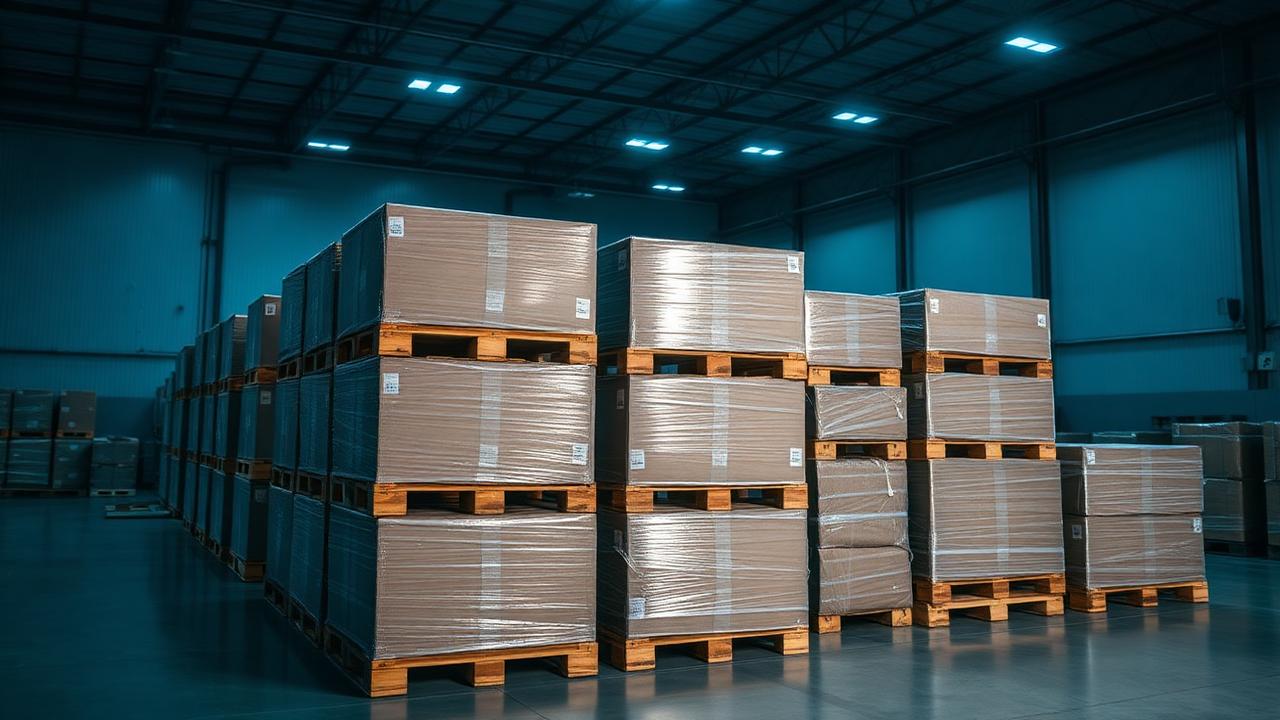
My first Wayfair lot arrived on a rainy Tuesday in a 53-foot dry van with no liftgate. The driver stared at me, I stared at his trailer bed four feet off the ground, and forty minutes later my business partner and I were hand-unloading 800 pounds of flat-pack particle board in the pouring rain. Two of the boxes looked like they had been thrown off a cliff. Inside one was a gray velvet accent chair missing three legs; inside another was a marble-topped vanity snapped clean in half.
We paid $950 for the lot and $340 for freight. After three weeks of building furniture, hunting down missing Cam-locks at Home Depot, and listing items on Facebook Marketplace, we cleared $610 in net profit. It was a hard lesson in physical labor and freight logistics. If you want to figure out how to buy wayfair liquidation pallets without burning your back or your wallet, you have to look past the high MSRP numbers on the manifest.
Wayfair is primarily an e-commerce broker. They do not manufacture most of what they sell; thousands of independent suppliers ship orders directly to consumers or out of Wayfair CastleGate fulfillment centers. When a customer returns a 90-pound dining table because the shade of brown didn't match their floor, sending it back to the original supplier is rarely cost-effective. Wayfair liquidates these returns and overstock items in bulk through secondary auction platforms like B-Stock, as well as contracted regional liquidators.
Here is how the inventory actually breaks down, how to deal with freight, and how to price these loads so you stay profitable.
Where Wayfair Inventory Comes From and Where to Get It
Most official Wayfair liquidation flows through the Wayfair Liquidations auction storefront hosted on the B-Stock Network. You need a valid business license and a resale certificate to register and bid on these lots. Liquidation auctions on B-Stock typically range from single-pallet test lots up to full truckloads (FTL) containing 24 to 30 pallets.
You will also see Wayfair merchandise on independent liquidator sites like Liquidation.com or through regional wholesale brokers who buy contract truckloads and split them up. Be careful with secondary brokers. When a third party buys a truckload directly from Wayfair, they often keep the high-value, un-damaged items like outdoor wicker sets or solid wood sideboards for their own retail stores and re-palletize the smashed flat-packs for unsuspecting local buyers.
When buying directly from official auction channels, you generally encounter three types of inventory:
- Customer Returns (Grade B/C): The most common option. These are items shipped back by buyers due to minor defects, wrong colors, missing hardware, or delivery damage. Box condition is often poor.
- Overstock & Discontinued (Grade A): Brand-new items that sat too long in fulfillment centers. Packaging might have warehouse dust, but the contents are factory sealed and complete.
- Freight Damage (Grade C/D): Bulky items crushed during transit by national parcel carriers. These carry high risk and low recovery rates.
How to Buy Wayfair Liquidation Pallets with Real Profit Margins
If you want to know how to buy wayfair liquidation pallets and stay in business, your manifest analysis has to account for processing labor and broken hardware. Furniture does not resell at standard electronics recovery rates. While clean tools or small kitchen appliances often recover 35% to 50% of original retail, heavy flat-pack furniture usually recovers closer to 20% to 30% of its original Wayfair list price.
Why? Because your target buyer is shopping on local peer-to-peer marketplaces. Nobody is paying $400 cash on Facebook Marketplace for an unbranded, unassembled particle-board dresser that sells for $500 new with free delivery on Wayfair's website. They want it for $175, fully assembled, delivered to their garage.
When reviewing a manifest, run every single SKU through image searches. Wayfair uses proprietary brand names like Three Posts, Mercury Row, and Zipcode Design to disguise white-label items sourced from various manufacturers. Searching for a "Mercury Row Mid-Century Desk" on eBay might yield zero results, but searching the item's dimensions or factory model number will reveal the exact same desk sold under three different brand names on Amazon and Target.
A manifest analysis tool like Pallet IQ helps you instantly aggregate these cross-platform prices and estimate realistic resale values instead of relying on inflated Wayfair MSRPs. If a manifest shows $10,000 in retail value, assume your realistic gross revenue ceiling is $2,200 to $2,800.
The Brutal Reality of Freight and Accessorials
Freight will ruin your profitability faster than damaged goods if you fail to calculate it before placing a bid. Wayfair pallets are tall, heavy, and awkward. A single pallet of knock-down dining chairs and TV stands can easily weigh 600 pounds and stand six feet tall.
If you lack a commercial building with a loading dock or a forklift, you will incur LTL (Less-Than-Truckload) accessorial charges on every delivery. Here is what carriers charge beyond the base line-haul rate:
- Residential Delivery Fee: $50 to $100 for the truck to enter a residential neighborhood.
- Liftgate Fee: $50 to $75 for the driver to lower the pallet to ground level using a hydraulic gate.
- Limited Access Fee: $30 to $60 if your location is classified as a farm, storage unit, or restricted area.
If your base freight quote is $220, those extra fees instantly bring your shipping cost to $400. On a pallet you won for $300, your total landed cost is now $700. If that pallet only yields $850 in gross local sales, you worked twenty hours for $150.
Fully Worked P&L: A 4-Pallet Wayfair Customer Returns Lot
To see how the numbers play out in the real world, let's look at a realistic profit and loss breakdown for a 4-pallet lot of mixed Wayfair customer returns purchased off B-Stock and delivered to a residential garage setup.
Order & Delivery Costs
- Winning Auction Bid: $850.00
- B-Stock Buyer Premium (typically 10%): $85.00
- LTL Freight Base Rate (Georgia RDC to Ohio): $290.00
- Residential + Liftgate Fees: $125.00
- Total Landed Cost Basis: $1,350.00
Inventory Processing & Manifest Audit
- Total Manifested MSRP: $6,800.00 across 14 boxed items.
- Category Breakdown: 3 TV stands, 2 office desks, 4 dining chair sets, 3 outdoor accent tables, 2 bathroom vanities.
- Condition Outcome:
- 2 items (1 TV stand, 1 vanity top) were completely smashed or missing structural panels. Value: $0 (Discarded/Scrapped).
- 3 items (desks, 1 TV stand) were missing hardware bags. Purchased replacement hardware fasteners for $25 total.
- 9 items were complete with minor cosmetic box damage or brief open-box returns.
Resale Execution & Gross Revenues
- Facebook Marketplace (Local Cash Pickup - Assembled): 7 items sold = $1,450.00
- OfferUp / Craigslist (Local Cash Pickup): 3 items sold = $420.00
- eBay (Small outdoor tables shipped out): 2 items sold = $290.00 gross
- Total Gross Revenue: $2,160.00
Platform Fees & Overhead Expenses
- eBay Selling Fees (13.25% + $0.30/item): $39.00
- eBay Shipping Outlay (buyer paid shipping, offset): $0.00 net
- Hardware store fastener replacements: $25.00
- Gas / Local Delivery drops: $35.00
- Total Operating Expenses: $99.00
Final Profit Calculation
| Line Item | Amount |
|---|---|
| Gross Sales Revenue | $2,160.00 |
| Less Landed Cost Basis | -$1,350.00 |
| Less Direct Expenses & Fees | -$99.00 |
| Net Net Profit | $711.00 |
In this scenario, you achieved a 52.6% return on your total cash investment ($711 net profit on $1,350 invested). Notice how a single destroyed vanity top erased $600 in potential retail value. If two more items had been smashed, the lot would have barely broken even.
Wayfair Liquidation vs. Standard Retail Manifests
How does Wayfair stock compare to traditional big-box retail liquidation pallets? The operational demands differ significantly from standard customer return loads.
| Attribute | Wayfair Liquidation | Target GM / Amazon Mixed | Home Depot Tools |
|---|
| Average Item Weight | Heavy (30 - 120 lbs) | Light/Medium (2 - 15 lbs) | Medium/Heavy (10 - 40 lbs) |
|---|---|---|---|
| Sourcing Format | Flat-pack / KD (Knock-Down) | Mixed Shelf Pulls & Returns | Boxed Power Tools / Hardware |
| Primary Resale Channel | Local Pickup (FB, OfferUp) | eBay, Mercari, Poshmark | eBay, Local, Flea Market |
| Assembly Required? | High frequency (40-60%) | Low / None | None |
| Average Recovery Rate | 20% - 30% MSRP | 25% - 40% MSRP | 35% - 50% MSRP |
| Freight Risk | High (Oversized dimensional) | Medium (Standard boxes) | Low (Dense weight) |
How This Goes Wrong: The Particle Board Trap
The single biggest failure mode in buying Wayfair pallets is the Structural Damage Cascading Trap.
Unlike solid wood or metal tools, ready-to-assemble (RTA) particle board furniture relies heavily on precise manufacturing tolerances. When a box is dropped by a carrier on its edge, the outer cardboard might only show a slight crease. Inside, however, the structural corner anchor holes inside the dense particle board have crumbled into coarse dust.
You pull the parts out of the box, spend forty-five minutes assembling a tall bookshelf, and only realize during the final step that the top cam-lock connector cannot bite into the pulverized particle board corner. The piece is now structurally unsafe.
When this happens, you face three options, all of which shrink your profit:
- Disassemble the entire unit, box it up, and sell it as a replacement parts lot on eBay for pennies.
- Use wood glue, metal L-brackets, and custom screws to reinforce the broken joint, then sell it locally at a heavy discount while disclosing the repair.
- Throw the entire 80-pound unit into your local dumpster, paying municipal disposal fees out of pocket.
If you do not inspect every panel before spending time building an item, you will waste hours assembling furniture that ends up in the trash. Always open the box, check the corners of the main structural panels, and verify the hardware bag is intact before you turn a single screw.
Winning the Wayfair Resale Game
Buying Wayfair liquidation pallets offers a defensible niche precisely because it is physically demanding. Many casual resellers refuse to handle 90-pound boxes, build flat-pack coffee tables, or deal with local cash buyers picking up furniture from their garages. That friction creates room for disciplined operators to make consistent money.
Keep your bidding disciplined, keep your freight calculations strict, and never pay more than 12% to 15% of manifested MSRP on customer return lots. When learning how to buy wayfair liquidation pallets, patience on the bid button is your only real protection against a garage full of unsellable particle board.
Do Wayfair liquidation pallets include hardware?
Not always. Customer returns frequently arrive with torn hardware bags or missing screws because previous buyers opened the pack before packing it up to send back. Keep a hardware kit stocked with standard M6/M8 machine bolts, wooden dowels, and cam-lock fasteners so you can complete incomplete units without trips to the store.
Can you sell Wayfair returns as "New in Box"?
No. Even if the box appears factory-sealed, internal transit damage is common on heavy furniture items. Mark open-box items as "Open Box - Inspected" or assemble them completely and sell them locally as "New Assembled Condition." Selling uninspected Wayfair returns as new leads to high return rates and poor feedback.
What is the best platform to resell Wayfair furniture?
Facebook Marketplace, OfferUp, and Craigslist are the best options for large furniture items because shipping costs on individual heavy boxes erase profits. Assembling the items and offering local garage pickup or low-cost driveway delivery usually yields the highest conversion rates and fastest cash turnaround.
Pallet IQ Editorial Team
We buy, grade and resell liquidation pallets, then turn what we learn into the tools on Pallet IQ. Every guide here comes from real manifests, real bids and real sell through numbers.
Written August 21, 2026, last reviewed October 19, 2026