How to Buy Kitchen Liquidation Pallets Without Getting Burned
Most kitchen liquidation looks great on the manifest until you open the shrink wrap and find half-empty Instant Pot boxes. Here is how we evaluate lots, handle freight, and make real profit.
By Pallet IQ Editorial Team
Published · Updated
 Liquidation Sourcing
Three years ago, I unloaded a $1,200 pallet of uninspected customer returns from an Amazon RDC in Indiana. On paper, it was packed with $4,000 MSRP worth of Ninja pressure cookers and Breville espresso machines. In reality? Two Brevilles had cracked thermoblocks, four Ninja lids were completely missing, and one Instant Pot box contained a literal bag of sandbox sand. I lost $450 after freight and eBay fees. That hard lesson forced us to rebuild our entire operational process for how to buy kitchen liquidation pallets without going broke.
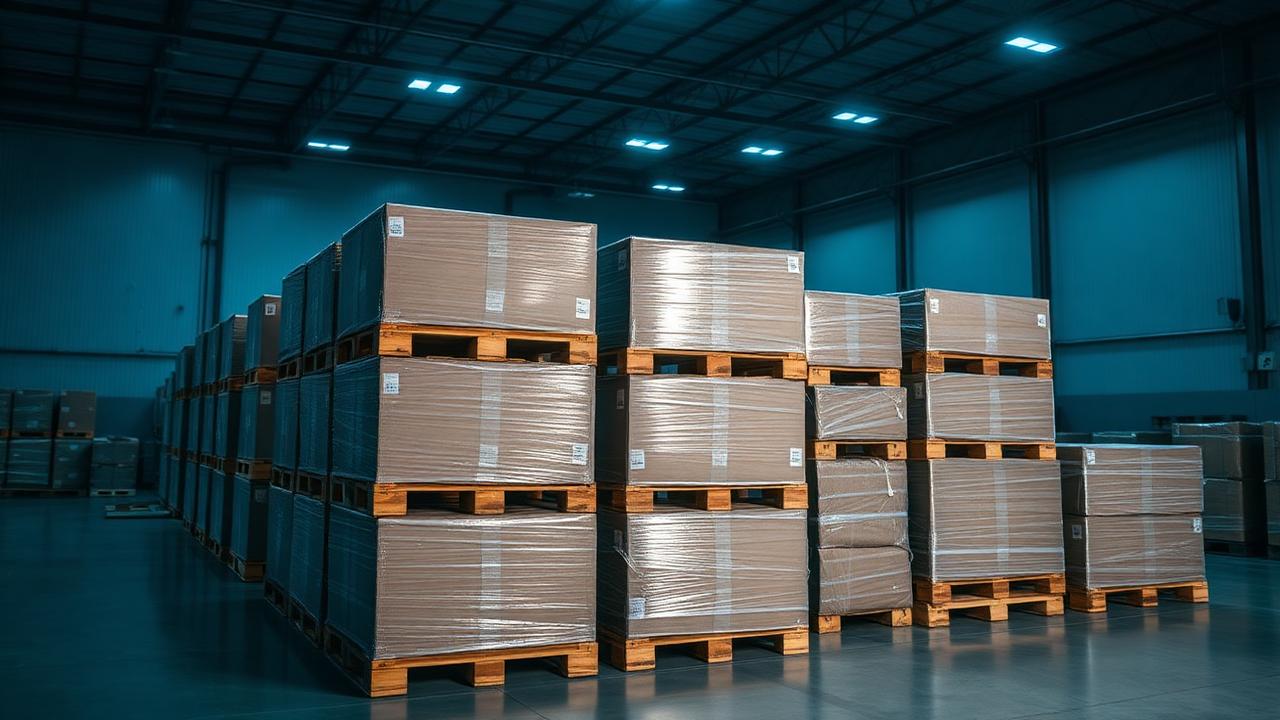
Kitchen gear is one of the highest-volume liquidation categories in North America. Consumers buy $200 air fryers for holiday dinners, use them twice, leave greasy bacon fat in the basket, and push them back across the Target customer service counter. Retailers do not test these units. They dump them onto 48-inch by 48-inch pallets, wrap them in black stretch film, and send them to auction. If you know how to sort, test, clean, and part out these lots, kitchen appliances deliver steady 30% to 45% net margins. If you buy blind, you are paying $200 in LTL freight to haul a retailer's garbage to your workshop.
Understanding Appliance Grades and Realistic Recovery Rates
In kitchen liquidation, your recovery rate is the percentage of original retail MSRP you pocket in cash after all platform fees, shipping, and cost of goods sold. For small kitchen appliances, coffee makers, blenders, toaster ovens, stand mixers, a realistic yield is 25% to 40% of retail value. If a pallet has an MSRP of $5,000, expect total gross sales between $1,250 and $2,000.
Condition grades dictate where you land on that spectrum:
- Grade A / Overstock / Shelf Pulls: Brand new items in original retail packaging. Box damage is minimal. Expected functional yield is 95% to 98%. These carry higher bid prices, often 30% to 40% of MSRP, leaving thinner profit margins but zero repair labor.
- Grade B / Open Box: Customer returns that were opened but likely unused or lightly tested. Expect 80% to 85% working units. Missing user manuals or twist ties are standard.
- Grade C / Used Return: Units pulled straight from customer return bins. Grease, water spots, missing inner baskets, and broken latches are guaranteed. Functional yield hovers around 60% to 70%.
- Grade D / Salvage: Heavy structural damage, crushed boxes, sheared power cords. You buy these strictly to harvest replacement motors, heating elements, or glass carafes.
How to Buy Kitchen Liquidation Pallets: Reading the Manifest
Never bid on an unmanifested kitchen lot unless you pay pure scrap value under $100 per pallet. A good manifest gives you the SKU, UPC, description, quantity, and original retail price. A bad manifest leaves descriptions vague, showing line items like "Assorted Housewares - 45 Units." That is reseller code for broken plastic food containers and missing toaster knobs.
When analyzing an appliance manifest, look for brand concentration. High-value kitchen lots are anchored by heavy hitters: Vitamix, KitchenAid, Breville, Ninja, Cuisinart, and De'Longhi. A single working Breville Barista Express can recover $450 of your bid. Conversely, lots loaded with off-brand $15 waffle makers eat up your storage space and shipping budget while generating single-digit margins.
Check item weight and dimensions on high-ticket items. Freight costs rise quickly when pallets contain bulky, lightweight air fryers that consume volume without adding density. Before placing a bid, run the item list through a manifest analysis tool like Pallet IQ to filter out low-value SKUs and flag items with high defect rates across secondary marketplaces.
| Sourcing Channel | Minimum Order | Manifest Detail | Typical Freight Cost | Resale Potential |
|---|---|---|---|---|
| Direct Retailer Portals | 1 Pallet / Truckload | High (UPC level) | $1.20 - $2.50 / mile | Moderate to High |
| Liquidation Brokers | 1 Pallet | Medium | $1.50 - $3.00 / mile | Variable |
| Local Wholesalers | Single Item / Pallet | Low / Unmanifested | Pickup Only (Free) | High Margin / High Risk |
| Government / Commercial Auctions | Lot / Facility | Poor | Buyer Arranged | High Risk / Mixed |
The Real Math: Worked P&L on a Kitchen Appliance Lot
Let's break down a real-world scenario. You spot a 32-unit lot of mixed small appliances out of a Georgia regional distribution center (RDC).
- Manifest Total MSRP: $3,800
- Winning Bid: $680
- LTL Freight (400 miles): $180
- Liftgate Accessorial Fee: $50
- Residential Delivery Fee: $60
- Total Cost Basis: $970
Now look at the actual operational processing and sales output:
Out of 32 units:
- 20 units are fully working, complete, and clean: Sold on eBay/Mercari for an average of 45% MSRP = $855 gross.
- 6 units are working but missing accessories (such as an Instant Pot without the inner pot): Sold locally on Facebook Marketplace at 30% MSRP = $250 gross.
- 4 units are broken but have high-value parts (Vitamix containers, Ninja lids, KitchenAid beaters): Parted out on eBay = $160 gross.
- 2 units are complete scrap with burnt motors or shattered housings: $0 revenue.
Gross Sales Revenue: $855 + $250 + $160 = $1,265
Operational and Platform Selling Expenses:
- Marketplace Fees (~13.25% + $0.30 per order on $1,015 of online sales): $142
- Outbound Shipping Subsidies / Boxes / Bubble Wrap: $110
- Total Direct Expenses: $970 (acquisition + freight) + $142 (platform fees) + $110 (supplies) = $1,222
Net Profit: $1,265 - $1,222 = $43 net profit.
Look closely at that number. You spent hours testing, scrubbing grease, and listing 32 items for forty-three dollars. Why? Because freight accessorials ($110 for liftgate and residential delivery fees) swallowed your margin, and your winning bid was too high relative to the mixed condition. If you picked up that pallet locally, saving the $290 freight bill, your net profit jumps to $333. Math like this is why freight calculation is the most critical step when evaluating how to buy kitchen liquidation pallets.
Operational Workflow: Processing Appliances Efficiently
To stay profitable, build a dedicated testing and processing bench before your first delivery arrives. You need a few basic tools:
- A kill-a-watt meter to test heating elements without waiting 20 minutes.
- An infrared thermometer to verify oven and air fryer temperatures.
- Citric acid powder and commercial degreaser for scaling coffee makers and stripping caked-on oil.
- A stock of universal 3-prong power cables and generic glass carafes.
When processing kitchen returns, speed dictates your hourly wage. Don't spend two hours deep-cleaning a $25 Hamilton Beach blender. Wipe down the base, test the motor on high for five seconds, log missing parts, and price it for local cash pickup.
Save your detailed restoration work for $200+ MSRP items like Vitamix blenders or Espresso machines where a pristine condition bump yields $50 extra profit.
Where Kitchen Liquidation Pallets Go Sideways
The biggest trap in kitchen liquidation isn't dead electrical motors, it's missing, proprietary components.
A Ninja Foodi Deluxe without its pressure lid is essentially a 15-pound paperweight. Buying that replacement lid on eBay costs $45, destroying your margin instantly. Instant Pots without inner pots, air fryers missing crisping trays, and food processors without blade assemblies occur on roughly 30% of raw customer return units.
Another failure mode is return fraud inside customer packages. Buyers purchase a new $400 Breville Smart Oven, place their seven-year-old rusted model inside the original box, and return it to the retail store. The store clerk scans the barcode on the box, tosses it into the liquidation bin, and the broker lists it as "Open Box." When you cut the shrink film, you discover junk. Always factor a 10% total loss rate into your initial bidding formulas when mastering how to buy kitchen liquidation pallets.
What is the typical recovery rate for kitchen liquidation pallets?
For small kitchen appliances, realistic recovery ranges from 25% to 40% of original retail MSRP. Grade A overstock leans toward the 40% side, while raw customer returns generally land closer to 25% after factoring in testing labor, broken units, and platform selling fees.
How do I handle missing accessories like lids or power cords?
First, check eBay for broken lots of the same brand to buy parts in bulk. If a replacement part costs more than 20% of the item's expected resale value, do not buy it. Instead, sell the remaining components individually, such as selling the blender pitcher, base, or lid separately as replacement parts.
Should I sell kitchen appliances on eBay or locally on Facebook Marketplace?
Sell heavy, low-value items (under $50 resale or over 15 lbs) locally on Facebook Marketplace or OfferUp to avoid high shipping costs and breakages. Reserve high-ticket, lightweight units like espresso machines, specialty coffee grinders, and Vitamix bases for eBay or Mercari where national demandCommands higher prices.
Pallet IQ Editorial Team
We buy, grade and resell liquidation pallets, then turn what we learn into the tools on Pallet IQ. Every guide here comes from real manifests, real bids and real sell through numbers.
Written August 22, 2026, last reviewed October 19, 2026