How Much to Ship a Pallet of Freight: Real Reseller Costs
I once paid $410 to ship a $350 pallet because I ignored accessorial fees. Here is what LTL freight actually costs and how to protect your resale margins.
By Pallet IQ Editorial Team
Published · Updated
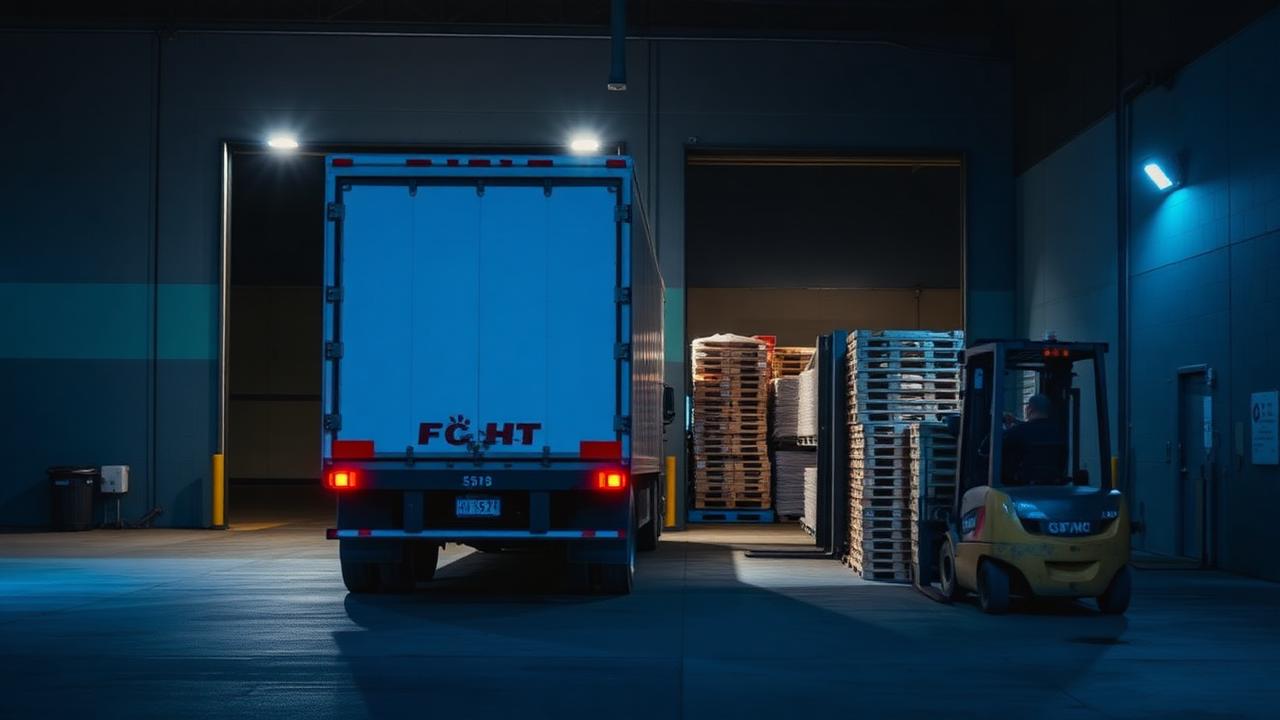 Freight Logistics
Three years ago, I won a 32-unit lot of returned kitchen appliances out of a Georgia regional distribution center. My winning bid was $350. I felt like a genius until the carrier invoice arrived showing $410 in freight charges. The delivery driver pulled up in a 53-foot sleeper rig on a tight residential street, handed me a liftgate surcharge bill, and left the wooden skid at the edge of my driveway in the rain. My expected profit vanished before I even cut the shrink wrap.
If you are asking how much to ship a pallet of freight, the short answer is that standard LTL (less-than-truckload) shipping typically costs between $150 and $600 per pallet for domestic regional runs. Cross-country moves can push that range from $450 up to $1,000 or more per pallet. However, the line-haul base rate is rarely the final price you pay.
To build a profitable reselling business, you must calculate total landed cost before you place a single bid. That means understanding line-haul rates, accessorial charges, and freight classification.
The Mechanics of LTL Freight Charges
Carriers do not price freight like parcel post. When you ship a cardboard box through standard mail, you pay primarily for weight and destination zone. LTL carriers price their space based on weight, volume, distance, density, and special handling requirements.
Line-haul rates generally average $0.80 to $2.50 per mile per pallet depending on shipping lanes, diesel fuel surcharges, and current freight demand. A short 200-mile run from a regional warehouse might carry a base rate of $140, while shipping that same 400-pound pallet 1,800 miles across state lines will cost closer to $520.
Freight density directly dictates your classification. High-density items like hardware tools rank at lower freight classes (Class 50 to Class 70) and cost less per pound to ship. Lightweight, bulky goods like boxed patio cushions or un-assembled plastic toys take up massive trailer space relative to their weight. They get categorized at higher classes (Class 250 to Class 400), driving shipping rates up fast. Checking billable volume using UPS dimensional weight rules gives you a realistic preview of how carrier algorithms bill space.
Then come the extra service fees. In the freight industry, extra services are called accessorials. If you operate out of a home garage, a storage unit, or a warehouse without a commercial loading dock, accessorial fees will easily double your freight bill if you do not account for them ahead of time.
Standard accessorial charges you will encounter on liquidation lots include:
- Liftgate Service ($50-$75): Required if neither the origin facility nor your drop-off site has a built-in loading dock or a forklift.
- Residential Delivery ($50-$100): Charged whenever a semi-truck delivers to a address designated as non-commercial by carrier mapping.
- Limited Access Fee ($30-$60): Applied to locations like storage facilities, farms, school zones, or strip malls where big trucks face tight maneuvering.
- Inside Delivery ($40-$80): Assessed if you ask the driver to push the pallet past the tailgate into a building or storage bay.
- Re-notification / Appointment Fee ($15-$35): Charged for calling ahead to schedule a specific delivery window.
Before placing a bid on any lot, run the parameters through a dedicated shipping cost calculator so these accessorials do not catch you by surprise.
How Much to Ship a Pallet of Freight in Practice: A Real P&L
Let us look at how freight costs affect your actual bottom line. Assume you win an auction on B-Stock for a 40-unit lot of Grade B consumer electronics out of an Atlanta distribution hub.
Original total retail value (MSRP) is listed at $4,000. For Grade B customer returns in consumer tech, our historical benchmark data in the recovery rate report shows a realistic gross recovery rate of roughly 35% of MSRP when selling across multi-channel marketplaces like eBay.
Here is how the numbers play out when you account for product cost, LTL freight, accessorials, and selling fees:
- Gross Resale Estimate (35% of MSRP): $1,400
- Winning Auction Bid: $320
- Buyer Premium (10%): $32
- Base LTL Freight (450-mile run): $215
- Liftgate Fee: $55
- Residential Delivery Fee: $65
- Total Sourcing & Freight Cost: $687
Now consider the operational costs to cash out the lot. Assuming 35 of the 40 items are fully operational and sellable, you incur marketplace fees and outbound shipping materials:
- eBay Final Value Fees (~13.25% + $0.30/item): $195.88
- Outbound Shipping Boxes & Bubble Wrap: $45.00
- Total Operating Expenses: $240.88
- Total Cash Outlay: $687 (Sourcing + Freight) + $240.88 (Fees & Supplies) = $927.88
- Net Profit: $1,400 - $927.88 = $472.12
- Net ROI on Investment: 50.8%
If you plug these figures into a pallet ROI calculator, you see a healthy 50% return. But notice what happens if you forget to factor in the $120 total for liftgate and residential delivery fees. Your projected profit margin shrinks by over 25% instantly. If two high-value units turn out to be completely broken scrap, you are dangerously close to breaking even.
Setting a firm bidding ceiling with a maximum bid calculator prevents you from overbidding when freight lanes are expensive.
How Much to Ship a Pallet of Freight Across Different Distance Lanes
Freight pricing scales based on lane density and distance. Shipping along major interstate corridors with high truck volume costs significantly less per mile than shipping into remote rural zip codes.
| Freight Lane | Distance | Base Rate Range | Common Accessorials | Expected Total Cost |
|---|---|---|---|---|
| Local / Metro | Under 100 miles | $90 - $160 | Liftgate ($50) | $140 - $210 |
| Regional LTL | 100 - 400 miles | $150 - $280 | Liftgate ($50), Residential ($65) | $265 - $395 |
| Interregional LTL | 400 - 1,000 miles | $270 - $480 | Liftgate ($60), Residential ($75) | $405 - $615 |
| Cross-Country LTL | 1,000 - 2,500+ miles | $480 - $950 | Liftgate ($75), Residential ($90) | $645 - $1,115 |
| Local Pickup (Self Hub) | Variable | $0 - $60 (Gas/Rental) | None | $0 - $60 |
If you source heavy items like home gym equipment or power tools, total weight will push base rates toward the higher end of each spectrum. For long-distance shipments, regional brokers or dedicated carriers like FedEx Freight often offer tiered pricing based on volume accounts.
How Freight Logistics Go Wrong for Resellers
Every experienced liquidation buyer has at least one horror story about a shipment that went sideways. The most common structural failure point is failing to verify the shipping address classification prior to dispatch.
Suppose you order a 450-pound mixed pallet of home goods. You list your delivery address as a business because you run your reselling company out of your residential garage under an LLC. The seller hands the pallet off to the carrier terminal as a standard commercial dock-to-dock delivery.
When the line-haul driver arrives in a 53-foot tractor-trailer, three severe problems hit at once:
First, the driver cannot turn around in your cul-de-sac. Second, there is no loading dock or forklift, so the driver refuses to drop the pallet off without a hydraulic liftgate. Third, the carrier dispatcher updates the address status to residential on the spot.
The carrier flags the delivery as failed, hauls the pallet back to their local distribution hub, and bills you for a re-delivery fee ($85), a residential adjustment fee ($75), a liftgate charge ($65), and daily storage fees ($50 per day after 48 hours).
By the time you resolve the delivery issue, you owe $275 in unbudgeted accessorials on a single pallet. If you refuse the delivery, the seller returns the product to their warehouse, charges you a 20% restock fee, and deducts round-trip freight from your refund.
Always specify your exact drop site capabilities at checkout. If you do not own a commercial loading dock with a forklift, check both Liftgate Needed and Residential Address every single time.
Strategies to Lower Your Freight Costs
Keeping your freight expenditures low requires planning before you enter the auction building.
- Consolidate Pallet Purchases: Freight rates drop rapidly per unit when you buy multiple pallets from the same warehouse location. Shipping two pallets on a single bill of lading might cost $380 total, whereas shipping two separate single pallets on different days could cost $300 each.
- Use Terminal Pickup: If you own a pickup truck, a utility trailer, or can rent a cargo van for $40 a day, ask the carrier to hold your freight at their local service center terminal. You can drive to the terminal, let their forklift operator load the pallet into your truck bed for free, and completely bypass residential and liftgate surcharges.
- Source Near Your Region: Limit your geographic sourcing radius when buying heavy low-margin goods. Use regional liquidators or localized sourcing maps to keep freight runs under 300 miles.
- Audit Your Manifests: Before bidding, run the itemized list through a manifest analysis tool like Pallet IQ to filter out unmanifested heavy filler items that inflate shipping weights without adding resale value.
- Review Buying Guidelines: Walk step-by-step through our buying decision guide to verify that expected item yields justify the freight investment.
When you consistently calculate how much to ship a pallet of freight into your sourcing model, you stop guessing and start locking in predictable reselling margins.
Can I ship a pallet to a residential address without a forklift?
Yes. However, you must order a liftgate service on the freight bill. The carrier will send a truck equipped with a hydraulic platform that lowers the pallet directly from the trailer bed down to street level. You will also need a manual pallet jack if you want to roll the skid inside your garage.
What happens if the driver re-weighs my pallet at the terminal?
Freight carriers pass every pallet over automated scale-and-scan systems at their hub facilities. If the actual weight or dimensions exceed what was listed on the Bill of Lading, the carrier will re-classify your shipment to a higher freight class and issue an adjustment invoice for the price difference.
How do I negotiate lower freight rates as a small reseller?
If you ship or receive more than two or three pallets a month, set up a business account with a third-party freight brokerage. Freight brokers aggregate volume across hundreds of small shippers to secure discounted tariff rates with major LTL carriers, saving you 15% to 35% off retail carrier rates.
Pallet IQ Editorial Team
We buy, grade and resell liquidation pallets, then turn what we learn into the tools on Pallet IQ. Every guide here comes from real manifests, real bids and real sell through numbers.
Written October 8, 2026, last reviewed October 19, 2026