Best Places to Buy Overstock Pallets: A Reseller Guide
Sourcing overstock pallets isn't about finding flashy deals. It comes down to manifest accuracy, landed LTL freight, and knowing your strict bid ceilings before placing an auction offer.
By Pallet IQ Editorial Team
Published · Updated
 Sourcing Guide
Three years ago, I won a load of 42 boxed food processors out of a Charlotte distribution center for $1,200. The manifest marked them as shelf pulls. I assumed shelf pulls meant factory-sealed overstock. Half of them arrived with torn retail boxes, missing spatulas, and store return stickers slapped over the barcodes. That shipment single-handedly wiped out my warehouse budget for the month. Finding the best places to buy overstock pallets is not just about clicking the highest-rated auction site on Google. It comes down to understanding carrier logistics, manifest accuracy, and how hard target retailers push their true overstock versus their unsellable salvage loads. If you skip the math before bidding, you will burn cash fast.
Overstock vs. Salvage Returns: Where the Money Really Goes
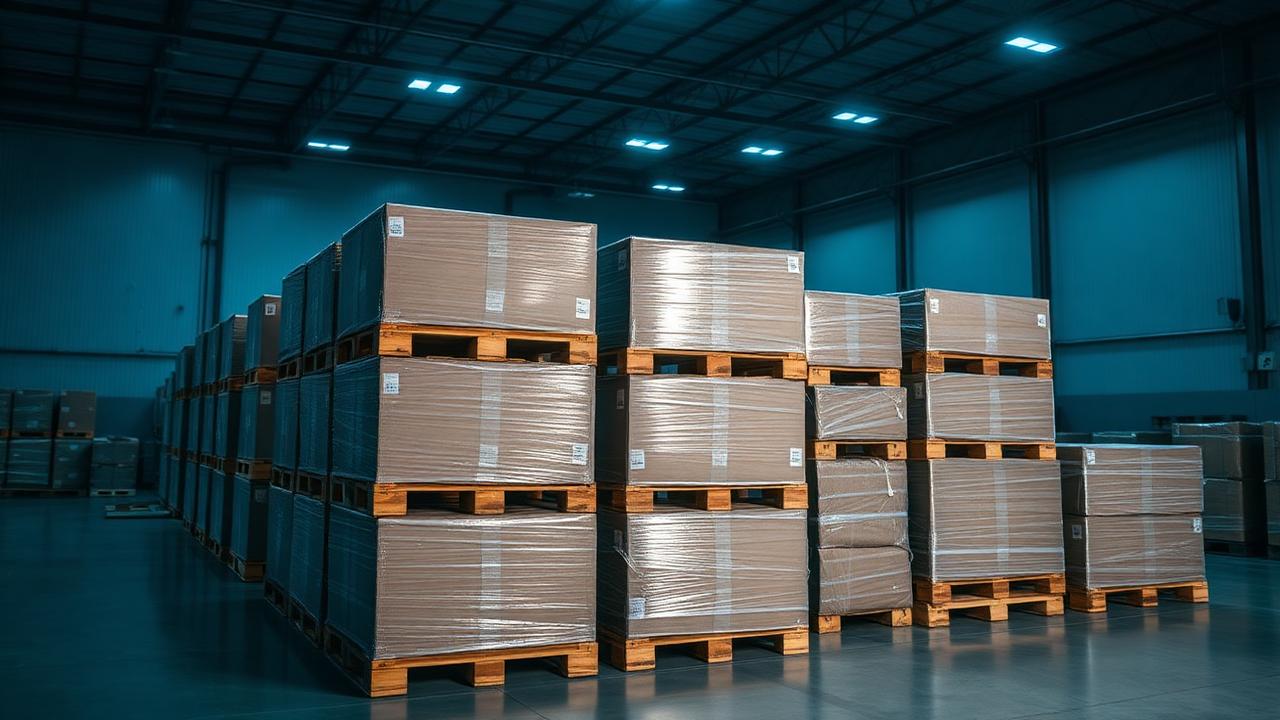
Overstock merchandise represents brand-new inventory that never left the retail supply chain to touch a customer's hands. Retailers clear out surplus to free up warehouse space before seasonal transitions, making true overstock ideal for resellers who want pristine boxes and lower testing overhead. Raw customer returns, by contrast, carry higher defect rates and heavy labor costs.
According to the NRF returns research, retail return volumes sit at historical highs, forcing stores to clear billions in unsold stock. If you examine our category recovery rates, pristine electronics typically clear 25-40% of original MSRP on secondary markets, while apparel hovers much lower at 8-15% due to size fragmentation. Tools sit comfortably higher, yielding 30-45%. When you buy overstock pallets, you skip the testing station, but you pay a higher upfront percentage of MSRP. The key is making sure the listing is genuinely overstock Grade A condition and not mislabeled store returns. Use our buying decision guide to set strict criteria before committing capital to any new seller.
Evaluating the Best Places to Buy Overstock Pallets
Where you source dictates your gross margin before freight even hits the invoice. Not all liquidation platforms operate under the same seller standards. Some platforms act as open brokerages where third-party sellers inflate MSRP values, while others run direct B2B auctions for primary retail giants.
Two main public hubs dominate online auctions: the B-Stock network and Liquidation.com auctions. B-Stock acts as a direct enterprise portal for major retailers like Target, Home Depot, and Walmart, while Liquidation.com aggregates smaller distributor lots alongside enterprise surplus. If you prefer avoiding heavy cross-country freight fees entirely, searching through our regional liquidators by city lets you identify local warehouses offering local dock pickup.
Here is how the primary sourcing channels break down when evaluating where to buy overstock lots:
| Sourcing Channel | Grade Quality | Freight Cost Structure | Typical Buyer Overhead | Ideal Reseller Profile |
|---|---|---|---|---|
| Direct Retailer B2B Portals | Grade A overstock / Grade B shelf pulls | Buyer pays full LTL / Truckload | High capital requirement ($2k+) | Established resellers with dock access |
| Wholesale Auction Aggregators | Mixed Grade A to Grade C | Palletized flat-rate or calculated LTL | Variable testing and sorting time | Intermediate eBay and Mercari sellers |
| Regional Liquidation Warehouses | Grade A/B overstock | Local pickup or regional drop | Low freight, higher per-unit bid | Small-scale reselling operations |
| Broker Liquidation Lots | Grade B shelf pulls / Grade C returns | Arranged LTL or third-party freight | High risk of manifest discrepancies | High-volume sorting operations |
To compare specific portal requirements, check our liquidation marketplace rankings for deeper fee structures across platforms.
The Hidden Freight and Accessorial Trap
Winning a lot for $600 feels like a victory until the LTL freight invoice arrives at $550. Line-haul freight typically runs between $0.80 and $2.50 per mile depending on fuel surcharges and carrier lanes. However, accessorial fees destroy margins for residential reselling setups faster than bad manifests.
Carriers bill residential delivery at $50-$100 on top of base freight. Need a liftgate because you lack a loading dock? Add another $50-$75. If your facility is classified as limited-access, such as a farm, storage unit, or downtown retail storefront, expect an extra $30-$60 charge. Reviewing FedEx Freight LTL rates or checking dimensional weight rules through UPS dimensional weight helps avoid surprises. Always calculate these surcharges with a shipping cost calculator before placing a bid on distant pallets.
Realistic P&L: Breaking Down a 32-Unit Small Appliance Lot
Let us look at a real scenario. We bid on a 32-unit overstock kitchen appliance pallet coming out of a Georgia regional distribution center.
Cost Basis & Sourcing:
- High bid on pallet: $480.00
- Marketplace buyer premium (10%): $48.00
- LTL Freight (340 miles): $215.00
- Liftgate accessorial fee: $60.00
- Total Landed Cost: $803.00
Resale Breakdown:
- 32 units total, Grade A overstock (factory packaging intact).
- Average original retail price per unit: $75.00 ($2,400 total MSRP).
- Expected average resale price (40% MSRP): $30.00 per unit gross.
- Gross revenue (32 x $30.00): $960.00.
Selling Expenses:
- Marketplace selling fees (assuming ~13.25% + $0.30/item per the eBay final value fee schedule): $136.80
- Outbound customer shipping subsidies (assuming $4.00 net cost per item): $128.00
- Packaging materials (boxes, tape, bubble wrap): $25.00
- Total selling expenses: $289.80
Net P&L Result:
- Gross Revenue: $960.00
- Less Total Landed Cost: -$803.00
- Less Total Selling Expenses: -$289.80
- Net Profit / Loss: -$132.80
That is a negative return despite winning Grade A overstock at 20% of MSRP. Why did it fail? Freight and marketplace fees ate every cent of profit. If we used a bid ceiling calculator beforehand, our maximum bid would have capped out at $180.00, not $480.00. Plugging these numbers into a pallet ROI calculator reveals that low unit-count pallets under $1,000 gross resale rarely absorb LTL freight costs unless sold via local pickup.
Sourcing Strategies for the Best Places to Buy Overstock Pallets
A manifest is a promise, but it is only as good as the system that built it. Raw manifest spreadsheets often contain missing UPCs, inflated original retail prices, or generic descriptions like "mixed housewares."
Never rely on summary totals provided by auction brokers. Run the manifest through a manifest analysis tool like Pallet IQ or manually aggregate item-level comps to establish your true target average selling price. Using a dedicated manifest analyzer lets you clean up missing product codes, strip out phantom MSRP inflation, and spot high-risk items like heavy glass or oversized goods before bidding capital.
How This Goes Wrong: The Long-Tail Inventory Trap
The easiest way to go broke buying overstock is tying up all your working capital in low-demand goods that sit on shelves for six months. A pallet of 100 brand-new iPhone 7 cases is technically pristine overstock, but nobody is buying them in high volume today.
When you buy high-volume overstock, calculate your cash flow cycle. If a lot takes six months to liquidate, your warehouse space costs and tied-up capital will erode your margins. Always evaluate sell-through velocity alongside recovery rates before buying bulk inventory.
What is the difference between overstock and customer returns?
Overstock consists of items that were never sold to retail customers, usually remaining in original factory packaging without consumer handling. Customer returns have been purchased, opened, or brought back to a store, resulting in varying degrees of wear, missing accessories, or damaged boxes.
How do I avoid paying massive freight costs on overstock pallets?
To keep shipping costs low, look for liquidation auction facilities within driving distance so you can arrange self-pickup with a box truck or trailer. If LTL shipping is unavoidable, combine multiple pallets into a single shipment to reduce the per-pallet freight fee.
What recovery rate should I expect on true overstock goods?
True overstock items usually fetch between 30% and 50% of their original MSRP on secondary platforms like eBay, Mercari, or Poshmark, depending on category demand. However, after deducting marketplace fees, outbound shipping, and landed freight, your net recovery typically lands between 15% and 25% of MSRP.
Finding the best places to buy overstock pallets requires looking past slick auction titles and focusing heavily on landed freight costs, category demand, and manifest precision. Know your numbers before bidding, set strict bid caps, and never let high MSRP numbers trick you into overpaying for slow-moving stock.
Pallet IQ Editorial Team
We buy, grade and resell liquidation pallets, then turn what we learn into the tools on Pallet IQ. Every guide here comes from real manifests, real bids and real sell through numbers.
Written September 1, 2026, last reviewed October 19, 2026