Reselling Salvage Pallets: A Real Reseller’s Blueprint
Salvage pallets can yield massive profit margins or eat your storage unit whole. Here is the exact math, grading breakdown, and process to turn broken customer returns into cash.
By Pallet IQ Editorial Team
Published · Updated
 Liquidation Strategy
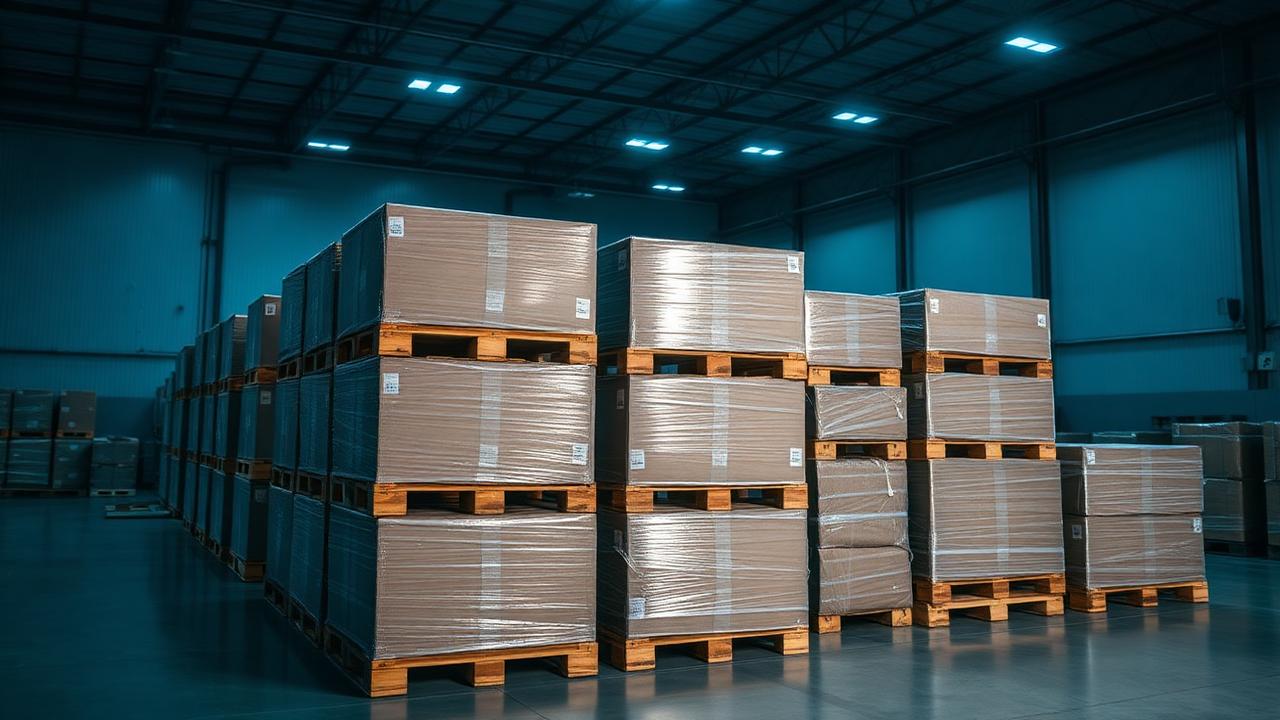
Two winters ago, an LTL freight driver dragged an 800-pound shrink-wrapped monster off his liftgate and left it at the edge of my driveway in freezing rain. It was an 18-unit lot of power tools marked as Grade D returns out of an Indiana distribution center. The top box was a Milwaukee M18 miter saw with a snapped aluminum casting. The bottom box was a DeWalt table saw missing its fence and full of wet sawdust. I had paid $340 for the lot and another $305 in freight and accessorials.
That single load taught me everything I needed to know about learning how to resell salvage pallets. If you go into salvage expecting clean boxes and quick flips, you will end up bankrupt and surrounded by plastic scrap. If you treat it like an industrial triage unit where every piece is evaluated for raw functional value, repair, or sub-assembly parts, salvage is one of the highest-margin categories in the entire secondary market.
What "Salvage" Actually Means on a Manifest
Liquidation houses assign grades to inventory before putting it on the block. Overstock and Grade A items are shelf pulls, pristine, retail-ready, and priced accordingly. Grade B and C are typically working customer returns with light cosmetic wear or damaged outer packaging. Grade D is salvage.
Salvage means the retailer or distribution center deemed the item unsuitable for direct resale. It contains heavy customer returns, damaged freight, store display models missing vital hardware, and open-box gear that someone butchered during a DIY project.
Recovery rates swing wildly depending on the category you pick. Do not touch salvage apparel or fast fashion unless you enjoy selling rags by the pound. Apparel recovery sits at an abysmal 8% to 15%. Hardware and tools, however, recover at 30% to 45% because contractors always need replacement motors, bare tools, and spare parts. Electronics land between 25% and 40%, provided you know how to flash firmware and source replacement boards.
Buying Criteria: What to Grab and What to Pass On
I never bid on unmanifested salvage. Unmanifested mystery boxes are where liquidators dump their trash after picking out the valuable items. You want manifested lots that list every SKU, brand, and item description.
When reading a manifest, look for high-value parent brands. A broken Ryobi drill is worth $10 for parts. A broken Milwaukee Fuel circular saw with a bad switch is worth $45 on eBay for parts alone, or $110 if you solder a $12 switch onto the board. Focus on categories with modular components:
- Outdoor power equipment (lawnmowers, trimmers, pressure washers)
- Heavy handheld power tools (framing nailers, rotary hammers, impact drivers)
- High-end small appliances (espresso machines, stand mixers)
Avoid categories with non-replaceable internal boards or heavily glass-dependent builds, such as budget 4K televisions or smart home hub displays. Crushed glass cannot be parted out.
| Inventory Grade | Average Cost % of MSRP | Labor Hours per Pallet | Resale Channel Focus | Risk Level |
|---|---|---|---|---|
| Grade A / Overstock | 30% - 45% | 2 - 4 hours | Amazon, eBay, Local | Low |
| Grade B / Open Box | 20% - 30% | 5 - 8 hours | eBay, Poshmark, Mercari | Medium |
| Grade C / Customer Returns | 12% - 20% | 10 - 15 hours | eBay, Facebook Marketplace | Medium-High |
| Grade D / Salvage | 5% - 12% | 15 - 25 hours | eBay Parts, Local Repair Sales | High |
The Math: A Real Salvage P&L Example
Let's run through an actual 18-unit outdoor power equipment lot bought off a regional B2B auction platform. To pull actual profit out of salvage, your landed cost basis must stay as low as humanly possible.
Upfront Costs
- Winning Bid: $340.00
- LTL Linehaul Freight (320 miles): $185.00
- Residential Delivery Accessorial: $55.00
- Liftgate Fee: $65.00
- Total Landed Cost Basis: $645.00
Manifest Triage & Net Yield
- 6 units repaired directly (swapped brushes, cleared carburetor jets, tightened wiring): Sold locally on Facebook Marketplace for $620 total. No shipping or platform fees.
- 5 units parted out on eBay (motors, housings, battery adapters, switches): Grossed $580. Platform fees at ~13.25% plus $0.30 per order cost $80.25. Outbound shipping covered by buyers. Net proceeds: $499.75.
- 3 units re-bundled as a single "DIY Fixer Lot" on local classifieds: Sold for $150 cash.
- 4 units unsalvageable (cracked main frames, stripped gears, melted casings): Scrapped for metal/trash. Value: $0.
Bottom Line
- Gross Resale Receipts: $1,350.00
- Platform Fees: $80.25
- Net Revenue: $1,269.75
- Total Cost Basis: $645.00
- Net Profit: $624.75
- ROI: 96.8%
Notice that four of the eighteen items were completely dead weight. If you build your spreadsheet assuming 100% of the items will resell, you will lose money. Model every salvage lot as if 25% to 30% of the pieces are going straight into the dumpster.
Step-by-Step Workflow: How to Resell Salvage Pallets Efficiently
When evaluating a manifest, run the line items through a manifest analysis tool like Pallet IQ to isolate true market averages from inflated MSRP numbers. Once the pallet hits your shop, execute a rigid triage process.
- Cut the wrap and sort into three staging piles: Clean/Working, Repairable, and Scrap/Parts.
- Serial tag every chassis. Track serials in your spreadsheet to avoid return fraud from online buyers switching broken units with your working stock.
- Test functionality immediately. Plug items into a GFCI outlet and use an inline watt meter to check draw.
- Clean aggressively. Dust, mud, and grease knock 30% off local resale values. A pressure washer and a bottle of simple green turn a ugly return into an acceptable cash listing.
- Strip unrepairable units for components. Switches, harness plugs, armature assemblies, and outer plastic shells sell consistently on eBay to specialty repair shops.
Where Salvage Reselling Goes Wrong
The biggest failure mode in this business is the labor trap. It is easy to spend three hours fixing a $30 string trimmer, only to realize you made $4 an hour after accounting for parts and platform fees. Set a hard time budget for repairs. If you cannot diagnose and fix an item within forty-five minutes, pull the salvageable assemblies, list the shell for parts, and move to the next item.
Freight costs will also wipe out your margins if you are careless. Standard LTL rates look cheap until the freight carrier stacks on $50 for a liftgate, $50 for residential delivery, and $40 for a limited-access surcharge because your workshop is behind an alley. Always calculate freight accessorials before placing a bid.
Finally, watch out for battery disposal rules. Damaged lithium-ion packs from salvage tool lots cannot be thrown in the household trash or shipped via standard USPS services without proper hazard labeling. If you receive swollen or shorted lithium batteries, take them directly to a certified recycling drop-off.
Mastering how to resell salvage pallets comes down to discipline. Keep your freight costs grounded, treat every item as a collection of valued parts rather than junk, and do not fall in love with broken inventory.
Pallet IQ Editorial Team
We buy, grade and resell liquidation pallets, then turn what we learn into the tools on Pallet IQ. Every guide here comes from real manifests, real bids and real sell through numbers.
Written August 23, 2026, last reviewed October 19, 2026