Pallet Delivery Cost Calculator: Master Freight Math
A surprise $412 carrier re-rating on a lot out of Nevada wiped out my entire margin. Here is how to calculate true landed pallet freight costs before bidding.
By Pallet IQ Editorial Team
Published · Updated
 Pallet Math
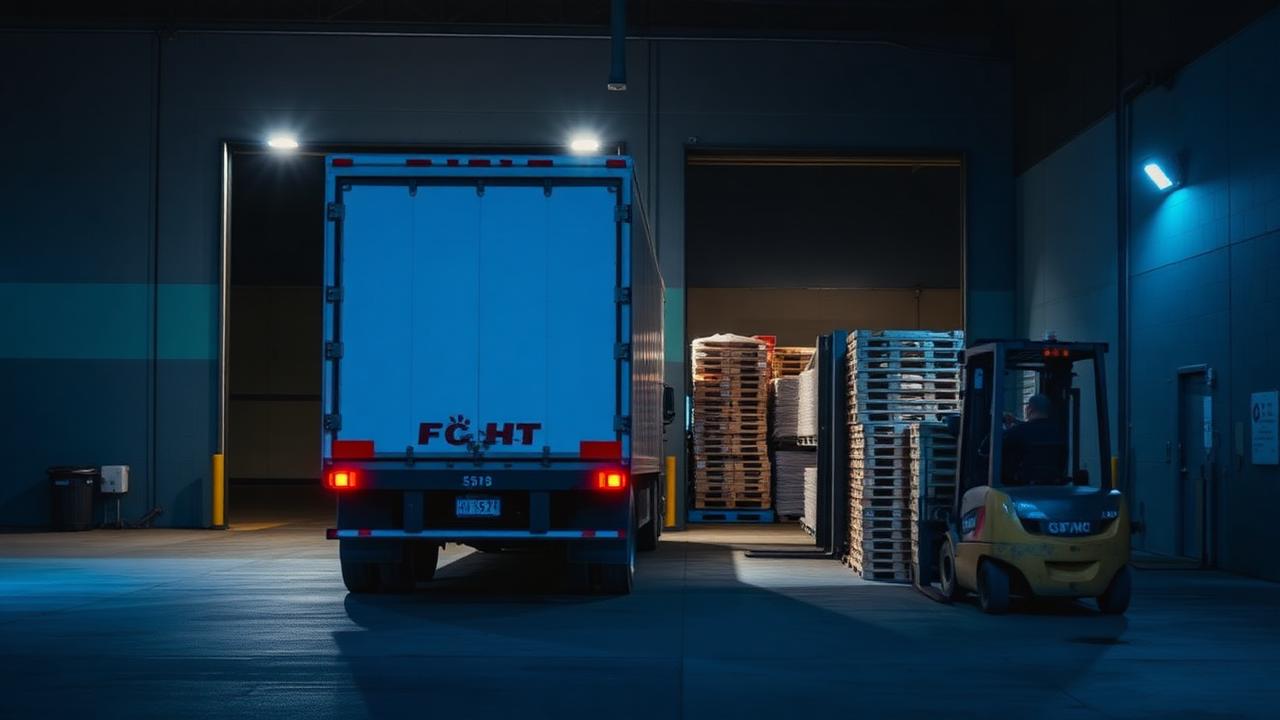
Three summers ago, a dry van backed into the alley behind my suburban garage and the driver stepped out holding a clipboard with a fresh $412 bill for line-haul re-rating. My $650 bid on a 420-pound lot of returned kitchenware out of a Sparks, Nevada facility had just turned into a net loss before I even cut the shrink wrap. The seller's shipping quote was an automated baseline that assumed a commercial facility with a raised loading dock and a forklift. I had neither. By the time the freight carrier tacked on residential delivery, liftgate service, and a re-weigh fee, freight wiped out my entire projected margin.
That single shipment taught me a lesson that every reseller learns eventually: freight isn't a secondary line item. It is the line item. If you buy inventory on B-Stock or direct retail liquidation auctions without running your numbers through a precise pallet delivery cost calculator framework, you are essentially gambling on whether the shipping company lets you keep your profits.
Why standard freight estimates destroy your margin
Most beginners think freight is simple mileage math. They see a flat rate quote or plug two zip codes into a basic shipping estimator, add twenty dollars for safety, and place their bid.
That is how you lose money. Less-than-truckload, or LTL shipping, relies on a dense web of variables that shift daily based on fuel surcharges, driver availability, and terminal congestion. Less-than-truckload simply means your pallet shares trailer space with cargo from six other companies rather than taking up the entire 53-foot truck.
When you ship LTL, freight carriers do not just bill for physical weight. They charge based on freight class, dimensional weight, and accessorial fees. If you ignore any of these three factors, your baseline profitability calculations crumble. Dimensional weight measures the cubic volume of your pallet relative to its actual weight, while accessorial fees are extra charges for services outside a standard terminal-to-terminal run.
If you don't calculate your landed costs accurately before bidding, you end up overpaying for inventory. You can run these shipping variables beforehand with our dedicated shipping cost calculator to catch accessorial surprises before you hit place bid.
Building your own pallet delivery cost calculator framework
To build a reliable bidding rule, you must understand how LTL pricing breaks down on real bills of lading. The basic carrier calculation relies on four core metrics.
First is distance and lane density. Shipping a pallet 400 miles along a heavily traveled corridor like Atlanta to Charlotte costs significantly less per mile ($0.80 to $1.20) than shipping that same pallet 200 miles into a rural pocket ($2.00 to $3.50 per mile).
Second is freight class. The National Motor Freight Traffic Association assigns classes ranging from Class 50 (dense items like steel nuts and bolts) to Class 500 (lightweight, bulky items like un-assembled plastic furniture). Liquidation apparel usually falls into Class 100 to 125, while unboxed mixed electronics sit around Class 150. Higher classes carry higher base rates.
Third is dimensional weight. Carriers apply a standard divisor (usually 139 for air or domestic LTL) to determine if your pallet takes up more space than its physical weight justifies. A 48 by 40 by 72 inch pallet of paper towels weighs 180 pounds, but its dimensional weight hits over 990 pounds. You pay for the 990 pounds.
Fourth is accessorial charges. This is where independent resellers get pounded. Here are standard carrier rates from networks like FedEx Freight:
- Residential delivery charge: $50 to $120
- Liftgate service (origin or destination): $50 to $95 per occurrence
- Limited access fee (schools, storage units, rural sites): $35 to $85
- Inside delivery: $75 to $150
- Appointment scheduling fee: $15 to $40
Before putting down cash, plug your maximum bid limit into our maximum bid calculator so freight fees do not swallow your upside.
Real-world P&L: A 2-pallet retail return lot
Let's break down a real scenario. You win a 2-pallet customer return lot of mixed housewares from a regional distribution center 380 miles away.
The manifest shows an estimated original retail value of $4,200 across 64 items. You bid $620 and win. Here is how your landed cost and profit margin look when you run the full stack through a strict financial process.
| Expense / Revenue Line Item | Cost / Revenue | Notes |
|---|---|---|
| Winning Auction Bid | $620.00 | Winning price on liquidation portal |
| Auction House Buyer Premium | $62.00 | Standard 10% buyer fee |
| Base Line-Haul Freight (LTL) | $285.00 | 380-mile lane for two 48x40 pallets |
| Fuel Surcharge | $42.75 | Current 15% carrier fuel index |
| Residential Delivery Accessorial | $65.00 | Delivery to residential address |
| Destination Liftgate Service | $55.00 | Required for un-loading without dock |
| Total Landed Inventory Cost | $1,129.75 | Your actual cash out-of-pocket |
Now let's look at realistic gross recovery. Customer returns in household goods usually yield a 30% to 40% net recovery against original retail after testing, cleaning, and discarding dead units.
- Gross Realized Sales (38 usable units sold): $1,470.00
- Marketplace Fees (e.g., eBay final value fees at 13.25% + $0.30/item): $206.10
- Outbound Customer Shipping Costs (buyer paid half, you absorbed half): $115.00
- Total Resale Revenue Net of Selling Costs: $1,148.90
- Net Cash Profit: $19.15 ($1,148.90 minus $1,129.75)
You spent three days processing, cleaning, testing, and packing 38 items to make $19.15. Why? Because line-haul, fuel, liftgate, and residential fees ate $447.75 of your gross margin. If you had run this shipment through a pallet ROI check, you would have capped your bid at $320 instead of $620. Calculate your expected return across shipping and seller fees using our pallet ROI calculator.
Comparing delivery options for independent buyers
If you buy small lots regularly, you must choose the right freight delivery setup. Here is how common delivery methods compare for a standard 400-pound, single-pallet shipment.
| Delivery Setup | Average Base Cost | Essential Surcharges | Typical Transit Time | Risk Factor |
|---|---|---|---|---|
| Commercial Dock to Dock | $140 - $220 | Fuel surcharge only | 2 - 4 business days | Very Low |
| Terminal Pickup (Hold at Hub) | $140 - $220 | Storage fees if delayed past 48 hours | 2 - 4 business days | Low |
| Residential with Liftgate | $240 - $380 | Residential + Liftgate + Call Ahead | 3 - 6 business days | Medium (liftgate scheduling delays) |
| Limited Access / Storage Facility | $270 - $430 | Limited access + Residential + Liftgate | 3 - 7 business days | High (driver refusal risk) |
Terminal pickup is the single best secret for home-based resellers. If you own a pickup truck or a flatbed trailer, you can request freight to be held at the nearest carrier terminal. You bypass residential fees, liftgate fees, and appointment wait windows entirely.
How freight math goes wrong on your first truckload
The most expensive mistakes happen when buyers scale up from single pallets to full truckloads or multi-pallet drops without adjusting their logistics plan.
Here is the exact failure mode: a reseller rents a 10x20 self-storage unit with a roll-up door. They buy a 6-pallet lot of customer returns from a vendor down south. They assume that because the storage facility has a paved parking lot, a standard 53-foot dry van truck can swing in, pull up to their door, and offload.
The carrier driver arrives, takes one look at the low overhead wires, tight turning radius, and lack of a loading dock, and marks the shipment as un-deliverable due to limited site access.
The carrier drives away. Now the reseller gets hit with:
- A redelivery fee ($100 - $250)
- A limited access surcharge ($50 - $90)
- Storage fees at the freight terminal ($50 per day after 48 hours)
- A forced re-consignment charge to move the load to a hub or terminal
Within 72 hours, an extra $500 to $800 in carrier penalties accumulates on a lot that was supposed to make $1,200 in gross margin. Always verify access restrictions before committing. Before pulling the trigger on complex purchases, evaluate the full picture with our buying decision guide.
To accurately project net payouts across different sales platforms like Facebook Marketplace or Mercari, plug your projected selling prices into our marketplace fee calculator.
Using a pallet delivery cost calculator before your bid
You cannot run a liquidation reselling business on guesswork. When you bid on raw manifests, every single dollar added to freight comes directly out of your pocket.
Before you place your next bid on any auction board, run your numbers through a proper pallet delivery cost calculator methodology. Know your origin zip code, your destination access rules, your freight class, and your accessorial stack. If the numbers leave you with paper-thin margins, walk away. There is always another pallet coming down the line.
Frequently asked questions
How do I estimate LTL freight costs without a commercial loading dock?
Add $110 to $170 over the base line-haul quote to account for residential delivery and liftgate fees. If you have a pickup truck, ask the carrier to hold the pallet at their local freight terminal. Terminal pickup drops those extra fees and lets you unload on your own schedule.
What is accessorial stacking, and how can I avoid it?
Accessorial stacking occurs when a carrier applies multiple individual service fees to a single shipment, such as adding residential delivery, liftgate service, limited access, and appointment notification together. You can avoid stacking by shipping to a commercial address with an existing dock or picking up directly from a carrier terminal.
Does freight class really change the price that much?
Yes. Lower freight classes represent dense, low-damage items that cost less per pound to transport. Moving a pallet from Class 70 to Class 150 can increase your base line-haul rate by 40% to 70% for the exact same physical weight, because bulky goods take up valuable trailer cubic volume.
Pallet IQ Editorial Team
We buy, grade and resell liquidation pallets, then turn what we learn into the tools on Pallet IQ. Every guide here comes from real manifests, real bids and real sell through numbers.
Written October 7, 2026, last reviewed October 19, 2026