Online Arbitrage vs Liquidation Reselling: Margins, Risk, and Real Operations
A operator-level breakdown of online arbitrage vs liquidation reselling: capital needs, net margins, freight realities, platform risks, and scaling bottlenecks.
By Pallet IQ Editorial Team
Published · Updated
 Resell Strategy
When scaling a reselling business, two primary inventory acquisition models dominate the conversation: online arbitrage (OA) and liquidation reselling. While both involve buying undervalued merchandise and selling it across online marketplaces, their operational mechanics could not be more distinct. One relies on software scripts, retail clearances, and rapid turnover via Amazon FBA. The other demands physical square footage, grading labor, freight logistics, and multi-channel liquidation strategies.
Choosing between online arbitrage vs liquidation reselling isn't about finding an objectively superior business model. It comes down to matching your existing capital, physical facility, labor capacity, and platform risk tolerance to the right supply chain strategy. Here is an operator's breakdown of how these two models compare on the ground.
Sourcing Mechanics and Sourcing Velocity
Online Arbitrage (OA)
Online arbitrage sourcing focuses on identifying price discrepancies between retail e-commerce sites (Target, Walmart, Kohl's, Nike) and third-party marketplaces (primarily Amazon). Resellers utilize specialized scanning software and browser extensions to analyze historical sales rank, buy box stability, and pricing trends.
Sourcing in OA is highly structured. You purchase unit-by-unit or in small multi-packs directly from standard retail checkout pages. Sourcing is clean: if you buy 15 units of a specific SKU, each unit arrives brand-new, packaged in standard retail boxes, and ready to be prepped and forwarded to a fulfillment center.
Liquidation Reselling
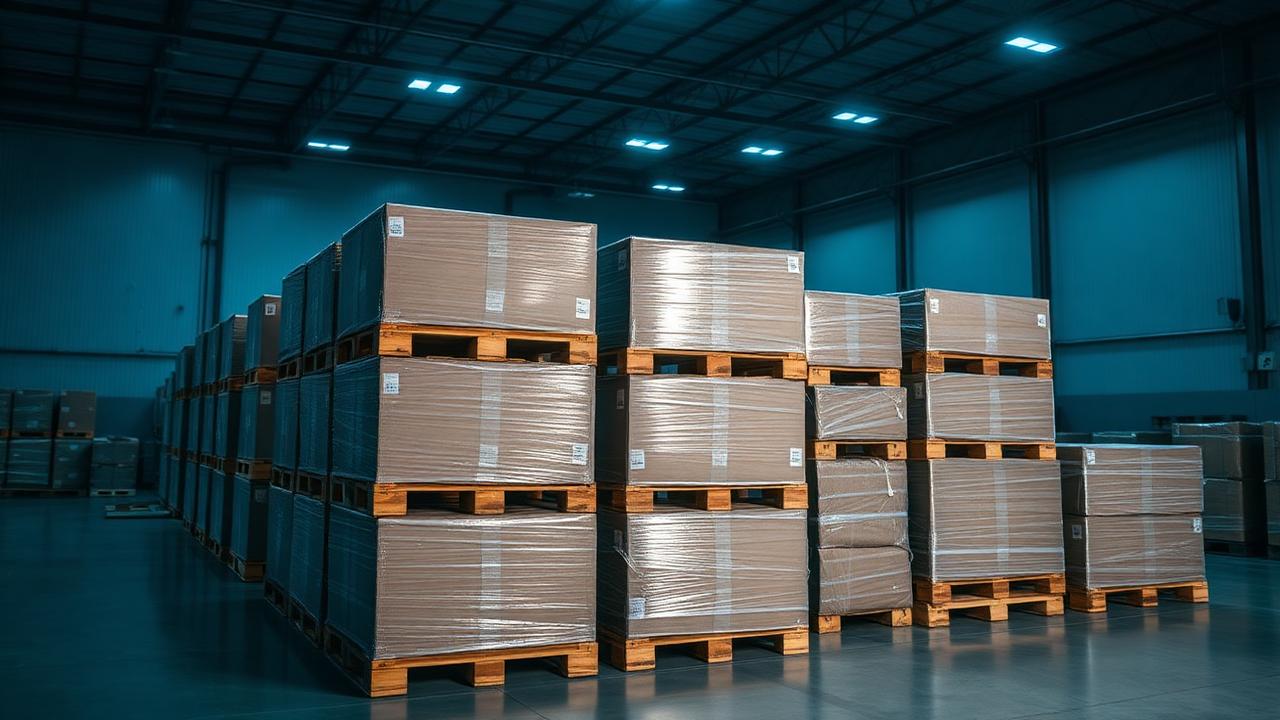
Liquidation reselling involves purchasing bulk inventory, ranging from individual gaylords and single pallets to full 53-foot LTL truckloads. The inventory consists of customer returns, shelf pulls, overstock, or salvage goods sold by major retailers through liquidators or direct B2B auction portals.
Unlike OA, liquidation inventory is heterogeneous. Even when purchasing a manifested pallet, line-item accuracy rarely hits 100%. Unmanifested pallets require a complete manual audit upon arrival. You are not buying individual SKUs; you are buying a block of bulk inventory with variable condition grades ranging from factory-sealed overstock to heavily damaged customer returns.
Unit Economics, Margins, and Recovery Rates
The financial structure of each business model highlights a clear trade-off: predictable, lower-margin unit velocity versus variable, high-margin asset recovery.
Online Arbitrage Economics
- Gross Margin: 25% to 40%
- Net Margin: 12% to 20% (after seller fees, inbound freight, software, and prep)
- Starting Capital: $500 to $2,000
- Inventory Velocity: High (30 to 45-day target turnover)
In online arbitrage, your cost of goods sold (COGS) is locked in before you buy. If a small appliance costs $30 on Walmart.com and holds a steady $75 Buy Box on Amazon, your return on investment (ROI) calculation is simple. After Amazon’s ~15% referral fee and a $7.50 FBA pick-and-pack fee, your net payout is roughly $56.25, leaving a $26.25 net profit (87.5% ROI on COGS).
However, because thousands of sellers run identical sourcing tools, price tanking occurs frequently. When 20 sellers hop on the same listing within a week, margins can evaporate quickly.
Liquidation Reselling Economics
- Gross Margin: 50% to 150%+ (on paper)
- Net Margin: 20% to 35% (after yield loss, freight, processing labor, and selling fees)
- Starting Capital: $1,500 to $5,000 (factoring in freight costs)
- Inventory Velocity: Moderate to Slow (60 to 120-day turnover)
Liquidation economics depend entirely on yield rate and freight amortization. A raw customer return pallet might cost $400, but getting that pallet delivered via LTL freight adds $150 to $300 depending on distance, fuel surcharges, and liftgate fees. Your true starting COGS is $650, not $400.
To calculate real recovery on a liquidation pallet, operators apply a yield formula based on realistic item conditions:
- Grade A/B (New / Open-Box): ~50% of manifest MSRP value (Resale value: 40-60% of original retail)
- Grade C/D (Used / Damaged / Parts): ~30% of manifest MSRP value (Resale value: 15-25% of original retail)
- Scrap Rate (Trash / Missing Parts): ~20% of manifest total (Resale value: $0)
If a pallet carries $4,000 in total original MSRP, a realistic total gross recovery across eBay, local sales, and secondary markets ranges from $1,100 to $1,400. Subtracting your $650 landed COGS and ~13% marketplace fees leaves a net profit of $307 to $568. The profit per pallet is solid, but it requires labor to unpack, grade, test, clean, photo, and list every individual piece.
Physical Footprint and Operational Friction
Logistical constraints are often the real deciding factor between these two models.
Space and Equipment Requirements
Online arbitrage can be run comfortably out of a spare room or residential garage. Inventory moves fast, unit sizes are generally small, and if physical space becomes a bottleneck, third-party prep centers (3PLs) can inspect, label, and ship your goods directly to Amazon centers without you ever touching a box.
Liquidation requires substantial space. A single standard pallet occupies a 40x48-inch footprint, but working that pallet requires three to four times that space for staging, sorting bins, testing apparatus, photo tables, and packing materials. Furthermore, receiving LTL freight at a residential address incurs extra carrier fees ($75-$125 for liftgate and residential delivery). Serious liquidation reselling rapidly forces you into a dedicated workshop or a commercial warehouse with a loading dock.
Processing Labor
- OA Processing: Low manual labor. You create shipments inside Amazon Seller Central or InventoryLab, print FNSKU barcodes, tape the box, and drop it off at UPS.
- Liquidation Processing: Heavy manual labor. You must break down pallets, test electronics for basic functionality, clean off store sticker residue, verify missing accessories, take custom photos for individual listings, and manage local customer pickups for bulky non-shippable items.
Platform Risk and Marketplace Compliance
Every reseller operates on rented land, but online arbitrage and liquidation face entirely different account safety hazards.
Online Arbitrage Risks
- IP Invoices & Authenticity Checks: Amazon routinely flags listings for Intellectual Property (IP) complaints or random authenticity verification. Retail checkout receipts from big-box stores are frequently rejected by Amazon's seller performance team, which prefers formal wholesale invoices. Unresolved IP complaints can freeze account funds or trigger permanent suspensions.
- Brand Gating: Brands actively restrict third-party sellers from listing their items as "New" without direct distributor authorization.
Liquidation Reselling Risks
- Inaccurate Grading & Returns: Selling customer returns on eBay or Mercari carries higher default return rates. Misgrading a Grade C item as Grade B leads to "Item Not As Described" (INAD) claims, forcing you to pay round-trip shipping costs and taking hits to your seller metrics.
- Condition Restrictions on Amazon: Customer returns should almost never be listed as "New" on Amazon, regardless of how clean the box looks. Liquidation inventory is primarily sold across eBay, Facebook Marketplace, Poshmark, Mercari, or specialized local liquidations.
Software Infrastructure and Sourcing Tools
Because the workflows differ, the software stack required to run each model efficiently is completely distinct.
``` +-----------------------+----------------------------------+----------------------------------+
| Feature | Online Arbitrage (OA) | Liquidation Reselling |
|---|
+-----------------------+----------------------------------+----------------------------------+
| Primary Channels | Amazon FBA | eBay, Local, Mercari, Poshmark |
|---|---|---|
| Sourcing Tech Stack | Keepa, Tactical Arbitrage | Manifest Scanners, PalletIQ |
| Inventory Unit Size | Small, predictable, packaged | Bulky, varied, unpredictable |
| Labor Intensity | Low (Digital/Prep focus) | High (Testing/Grading/Photos) |
| Main Bottleneck | Brand gating & price tanking | Sorting throughput & workspace |
+-----------------------+----------------------------------+----------------------------------+ ```
When analyzing raw liquidation manifests containing hundreds of unformatted line items, evaluating expected margins line-by-line manually takes hours. Using a tool like PalletIQ allows liquidation resellers to upload raw manifest files, automatically pull live marketplace pricing, factor in category scrap rates, and output accurate net margin projections before placing a bid on an auction.
Which Model Fits Your Operation?
Choose Online Arbitrage if:
- You operate out of an apartment or small home office with no freight access.
- You want to leverage Amazon FBA's fulfillment network to avoid individual pick-and-pack operations.
- You excel at digital sourcing, data analysis, and tracking pricing trends using charts.
- You want rapid capital turnover and highly standardized inventory.
Choose Liquidation Reselling if:
- You have access to a garage, shop, or commercial warehouse space.
- You have the setup to test, repair, or clean physical merchandise.
- You want to buy inventory at massive discounts (10 to 25 cents on the dollar) and build multi-channel sales streams.
- You prefer local cash flow channels (Facebook Marketplace, local auctions) alongside online platforms like eBay.
Final Conclusion
Neither model provides passive income. Online arbitrage is essentially a financial arbitrage and catalog management game, where success relies on speed, software, and compliance with Amazon’s strict rules. Liquidation reselling is a physical logistics and secondary asset recovery business, where success relies on freight efficiency, rapid grading labor, and accurate yield math. Evaluate your space, your capital, and your operational strengths before committing to a inventory strategy.
Pallet IQ Editorial Team
We buy, grade and resell liquidation pallets, then turn what we learn into the tools on Pallet IQ. Every guide here comes from real manifests, real bids and real sell through numbers.
Written July 27, 2026, last reviewed October 19, 2026