How to Resell Tool Liquidation Pallets for Real Profit
A veteran reseller breaks down real tool manifest math, testing workflows, carrier freight traps, and how to avoid getting stuck with dead batteries.
By Pallet IQ Editorial Team
Published · Updated
 Resell Guides
Two years ago, I bought a 38-unit power tool return lot out of a Greenfield, Indiana fulfillment facility for $1,450. On paper, it looked like a slam dunk. The manifest listed Milwaukee M18 Fuel drivers, DeWalt 20V Max saws, and a couple of Rigid combo kits. I figured I would wipe them down, throw them on eBay, and clear $1,200 net profit by Friday.
Instead, I spent eighteen hours in a cold garage with a multimeter, three replacement chucks, and a stack of twelve dead lithium-ion batteries that would not take a charge. After freight, platform fees, and replacement parts, I made $114.
Learning how to resell tool liquidation pallets profitability isn't about finding a magic supplier. It comes down to cold manifest math, strict testing protocols, and knowing exactly which tool categories are worth your bench time.
Tool Pallet Liquidation Grade Realities
Tools carry some of the highest category recovery rates in the resale market, typically 30% to 45% of MSRP for mixed customer returns, and up to 60% to 70% for overstock or factory reconditioned units. But customer returns in the hardware space behave differently than apparel or home decor.
When a buyer returns a sweater, it usually didn't fit. When a buyer returns an SDS rotary hammer drill, there is a 50% chance they used it to bust up a concrete patio over the weekend and dumped it back on the retailer on Monday morning.
Understanding industry grading is critical before placing a single bid.
- Grade A (Overstock / Shelf Pulls): Pristine condition, intact original retail boxes. Expect 55-70% recovery. These require zero bench time beyond a quick visual inspection.
- Grade B (Refurbished / Open Box): Factory reconditioned or clean customer returns. Usually complete with accessories. Recovery ranges from 40-55%.
- Grade C (Raw Customer Returns): Uninspected returns direct from retail store return desks or dot-com fulfillment centers. Expect 25-40% working units out of the box, 35% needing light repair or missing parts, and the rest as scrap.
- Grade D (Salvage / Parts Only): Stripped units, melted housings, smashed motor casings. Buying these only makes sense if you already run a dedicated repair shop and need armatures, switches, and housings for parts inventory.
If you want to survive in this category, stay away from raw, unmanifested gas-powered outdoor power equipment. String trimmers and chainsaws returned to home improvement centers almost always have gummed-up carburetors filled with stale 87-octane ethanol fuel. Unless you enjoy ultrasonic cleaning tanks and rebuilding tiny diaphragms for a $15 profit margin, leave those lots on the truck.
Manifest Evaluation and Landed Cost Math
Never bid on a pallet based on total retail MSRP alone. The MSRP listed on liquidator manifests is often bloated, reflecting the original full-price sticker from three seasons ago rather than current market value.
Before you evaluate a lot, download the manifest CSV. Cross-reference every single line item against completed, sold listings on eBay, not active asking prices. Filter specifically for "Used" or "For Parts/Not Working" condition depending on the lot grade.
Running 50 to 200 line items through a spreadsheet manually takes hours. Using a manifest analysis tool like Pallet IQ speeds this up by pulling historical resale averages, estimated platform fees, and item-level weight data instantly so you can spot padded retail values before bidding.
Your bid price is only half the equation. Freight will kill your margins faster than broken tool armatures if you don't calculate your landed cost upfront.
Standard Less-Than-Truckload (LTL) freight runs anywhere from $0.80 to $2.50 per mile depending on fuel surcharges and lane density. But the real margin killers are carrier accessorial charges:
- Residential Delivery Fee: $50 to $100
- Liftgate Service: $50 to $75 (required if you do not have a commercial loading dock or forklift)
- Limited Access Fee: $30 to $60 (schools, storage units, rural farms)
If you win a tool pallet for $600 and the carrier adds $280 in base freight plus $125 in accessorials, your true landed cost is $1,005. If the total realistic market value of the working tools on that pallet is $1,400, platform fees will push you straight into a net loss.
How to Resell Tool Liquidation Pallets Step by Step
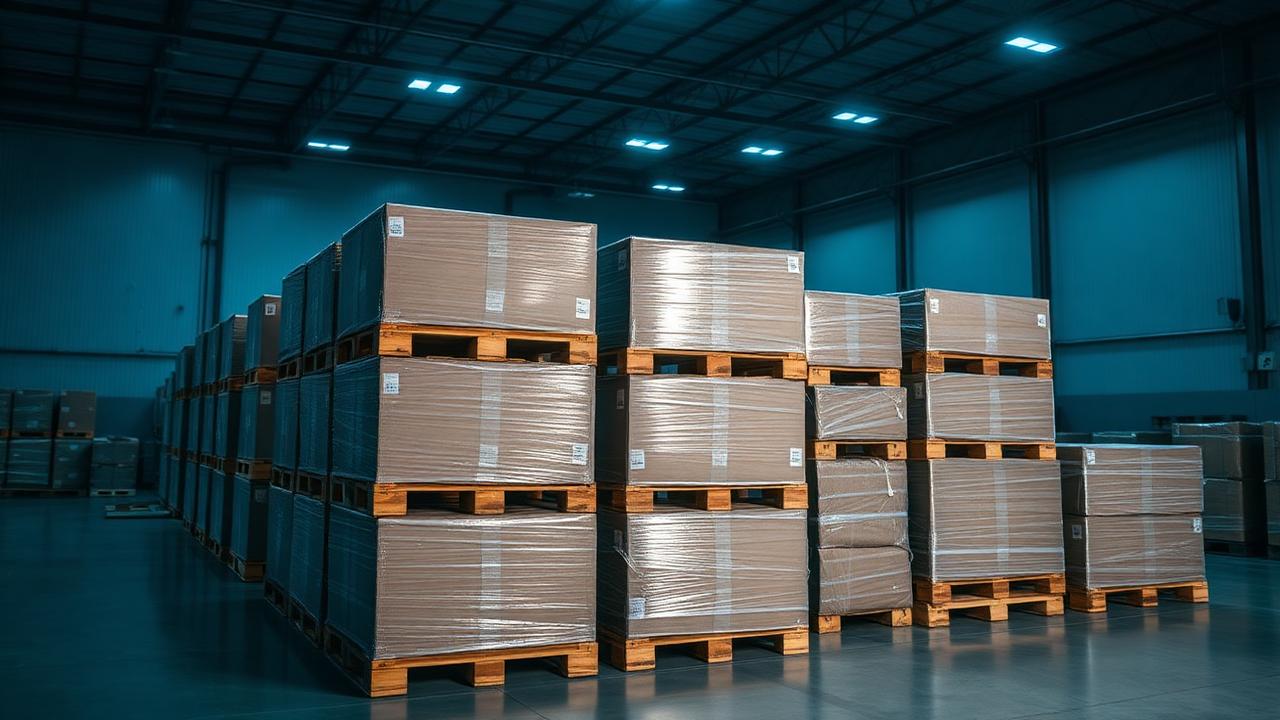
Once the freight truck drops a 48x40-inch pallet in your driveway, your process needs to be systematic. Do not start listing items until you have triaged the entire load.
Step 1: Sorting and Safety Triage
Cut the stretch wrap and clear off a workbench. Group the tools by brand and system (for instance, all Milwaukee M18 in one stack, DeWalt 20V in another, Ryobi ONE+ in a third). Keep batteries completely separate until testing.
Inspect corded tools for spliced rubber jackets or exposed copper wire before plugging them into an outlet. Check power tool housings for hairline fractures around the handle and motor mounts. A drill with a cracked motor housing is unsafe and should immediately be downgraded to a parts lot.
Step 2: Bench Testing Protocols
Every tool category requires a specific testing protocol:
- Corded Drills and Grinders: Plug into a surge-protected outlet. Check trigger variable speed response, forward/reverse switch, lock-on button, and look for excessive sparking at the motor brushes.
- Cordless Bare Tools: Insert a known, fully charged shop battery. Run the tool under light resistance. For impact drivers, verify the anvil engages properly. For circular saws, check spindle lock operation and guard spring return.
- Lithium-Ion Batteries: Place a voltage meter across the terminals. If a 20V max battery reads below 12 volts, standard chargers will flash a "defective" error code. You can sometimes jump-start low-voltage cells using an external DC power supply, but never sell a jumped battery without disclosing its history.
Step 3: Channel Selection and Platform Fees
Different platforms serve different tool buyers. Selling a 14-pound SDS Max masonry hammer on eBay means paying heavy outbound shipping fees and platform cuts, whereas local cash sales avoid shipping risks entirely.
Here is how marketplace fees break down for tool resellers:
- eBay: ~13.25% final value fee + $0.30 per order. Best for bare tools, high-end brushless drivers, replacement parts, and specialty trade tools.
- Amazon (Third-Party Merchant): ~15% category fee. Only applicable for brand-new, factory-sealed Grade A overstock. Gating restrictions apply heavily to DeWalt and Bosch.
- Mercari: 10% selling fee. Great for small bare tools, chargers, and light drill sets.
- Facebook Marketplace: 0% for local cash pickup; 5% for shipped items. Ideal for heavy stationary tools, air compressors, combo kits, and lower-tier consumer brands like Ryobi or Craftsman.
Worked P&L Example: 24-Unit Home Improvement Return Lot
To see how the numbers hold up in practice, let's examine a real-world calculation for a 24-unit mixed power tool pallet purchased out of a regional retail distribution center.
Expenses (Cost Basis)
- Winning Auction Bid: $720.00
- Buyer’s Premium (10%): $72.00
- LTL Freight Charge: $185.00
- Liftgate Accessorial: $60.00
- Residential Delivery Accessorial: $50.00
- Replacement Parts Purchased (2 chucks, 1 battery door): $34.00
- Total Landed Cost Basis: $1,121.00
Yield and Resale Breakdown
Out of 24 units manifest:
- 15 units tested fully functional (Grade A/B condition)
- 5 units needed minor cleaning or small parts (Grade C condition)
- 4 units unrepairable / missing major components (Grade D condition)
Sales Output:
- 15 Working Bare Tools & Kits (eBay): $1,420.00 gross
- 5 Lightly Repaired Tools (Facebook Local Pickup / Cash): $270.00 gross
- 4 Salvage/Parts Lots (Bundled together on eBay as a mechanic's special): $95.00 gross
- Total Gross Revenue: $1,785.00
Selling Fees & Shipping Expenses
- eBay Platform Fees ($1,515 total eBay sales @ 13.25% + $0.30 per order x 12 transactions): $204.34
- Outbound Shipping Paid by Seller (promotional free shipping on small bare tools): $68.00
- Facebook Marketplace Local Cash Fees: $0.00
- Total Realized Selling Expenses: $272.34
Net Profit Decision
- Net Revenue: $1,785.00 - $272.34 = $1,512.66
- Less Total Landed Cost Basis: $1,512.66 - $1,121.00 = $391.66 Net Profit
- Return on Investment (ROI): 34.9%
This is a solid, realistic margin for an experienced operator. Notice that four items were complete junk, yet the lot remained profitable because the acquisition price accounted for scrap rates.
Tool Pallet Grade Comparison
Use this reference table when reviewing manifests to estimate processing overhead before submitting your bids.
| Tool Category & Grade | Average Recovery (% of MSRP) | Testing & Prep Time | Ideal Sales Channel | Risk Level |
|---|---|---|---|---|
| Grade A Overstock Power Tools | 60% - 75% | 5 mins / unit | eBay / Amazon / Mercari | Low |
| Grade B/C Brushless Bare Tools | 35% - 50% | 15 mins / unit | eBay / Facebook Local | Medium |
| Grade C Outdoor Gas Equipment | 15% - 30% | 45+ mins / unit | Facebook Local / Small Engine Shop | Extremely High |
| Grade C/D Tool Accessories & Bits | 20% - 35% | 10 mins / lot | eBay Bundles / Flea Market | Low |
| Heavy Stationary Machinery | 30% - 45% | 30 mins / unit | Facebook Local Cash Only | Medium |
How This Goes Wrong: The Battery Trap
The single fastest way to blow up your margins on tool liquidation is misjudging cordless combo kits that include lithium-ion batteries.
A manifest might list a DeWalt 20V Max 5-Tool Combo Kit with an MSRP of $599. On paper, that looks like $250 in potential resale value. But when you open the box, the tools themselves are often in working shape, while the two 4.0Ah batteries inside have been swapped out by the returning customer for completely dead 1.5Ah batteries from 2016.
Genuine OEM lithium batteries are expensive. A replacement DeWalt 20V 4.0Ah pack costs $80+ wholesale. If you have to buy brand-new batteries to sell a tool kit as a working bundle, your profit margin instantly turns negative.
Protect yourself against the battery trap with these rules:
- Value cordless combo kits on manifests as bare tools only. Assume every battery included in a customer return lot is degraded or dead.
- Never buy knockoff unbranded batteries off generic importing sites to complete a branded kit. If a fire or failure occurs, you hold strict product liability as the reseller.
- If a battery arrives dead, list the bare tool by itself and sell the dead battery casing in a dedicated "crafting / cell rebuilding" lot on eBay to recover a few dollars.
Long-Term Success Strategy
Knowing how to resell tool liquidation pallets reliably comes down to strict operational discipline. Set a firm maximum bid based on conservative resale estimates, account for LTL freight accessorials down to the dollar, and build a dedicated testing bench with spare chargers and diagnostic meters.
When you stop bidding on raw MSRP numbers and start pricing lots based on true landed costs and scrap yields, tool liquidation changes from a risky gamble into a repeatable, profitable business.
Do I need to be a certified technician to resell power tool pallets?
No. Most customer returns only require basic cleaning, cosmetic triage, and functional verification with a battery or power source. If a tool requires complex internal armature work or motor casing disassembly, it is usually more profitable to list it as "For Parts or Not Working" on eBay rather than spending hours hunting down obscure internal components.
Where is the best place to source tool liquidation pallets?
Major B2B liquidation marketplaces like B-Stock (which runs official auction portals for Home Depot, Lowe's, and Amazon), Direct Liquidation, and Liquidation.com are primary sources. Always check whether the seller is a primary retailer or a secondary broker who has already picked through the high-value units.
What percentage of a customer return tool pallet is usually junk?
For raw Grade C customer returns from major home improvement retailers, plan on a 15% to 25% complete scrap rate. Another 30% will require minor cleaning or replacement carbon brushes/chucks, while roughly 45% to 50% will be fully functional right out of the box.
Pallet IQ Editorial Team
We buy, grade and resell liquidation pallets, then turn what we learn into the tools on Pallet IQ. Every guide here comes from real manifests, real bids and real sell through numbers.
Written August 20, 2026, last reviewed October 19, 2026