How to Resell Mixed General Merchandise Pallets
Mixed general merchandise pallets are a gamble if you buy blind. Here is how we break down manifests, compute real freight costs, and turn a profit.
By Pallet IQ Editorial Team
Published · Updated
 Reselling Strategies
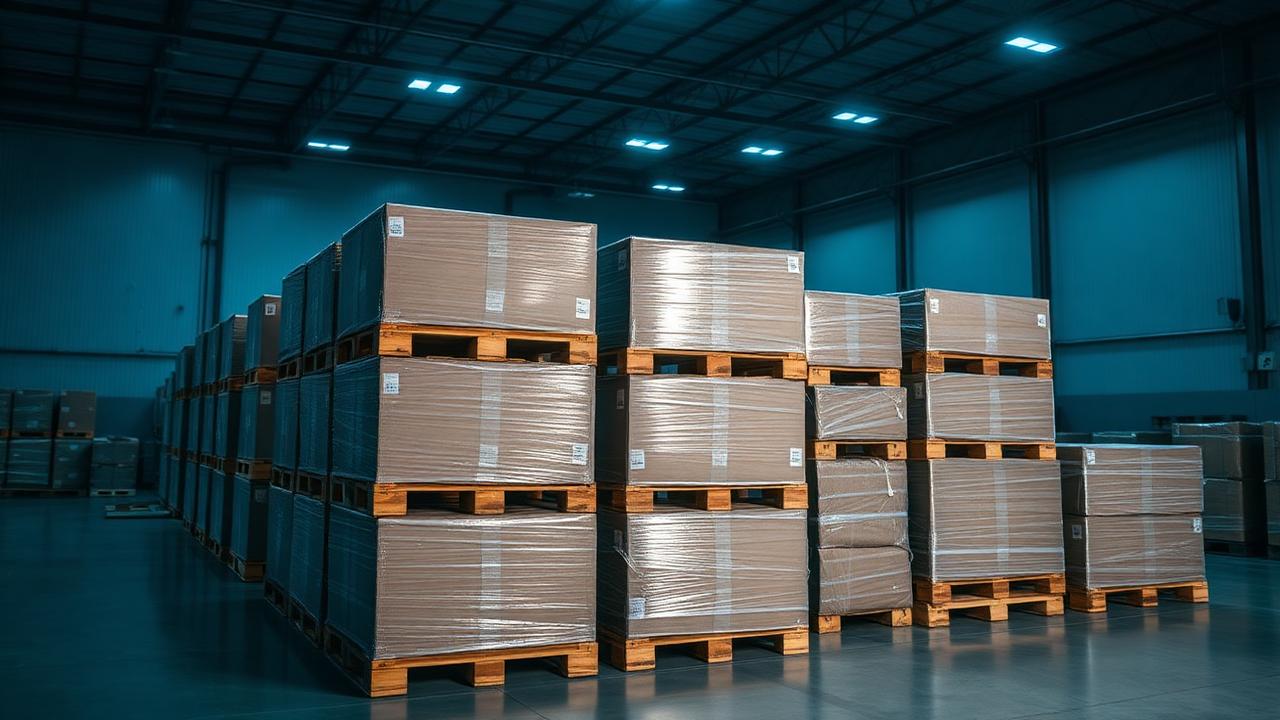
We paid $1,150 for two pallets out of an Indiana regional distribution center (RDC) last spring. Freight ran another $385 because the driver needed a liftgate on a residential drop. What rolled off the truck was a towering mess of shrink wrap holding together broken air fryers, unboxed humidifiers, loose phone cases, and thirty identical silicone spatula sets. If you want to know how to resell mixed general merchandise pallets without losing your shirt, that scene is where you start.
Mixed general merchandise (GM) lots are the backbone of the liquidation market. They are also the fastest way for a new reseller to clutter a garage with unsellable plastic. Retailers stack these pallets with whatever returns or shelf pulls couldn't fill a single-category box. You get toaster ovens next to dog beds, wrapped in a manifest that might be 80% accurate if you are lucky.
To pull a profit out of this chaotic inventory, you need to understand category recovery rates, calculate freight down to the penny, and sort items into the right sales channels immediately.
Understanding What Is Inside a Mixed Lot
Not all mixed inventory is created equal. Before you bid on a lot, you have to read between the lines of the manifest and know the condition grade.
Retailers assign condition grades to liquidated lots, but these letters do not always match what hits your warehouse floor:
- Shelf Pulls: Goods removed from store shelves to make room for new stock. These are usually unused, though boxes might have store stickers, dust, or minor shelf wear. Expect an 80% to 90% functional rate.
- Overstock: Excess inventory that never saw the sales floor. Box condition is typically clean, and item functionality sits around 95% to 100%.
- Untested Customer Returns: Items brought back by retail buyers. Reasons range from defective gear to missing parts. Functionality varies wildly, usually averaging 50% to 70%.
- Salvage: Heavily damaged, incomplete, or broken items. Salvage is strictly for parts, repair techs, or scrap metal.
Category mix dictates your baseline return on investment. Electronics carry high sticker prices but suffer high defect rates, yielding a realistic category recovery rate of 25% to 40% of original retail value. Tools are sturdy and hold 30% to 45% recovery. Apparel is a drag on mixed lots, usually netting only 8% to 15% due to sizing clutter and stain returns. General home goods and small kitchen appliances sit comfortably in the 18% to 28% recovery window.
How to Resell Mixed General Merchandise Pallets for Profit
To maximize yield on a mixed pallet, you cannot dump every item onto eBay. You need a tiered channel strategy. High-value functional items go online; bulky or lower-margin goods go local; broken goods get salvaged or bundled.
Different platforms cost different amounts to operate:
- eBay: Great for unique, lightweight, or medium-value electronics and small appliances. Fees average around 13.25% plus $0.30 per transaction.
- Amazon (FBA or FBM): Ideal for pristine overstock or clean shelf pulls. Fees run about 15%, plus storage and fulfillment fees if using FBA. Strictly avoid selling customer returns here unless listed as Used under seller-fulfilled options.
- Mercari: Good for home decor, light apparel, and small gadgets. Fees sit at roughly 10%.
- Local Marketplaces (Facebook Marketplace, OfferUp): Essential for heavy items, small furniture, or open-box kitchen gear where shipping wipes out profit margins. Platform fees are 0% for cash pickup, or 5% if using local checkout shipping.
Here is how different liquidation sourcing channels stack up when you evaluate mixed inventory:
| Sourcing Channel | Average Pallet Cost | Condition Quality | Processing Effort | Typical Recovery Rate |
|---|---|---|---|---|
| Direct Retailer Auctions (B-Stock) | $300 - $900 | Untested Returns | High (Full testing required) | 20% - 30% of Retail |
| Regional Wholesale Liquidators | $500 - $1,200 | Mixed Pulls & Returns | Medium | 25% - 35% of Retail |
| Local Manifested Truckload Brokers | $400 - $850 | Shelf Pulls / Overstock | Low to Medium | 30% - 40% of Retail |
| Unmanifested Mystery Pallets | $150 - $400 | Heavy Returns / Salvage | Extreme | 10% - 20% of Retail |
Sorting immediately upon delivery is critical. Create three distinct staging zones in your space: Zone A for immediate testing and online listing, Zone B for local marketplace listing, and Zone C for parts, testing delay, or scrap.
The Numbers: A Real-World P&L Example
Let us look at a hard example. We bought a 2-pallet mixed GM lot originating from a major big-box retailer's Midwest hub. The manifest listed 112 total units with an estimated original retail value of $4,800.
Here is the exact cost and revenue breakdown:
Expenses:
- Winning Auction Bid: $650.00
- Linehaul Freight (320 miles): $210.00
- Liftgate Accessorial Fee: $65.00
- Residential Delivery Fee: $55.00
- Packaging Materials & Labels: $45.00
- Total Cost Basis: $1,025.00
Gross Revenue Realized (Over 60 Days):
- 18 Tier-1 items sold on eBay (electronics, complete appliances): $1,120.00
- 34 Tier-2 items sold locally on Facebook Marketplace (patio gear, bulky decor, open-box items): $680.00
- 22 Tier-3 items sold in a bulk flea market bundle to a local dealer: $150.00
- 38 items (broken, missing critical parts, or unsellable trash): $0.00
- Total Gross Sales: $1,950.00
Platform Fees & Direct Shipping Costs:
- eBay Selling Fees (~13.25% + fixed fees): $152.00
- Seller-paid outbound shipping (discounted rates): $185.00
- Total Selling Costs: $337.00
Net Profit Math:
- Gross Sales ($1,950.00) minus Selling Costs ($337.00) = $1,613.00 Net Revenue
- Net Revenue ($1,613.00) minus Total Cost Basis ($1,025.00) = $588.00 Net Profit
This lot yielded a 57.3% return on capital invested over two months. That is a solid outcome for a mixed returns lot. However, notice that 38 out of 112 items, over a third of the pallet, generated zero revenue. If our freight had been $200 higher, or if two top-tier items had arrived smashed, our profit margin would have vanished entirely.
Sourcing Tactics: How to Resell Mixed General Merchandise Pallets Like a Pro
The difference between an amateur liquidator and a profitable operator comes down to manifest triage before placing a bid.
Never rely on the seller's total estimated retail value. Liquidators frequently use original MSRP from three years ago, or they list the price of an entire bundle when only a single accessory is in the box.
When you scan a manifest, use a manifest analysis tool like PalletIQ to parse unit counts, identify high-value anchor items, and flag filler SKUs. Look for the anchor items first. If a 100-unit pallet has two $300 espresso machines and 98 cheap plastic water bottles, those two espresso machines carry the entire lot. If one of them is water-damaged or missing its pump, the pallet is a loser.
Watch out for LTL (Less-Than-Truckload) freight accessorials. Freight carriers charge extra for services beyond standard dock-to-dock transport. A baseline linehaul rate might be $1.20 per mile, but accessorial fees add up fast:
- Residential Delivery Fee: $50 to $100
- Liftgate Service: $50 to $75
- Limited Access Delivery (schools, storage units, rural farms): $30 to $60
- Re-consignment Fee (if you change the address while in transit): $75 to $150
Always calculate freight *before* setting your maximum bid. If your freight is $350 on a $500 pallet, your cost basis is $850. To hit a healthy profit margin, that pallet must reliably yield at least $1,700 in gross sales.
Where This Goes Wrong: The Hidden Pitfalls
The most common failure mode in mixed general merchandise reselling is floor-space starvation combined with processing drift.
We call this the Trash Avalanche. It happens when you order a second and third pallet before you have fully processed, listed, and cleared the inventory from the first lot. Unchecked boxes pile up in your garage or shop. You lose track of what is tested and what is broken. Suddenly, your working capital is tied up in half-sorted cardboard, while storage space evaporates.
Another critical mistake is emotional pricing. You see an item with a $200 MSRP on the manifest, test it, and find a scuff on the side. You list it on eBay for $160 because it looks basically new. It sits for four months without a view. Meanwhile, market value for open-box returns on that model is actually $85. You must price for fast cash conversion. In liquidation, velocity beats margin every single day. A dollar turned three times a year at a 25% margin beats a dollar turned once a year at a 60% margin.
Finally, watch for incomplete sets. GM pallets are famous for shipping cookware sets missing the fry pan, modular couch cushions without the frame, or smart home kits missing the bridge unit. If an item cannot function out of the box, do not waste time trying to source missing parts on eBay unless the net upside exceeds $50. Put it straight into your local bulk clearance pile and move on.
Learning how to resell mixed general merchandise pallets requires treating unpredictable inventory with predictable operational discipline. Know your real numbers, process lots instantly, and keep your space clear.
What is the average profit margin on mixed general merchandise pallets?
Net profit margins typically range between 15% and 35% after factoring in linehaul freight, accessorial fees, platform commissions, and scrapped inventory. Well-manifested shelf-pull lots yield higher margins, while unmanifested customer return lots carry higher risk and wider margin variance.
How do I handle broken or non-working items from a pallet?
Sort items immediately into usable parts, scrap, or bulk lots. High-value broken electronics can be listed on eBay as For Parts or Not Working to recover cost basis. Low-value damaged plastics and broken appliances should be bundled for local flea market buyers or taken to scrap recycling to keep storage clear.
Do I need a commercial dock to buy liquidation pallets?
No, but receiving LTL shipments at a residential address without a loading dock or forklift requires paying liftgate and residential accessorial fees. These fees typically add $100 to $175 per delivery. Alternatively, you can request terminal pickup at the carrier's local freight hub and haul the pallets home in a pickup truck or trailer.
Pallet IQ Editorial Team
We buy, grade and resell liquidation pallets, then turn what we learn into the tools on Pallet IQ. Every guide here comes from real manifests, real bids and real sell through numbers.
Written August 9, 2026, last reviewed October 19, 2026