How to Resell Liquidation.com Pallets Without Losing Money
Pallet liquidation looks easy until a truckload arrives full of smashed audio gear. Here is our real operational strategy for sourcing and selling Liquidation.com lots profitably.
By Pallet IQ Editorial Team
Published · Updated
 Sourcing Strategies
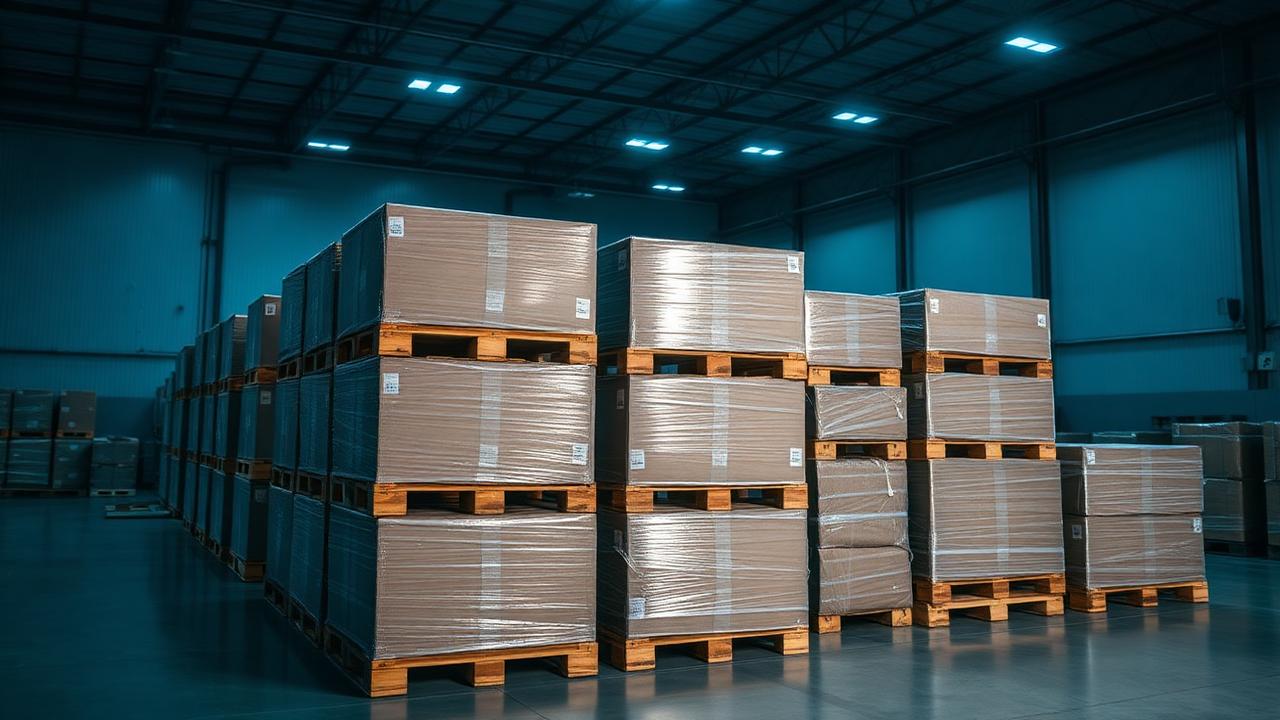
We learned our lesson on a 42-unit mixed consumer tech lot out of an Atlanta regional distribution center. The bid closed at $650, which felt like a steal for an advertised $4,200 total retail value. Then came the $310 Less-Than-Truckload (LTL) freight charge, a $65 buyer premium, and $75 in residential delivery fees. By the time the pallet landed in our garage, our cost basis hit $1,075. After spending fourteen hours testing Bluetooth speakers and listing working units on eBay, our net profit came out to $75.95. That works out to roughly five dollars an hour. Learning how to resell liquidation com pallets requires brutal math before you click the bid button.
Liquidation.com is one of the oldest and largest clearinghouses for corporate store returns, overstock inventory, and shelf pulls. Retail giants shift millions of dollars in excess inventory through the platform every week. But if you do not understand landed costs, testing labor, and actual category recovery rates, you will end up storing expensive trash. This guide lays out how we evaluate lots, calculate real profit margins, and keep inventory moving.
Understanding Manifest Grades and True Yield
When you scan listings, every lot comes with a condition grade assigned by the seller or facility. Buying blindly based on retail price tags is the fastest way to wipe out your bank account. You need to know what those grades actually mean once the shrink wrap comes off.
Grade A: Brand New / Overstock
These items have never been opened or bought by a consumer. Packaging is crisp, factory seals are intact, and every accessory is in the box. Expected category recovery sits around 50% to 70% of current retail price. You can list these directly on Amazon or eBay without spending time testing.
Grade B: Refurbished / Shelf Pulls
Shelf pulls are items taken off retail shelves due to seasonal rotation, minor box damage, or store closing liquidation. Outer packaging might have price tags, clearance stickers, or mild shelf wear. Refurbished goods have been inspected or repaired by a third party. Expect a recovery rate of 35% to 50% on these units.
Grade C: Customer Returns
This is where most auction volume lives. Customer returns are a wild box of surprises. Someone bought a vacuum, used it for twenty-nine days, crammed it back into the box full of pet hair, and returned it to Target or Walmart. Recovery rates vary wildly depending on the inventory type:
- Consumer Electronics: 25% to 40% functional yield
- Tools and Hardware: 30% to 45% functional yield
- Apparel and Soft Goods: 8% to 15% clean yield
Grade D: Salvage / Untested
Salvage lots are store burn piles. Units are stripped for parts, smashed during freight transport, or returned broken by customers. Unless you run an dedicated repair shop or specialize in selling replacement parts, avoid Grade D lots entirely.
| Manifest Grade | Expected Yield | Average Recovery Rate | Testing Labor Required | Primary Resale Channel |
|---|---|---|---|---|
| Grade A (Overstock) | 95% - 100% | 50% - 70% MSRP | None | Amazon, eBay, Shopify |
| Grade B (Shelf Pull) | 80% - 90% | 35% - 50% MSRP | Minimal (Visual Check) | eBay, Mercari, Poshmark |
| Grade C (Returns) | 40% - 65% | 25% - 40% MSRP | Heavy (Full Bench Test) | eBay, Local Marketplace, Flea |
| Grade D (Salvage) | 10% - 30% | 5% - 15% MSRP | Extreme (Teardown/Parts) | Parts Direct, Local Cash |
Calculating Landed Cost Basis Before You Bid
Your bid amount is only a fraction of what you actually pay. To run a sustainable resale business, you must calculate your landed cost basis, the exact dollar amount required to put that pallet on your floor.
When figuring out how to resell liquidation com pallets profitably, build this formula directly into your bidding spread:
Landed Cost = Winning Bid + Buyer Premium + Sales Tax + LTL Freight + Accessorial Fees
Liquidation.com charges a buyer premium (typically 10% to 12% depending on auction terms). Next, add state sales tax unless you have submitted a valid resale certificate to your account. Then comes freight.
Freight will eat your margins alive if you do not plan ahead. LTL freight rates generally run between $0.80 and $2.50 per mile, but accessorial charges quickly stack up:
- Liftgate Service: $50 to $75 (required if you do not have a loading dock or forklift)
- Residential Delivery: $50 to $100
- Limited Access Delivery: $30 to $60
If a pallet costs $300 to buy, but shipping adds $250, your real cost is $550. If the total resale market value of the good units on that pallet is only $700, you are working for crumbs after marketplace fees.
How to Resell Liquidation.com Pallets with Margin
Once you win an auction and the freight truck drops off your pallet, speed is everything. Holding onto dead inventory bleeds cash through storage costs and capital lockup.
1. Audit the Manifest Immediately
Cut the shrink wrap and compare every item against the official manifest provided in your auction dashboard. You generally have a strict 2-day or 3-day window from delivery to file a dispute if there are massive short shipments, missing high-value items, or incorrectly graded lots. Run down the manifest row by row. Use a spreadsheet or a manifest analysis tool like PalletIQ to compare delivered quantities against listing claims.
2. Triage and Sort Inventory
Create four designated zones in your workspace:
- Quick List (Grade A / New in box units needing zero testing)
- Bench Test (Electronics, small appliances, and power tools needing power-on verification)
- Clean/Prep (Soft goods or open-box items needing dirt removal or cosmetic work)
- Scrap/Parts (Unrepairable units to strip for salvage components or dispose of)
3. Price to Move Fast
Do not list used or return items at price tags matching historical peak eBay sales. Look at completed, sold listings over the last 30 days. Price your items competitively in the lower third of the active market range to turn cash over rapidly. Turning a pallet in two weeks at a 30% return on investment beats holding inventory for six months trying to squeeze out a 50% return.
4. Account for Platform Fees
Match every item to its optimal sales channel to minimize platform costs:
- eBay: Great for specialized parts, electronics, and rare items. Expect ~13.25% plus $0.30 per sale.
- Amazon (FBA/FBM): Best for pristine Grade A overstock. Expect ~15% referral fee plus fulfillment costs.
- Mercari / Poshmark: Ideal for apparel, shoes, and compact home goods. Platform fees hover around 10% to 15%.
- Facebook Marketplace / Local Cash: Ideal for heavy items like pressure washers, lawn care equipment, or large furniture. Zero platform fees and zero shipping hassle, but lower price realization.
Fully Worked P&L: A Real-World Pallet Example
Here is a complete financial breakdown of a 30-unit mixed lawn and garden tool lot (Grade C Returns) sourced from a regional warehouse in Ohio.
Cost Basis Breakdown
- Winning Bid: $420.00
- Liquidation.com Buyer Premium (10%): $42.00
- Sales Tax (Exempt with valid resale certificate): $0.00
- LTL Freight (220 miles): $145.00
- Liftgate Accessorial Fee: $55.00
- Residential Delivery Fee: $50.00
- Total Landed Cost Basis: $712.00
Resale Revenue Realization
Out of 30 manifested lawn tools:
- 18 units tested fully functional and complete -> Sold on eBay/Mercari for an average of $55 each ($990.00 gross)
- 6 units were missing minor accessories -> Sold locally on Facebook Marketplace for cash at $30 each ($180.00 gross)
- 4 units required motor re-wiring -> Repaired using spare parts, sold on eBay for $45 each ($180.00 gross)
- 2 units were completely seized/broken -> Stripped for parts, nets $20 total on eBay ($20.00 gross)
- Total Gross Resale Revenue: $1,370.00
Fees and Net Profit
- Total Gross Revenue: $1,370.00
- Online Marketplace Fees (eBay/Mercari avg ~13.5% on $1,190 online sales): -$160.65
- Outbound Shipping Cost Paid/Subsidized: -$142.00
- Packing Materials (Boxes, bubble wrap, tape): -$25.00
- Net Revenue Received: $1,042.35
- Total Landed Cost Basis: -$712.00
- Net Cash Profit: $330.35
- Return on Investment (ROI): 46.4%
Notice that this deal turned out profitable because 28 out of 30 units were recoverable through minor repairs or local cash sales. If half those motors had been burnt out, the lot would have lost money.
How This Goes Wrong: The Salvage Tech Death Spiral
The single biggest failure mode for new resellers buying Liquidation.com lots is falling into the tech testing trap.
It happens like this: You see a pallet of 50 high-end wireless headphones with a total retail MSRP of $9,000 listed at a starting bid of $200. You win the lot for $800, pay $300 for freight, and feel like a genius.
Then the pallet arrives. Every single pair of headphones was returned for a reason. Thirty pairs have faulty lithium batteries that will not hold a charge. Twelve pairs have loose internal wiring that drops audio in one ear. Five pairs have heavy sweat damage inside the drivers. Only three pairs work out of the box.
Now you face a grueling bottleneck. You sit at a workbench with a soldering iron and multimeter, spending forty-five minutes on a single headset to salvage a $35 sale. You spend three weeks fixing ten pairs. Meanwhile, your workspace is piled high with broken plastic, your working capital is trapped in broken inventory, and your effective hourly wage dips below minimum wage.
Avoid this death spiral by treating consumer tech customer returns as high-risk gambles. Unless you have automated testing setups, spare parts stock, or a dedicated repair tech on staff, leave Grade C electronics lots to high-volume refitters.
Crucial Steps on How to Resell Liquidation.com Pallets
When building a long-term sourcing pipeline, consistency beats chasing high retail values on risky lots every single time. Stick to categories where mechanical failure is simple to spot and easy to fix, like home hardware, outdoor power equipment, or branded tools.
Always double-check shipping distances before bidding. Bidding on a pallet located at a warehouse across the country can easily double your freight cost compared to picking up from a regional hub within 150 miles of your shop. If you own a pickup truck or box trailer, focus on local pick-up auctions to eliminate freight charges entirely. Removing shipping costs from your landed cost basis instantly increases your profit margins on every single lot.
Mastering how to resell liquidation com pallets comes down to disciplined execution: calculate every fee upfront, set strict bidding caps, clear non-working inventory fast, and protect your working capital at all costs.
Frequently Asked Questions
Can I pick up liquidation pallets directly to save on freight?
Yes, Liquidation.com allows local buyer pickup at many of their warehouse facilities. Check the auction listing details under the shipping tab before bidding. If local pickup is listed, you can schedule a pickup window, drive your own truck or trailer, and skip LTL freight costs completely.
How do I handle missing items that were listed on the manifest?
If your delivered lot is missing high-value items present on the auction manifest, take photos of the wrapped pallet before opening it, then log every received item immediately. File a dispute claim directly through your Liquidation.com buyer portal within their specified claim window (usually 2 to 3 business days from delivery).
What tools do I need to test returned items efficiently?
At a minimum, keep a digital multimeter, a multi-head precision screwdriver set, general cleaning supplies (isopropyl alcohol, microfiber towels, adhesive remover), universal power adapters, and basic battery testers in your processing area. Having these items ready speeds up testing and sorting dramatically.
Pallet IQ Editorial Team
We buy, grade and resell liquidation pallets, then turn what we learn into the tools on Pallet IQ. Every guide here comes from real manifests, real bids and real sell through numbers.
Written August 16, 2026, last reviewed October 19, 2026