How to Resell Home Depot Liquidation Pallets: The Real Math
I lost $420 on my first Home Depot returns lot. Here is the exact testing workflow, freight breakdown, and unit economics you need to consistently turn orange-box returns into net profit.
By Pallet IQ Editorial Team
Published · Updated
 Sourcing Strategy
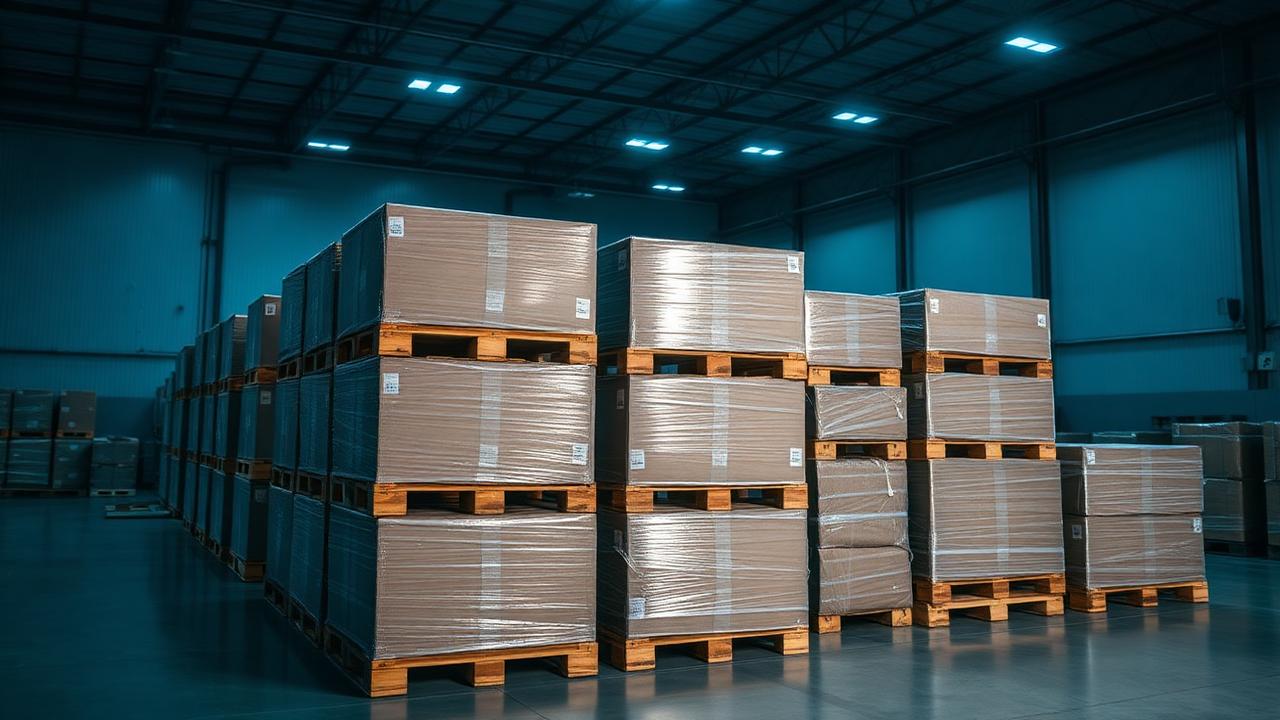
I backed my pickup to the freight dock in Indianapolis three winters ago to load my first direct Home Depot customer return lot. Pay attention to the invoice: $1,150 purchase price, $340 LTL freight, 38 units. The manifest listed six DeWalt combo kits and four Milwaukee FUEL miter saws. What the manifest did not say was that three of those miter saw boxes contained cracked aluminum frames and a two-inch layer of dried mortar inside the motor housings.
I lost $420 on that single lot.
Learning how to resell Home Depot liquidation pallets isn't about bidding on every orange-labeled box you see on B-Stock or secondary liquidation sites. It comes down to knowing how to read manifests for missing bare tools, calculating LTL freight down to the accessorial dime, and having a realistic plan for testing electrical components before listing them on eBay or Facebook Marketplace.
The Anatomy of Home Depot Liquidation Lots
Home Depot processes customer returns through regional distribution centers (RDCs). These loads are categorized into distinct condition grades before being auctioned off. Buying blindly without understanding these grades is the fastest way to turn your garage into a scrap yard.
Overstock and shelf pulls are the gold standard. These are items pulled due to seasonal resets, damaged outer packaging, or minor box crushed corners. Expect recovery rates between 60% and 80% of original retail value on these loads.
Customer returns are a different beast entirely. They fall into three practical tiers:
- Grade A/B Customer Returns: Open-box items where the customer bought the wrong size, changed their mind, or used the tool once for a weekend DIY project. Recovery sits around 40% to 55%.
- Grade C Customer Returns: Defective returns, missing key accessories like chargers or safety guards, or heavy-use returns where the motor brushes are near death. Expect 20% to 35% recovery.
- Salvage and Raw Lots: Unchecked bulk bins containing everything from burnt-out lawnmowers to cracked porcelain toilets. Unless you own a small engines repair shop, avoid raw salvage lots.
Power tools, hand tools, outdoor power equipment (OPE), and plumbing fixtures make up the bulk of Home Depot liquidated inventory. Tools carry high resale velocity but suffer from heavy return fraud. Plumbing and vanities carry high paper value on manifests but suffer horrific transit breakage rates.
Freight Charges Will Destroy Your Margin
If you bid $800 on a pallet and forget to calculate LTL (Less-Than-Truckload) freight accessorials, you are working for free.
Base linehaul rates run anywhere from $0.80 to $2.50 per mile depending on diesel surcharges and lane density. But the base rate is rarely what you actually pay. Freight carriers charge extra for every touchpoint that departs from a standard commercial dock-to-dock shipment.
- Residential Delivery Fee: $50 to $100 extra if you do not have a commercial storefront.
- Liftgate Service: $50 to $75 for the driver to lower the pallet to the ground with a hydraulic gate.
- Limited-Access Surcharge: $30 to $60 if your storage facility or farm is flagged as difficult for a 53-foot sleeper cab to navigate.
If a single pallet costs $300 in total freight, and you bought 30 units on that pallet, you just added $10 of fixed cost basis to every single unit before you even cut the shrink wrap.
Marketplace selling fees add another layer. eBay takes roughly 13.25% plus $0.30 per order in most tool categories. Mercari takes 10%. Local sales via Facebook Marketplace cost zero in platform fees, but you trade platform fees for time spent waiting on buyers who show up two hours late with half the agreed cash.
How to Resell Home Depot Liquidation Pallets: A Worked P&L
Here is a real historical breakdown from a 32-unit mixed power tool and outdoor equipment lot sourced out of a Georgia facility.
The Purchase Basis
- Winning Bid: $980.00
- LTL Freight (Residential + Liftgate): $285.00
- Total Landed Cost Basis: $1,265.00
- Cost Basis Per Unit: $39.53
The Manifest Reality Check
Out of 32 units on paper:
- 8 Milwaukee Fuel 18V Cordless Drills
- 5 Ryobi 40V String Trimmers
- 4 DeWalt 20V Max Circular Saws
- 15 Assorted hardware units (drill bit sets, work lights, extension cords, blade multi-packs)
Upon opening and bench testing, 6 of the Milwaukee drills worked perfectly. 2 had completely stripped planetary gears and were listed as "For Parts Only." 4 of the Ryobi trimmers worked, but only 2 included their 40V battery and charger. All 4 circular saws worked, but 1 was missing the blade guard, making it an immediate safety hazard that had to be salvaged for bare parts.
Sales Channel Execution & Returns
- eBay Sales (Tested Working Bare Tools & Combo Items): $1,120.00 gross. Marketplace fees (13.25% + fixed fees) equaled $148.00. Out-of-pocket shipping costs equaled $110.00. Net eBay Cash: $862.00
- Local Cash Sales (String Trimmers & Heavy Items via FB Marketplace): $450.00 cash
- eBay Parts/Repair Listings (Stripped tools & bare housings): $140.00 gross. Fees and shipping equaled $42.00. Net Parts Cash: $98.00
The Final Financial Ledger
- Total Gross Sales: $1,710.00
- Total Net Cash Received (After Platform Fees & Outbound Shipping): $1,410.00
- Minus Initial Landed Cost ($1,265.00): $145.00 Net Profit
Look at those numbers closely. A gross sale value of $1,710 turned into just $145 of true net profit after four hours of bench testing, cleaning grease, listing items, and packing boxes. If freight had been $150 higher, this lot would have been a financial net negative. That is why itemized valuation before bidding is mandatory.
Category Breakdown: What Works and What Rots
Not all aisles in Home Depot yield equal returns on the liquidation market. High retail price does not mean high market demand.
| Category | Realistic Recovery Rate | Testing Effort | Resale Velocity | Top Channel |
|---|---|---|---|---|
| Power Tools (Milwaukee, DeWalt, Makita) | 35% - 50% | High (Motor & battery checks) | Fast (1-7 days) | eBay / Local Cash |
| Outdoor Power Equipment (Gas & 40V) | 20% - 35% | High (Carburetors & batteries) | Seasonal (1-3 weeks) | Facebook Marketplace |
| Plumbing & Fixtures (Faucets, Vanities) | 15% - 30% | Medium (Inspect for missing brass/cracks) | Slow (2-6 weeks) | Local Cash Only |
| Lighting & Ceiling Fans | 20% - 40% | High (Count hardware packs) | Medium (1-2 weeks) | eBay / Local |
| Hardware & Consumables | 60% - 80% | Low (Visual inspection) | Fast (1-5 days) | Bundled eBay |
Power tools carry the highest liquidity. A working Milwaukee M18 fuel impact driver will sell within 48 hours on eBay if you price it 15% below trending market rates. Plumbing fixtures, on the other hand, sit in your garage for months. Shipping a 40-pound porcelain vanity top across the country will eat your entire margin in carrier dimensional weight fees.
How This Goes Wrong (and How to Avoid Bankrupting Your Garage)
The biggest threat to your reselling capital is return fraud executed by retail customers before the store accepts the box.
The Brick Swap
A buyer purchases a $399 brushless miter saw from Home Depot, takes it home, removes the tool, puts their 10-year-old burned-out model (or an actual construction brick) inside the box, tapes it shut, and returns it for a full cash refund. Minimum-wage retail customer service reps rarely open sealed boxes to verify serial numbers against the sales receipt.
When you buy that unit on a liquidation manifest, you are paying freight on brick weight. Always factor a mandatory 15% trash rate into your bid model for customer return tool lots.
Battery Pin Damage and Lithium Traps
Outdoor power equipment and cordless tools live and die by their lithium-ion battery packs. A Ryobi 40V 6Ah battery retails for around $180 in store. If a return lot contains 5 trimmers but zero batteries, your resale value drops by 60%.
Additionally, buyers often return dead batteries with bent terminal pins or shorted internal circuit boards. Never ship a lithium battery to an eBay buyer without using a dedicated battery tester and checking cell voltages with a multimeter. Sending a dead or dangerous battery creates immediate dispute claims, forced returns, and account defects.
Missing Bare Tool Accessories
Bare tools (tools sold without batteries or cases) often arrive missing key operational parts: depth gauges, arbor wrenches, blade guards, or side handles. Buying replacement parts at retail from OEM suppliers will instantly erase your margin. Build a small box of generic replacement parts, like standard miter saw wrenches and chuck keys, to complete units before listing them.
Final Strategy Rules for Reselling Home Depot Lots
Before you drop your hard-earned capital on an orange-box truckload or single pallet, run through these operating rules:
- Calculate your maximum bid backward from net recovery, not gross retail value. Subtract 15% for bad/swapped units, 15% for platform fees, and exact LTL freight before setting your hard bid limit.
- Never buy heavy porcelain, tile, or liquid chemicals on LTL pallets unless you plan to sell them exclusively for local cash pickups within 20 miles of your shop.
- Before placing a bid on an unmanifested or mixed lot, run the manifest through a manifest analysis tool like Pallet IQ to isolate high-value SKUs from bulky zero-margin trash.
- Build a dedicated testing bench equipped with test batteries for every major brand (Milwaukee M18/M12, DeWalt 20V, Ryobi 18V/40V, Ridgid 18V) and a multimeter.
Mastering how to resell Home Depot liquidation pallets isn't a get-rich-quick maneuver. It is an unglamorous, operational business that rewards accurate math, realistic risk management, and persistent bench testing.
FAQ
Where do you source authentic Home Depot pallets?
Authentic Home Depot liquidation inventory is primarily sold through official B2B marketplaces like Home Depot Liquidation Auctions (powered by B-Stock Solutions). Secondary liquidators and regional auction houses also buy direct truckloads and break them down into individual pallets, though prices are higher and manifests may be filtered.
Do I need a reseller tax certificate to buy these lots?
Yes. Official liquidation platforms like B-Stock require a valid state resale certificate during account registration. Having a resale certificate allows you to buy lots without paying upfront sales tax, shifting the tax responsibility to the end consumer when you sell the item.
What is the average profit margin on a Home Depot return lot?
After accounting for realistic trash rates, platform fees, outbound shipping, and LTL freight costs, experienced resellers aim for a net margin between 15% and 25% on landed cost. Buying poorly manifested lots or underestimating freight can easily push margins into negative territory.
Pallet IQ Editorial Team
We buy, grade and resell liquidation pallets, then turn what we learn into the tools on Pallet IQ. Every guide here comes from real manifests, real bids and real sell through numbers.
Written August 18, 2026, last reviewed October 19, 2026