How to Price Shoe Liquidation Pallets for Profit
Don't let missing boxes, single shoes, and extreme sizes destroy your margins. Here is how working resellers price shoe liquidation pallets for real profit.
By Pallet IQ Editorial Team
Published · Updated
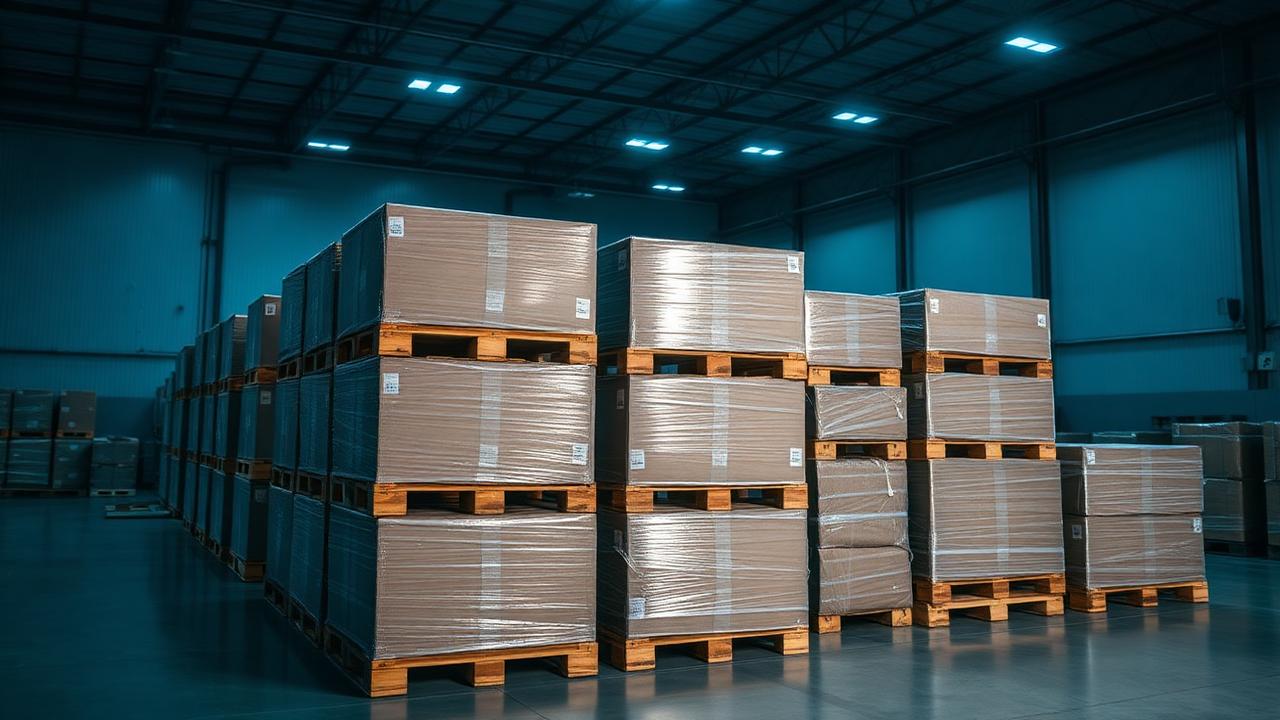 Liquidation Pricing
Three years ago, I bought a $1,400 footwear pallet out of a warehouse in Greensboro. The manifest listed 160 pairs of brand-name running shoes and hiking boots. What the manifest left off was that 24 of those boxes contained only a single left shoe, and another 30 pairs had blown-out treads from three months of intense road use. By the time I paid $280 for LTL freight and spent two weekends pairing, cleaning, and listing, I cleared a grand total of $62 profit. That painful lesson taught us exactly how to price shoe liquidation pallets before placing a single blind bid on an auction site.
If you get your math right, footwear is one of the cleanest categories in liquidation. Shoes ship in predictable box sizes, rarely shatter in transit like glass, and command solid search volume on secondary channels year-round. Get your valuation wrong, however, and you will end up drowning in mismatched pairs and non-standard sizes that sit on your warehouse shelves for twelve months.
Key Factors When Learning How to Price Shoe Liquidation Pallets
Priced footwear manifest lots require looking far beyond retail MSRP. A boot listed at $180 retail might only fetch $45 on eBay if it arrives without the original box, or if it happens to be a size 5 or a size 16.
First, study the size curve. Standard bell-curve distributions (men's sizes 8.5 to 11.5, women's sizes 7 to 9.5) move fast. If a manifest is heavy on extreme sizes, knock 30% off your projected resale value immediately. Nobody buys twenty pairs of size 15 golf shoes in a single quarter.
Second, factor in packaging grade. According to NRF returns research, retail return rates hit nearly 15% across consumer categories, with footwear skewing higher due to fit issues. Customer returns usually arrive with crushed lids, missing tissue paper, or taped-up shoe boxes. New in Box (NIB) condition commands a 20-30% premium over unboxed inventory because buyers on platforms like StockX or GOAT demand intact original boxes.
Third, look for pair matching risks. Unmanifested footwear lots from secondary hubs often contain single shoes, mismatched sizes within the same box, or floor models with distinct UV discoloration on one shoe. You must build a mandatory 8-12% scrap rate into your baseline math to account for complete write-offs.
Recovery Rates and Resale Multipliers by Footwear Grade
You cannot bid on footwear without knowing expected yield percentages. Our data on category performance shows that realistic category recovery rates for footwear average between 18% and 35% of original MSRP, depending heavily on brand tier and manifest condition grade.
Here is how realistic pricing breaks down across the four primary grading categories:
| Footwear Grade | Manifest Condition | Average Resale Value (% MSRP) | Typical Scrap / Loss Rate | Best Resale Channels |
|---|---|---|---|---|
| Grade A (NIB / Shelf Pulls) | Factory boxes, pristine, intact tags | 35% - 50% | 1% - 3% | eBay, Poshmark, Mercari |
| Grade B (Box Damaged / Store Display) | Crushed boxes, light bottom wear, floor tried | 22% - 34% | 4% - 8% | eBay, Local Flea Markets, Whatnot |
| Grade C (Customer Returns) | Heavy box wear, dirty outsoles, missing insoles | 12% - 21% | 10% - 15% | Mercari, Poshmark (as-is), Local Clearance |
| Grade D (Salvage / Unmanifested Mixed) | Loose pairs, missing boxes, single shoes | 5% - 11% | 20% - 35% | Flea Markets, Bulk Wholesale Bins |
When evaluating channels, remember to subtract selling costs from your top-line expectation. Check standard eBay seller fees (which average around 13.25% plus a fixed transaction fee) and compare them with Mercari selling fees using a dedicated marketplace fee calculator before committing your cash.
Step-by-Step P&L: Pricing a 110-Pair Mixed Footwear Lot
Let us walk through a real-world sourcing scenario on B-Stock involving a 110-pair mixed customer return and shelf-pull pallet from a major national department store.
- Total Retail Value (MSRP): $9,800
- Total Units: 110 pairs (Mix of athletic sneakers, boots, and casual flats)
- Winning Bid Target: To be calculated
Step 1: Calculate Gross Realizable Value (GRV) Based on historical data for Grade B mixed footwear, we project an average recovery rate of 26% of MSRP across the entire lot. Gross Projected Revenue = $9,800 x 0.26 = $2,548.00
Step 2: Account for Scrap and Missing Pairs We deduct a conservative 10% from our projected unit count for single shoes, severe wear, or counterfeit flags. Adjusted Gross Revenue = $2,548.00 x 0.90 = $2,293.20
Step 3: Calculate Variable Overhead and Shipping Costs
- Marketplace Selling Fees (~13.5% average): $309.58
- Outbound Shipping Subsidies & Supplies ($3.50 per unit across 99 saleable pairs): $346.50
- Inbound Freight: $245.00 base LTL freight rate + $65.00 liftgate fee (calculated using our shipping cost calculator) = $310.00 total freight cost
Total Direct Costs (excluding item purchase price) = $309.58 + $346.50 + $310.00 = $966.08
Step 4: Establish Maximum Bid Ceiling If our target net profit margin is 30% on gross revenue ($2,293.20 x 0.30 = $687.96 target profit), we calculate our bid limit: Maximum Allowable Purchase Price = Gross Projected Revenue - Direct Costs - Target Profit Maximum Allowable Purchase Price = $2,293.20 - $966.08 - $687.96 = $639.16
Before placing your bid, plug these specific numbers into a pallet ROI calculator or use a dedicated maximum bid calculator to test different freight scenarios. If freight spikes by $50 due to a residential delivery accessorial fee, your bid ceiling must drop dollar for dollar.
How to Price Shoe Liquidation Pallets Without Getting Burned
The fastest way to blow your margins on footwear is ignoring regional sales velocity and hidden labor costs. Processing shoes takes significantly longer than processing simple hardgoods. Every single pair must be inspected for wear, checked inside the toe box for size tags, measured if unboxed, cleaned with foam solution, photographed from five angles, and boxed for storage.
If you pay $12 per pair on a customer return pallet expecting to sell each pair for $30, you might feel safe on paper. But if your processing time averages 15 minutes per pair, you are spending 27.5 hours of labor on a 110-pair pallet. At a standard $18 per hour labor rate, that adds $495 in hidden soft costs. Suddenly, your paper margin vanishes.
Another critical failure point is brand misattribution. High-end athletic brands sell fast, but budget store brands (like private-label big-box shoes) have almost zero resale demand online. A manifest showing 200 pairs of shoes with a $6,000 MSRP might look attractive, but if 80% of those pairs are private-label shoes originally priced at $30 retail, your actual recovery rate will collapse to 8% or 10%. Before making a commitment, run the manifest through a quick check or refer to a comprehensive buying decision guide to verify brand composition.
If you are analyzing complex auction manifests with hundreds of line items, running them through an automated manifest analyzer like Pallet IQ helps flag single-shoe anomalies, poor brand distributions, and low-margin size distributions before you place a bid you regret.
Operational Rules for Footwear Resellers
To protect your capital when evaluating footwear liquidation lots, follow these four operational rules:
- Never bid on unmanifested return lots unless the purchase price per pair is under $4.00 total landed cost.
- Always cap your maximum bid at 15-20% of MSRP for customer returns and 25-30% of MSRP for clean shelf pulls.
- Factor in seasonal timing: winter boots bought in April will hold your capital captive for six months before generating cash flow.
- Factor accessorial freight fees directly into your bid equation before hitting the confirm button on live auctions.
Knowing how to price shoe liquidation pallets comes down to disciplined math, respecting labor costs, and refusing to pay top dollar for damaged shoe boxes and extreme sizes. Maintain strict pricing rules, and footwear will remain one of the most consistent income streams in your liquidation business.
How do you deal with unboxed shoes from liquidation pallets?
Unboxed shoes fetch lower prices on platforms like eBay, but they perform well on local platforms like Facebook Marketplace or Mercari where buyers care less about original packaging. Group lower-value unboxed shoes into size-matched multi-pair lots or clean them up for local flea market sales where packaging isn't expected.
What size distribution is ideal when buying shoe liquidation pallets?
Look for lots where 70% or more of the inventory falls within core adult sizes: men's 8.5 through 11.5 and women's 6.5 through 9.5. Avoid lots saturated with outlier sizes like men's 6 or 15 unless the purchase cost per pair is under $2.00.
How do you inspect liquidation shoes for dry rot or wear?
Bend the shoe sole firmly at the flex point near the ball of the foot. If the rubber crumbles, cracks, or releases a powder, the shoe has dry rot and cannot be sold safely. Check for uneven tread wear on the heels of returned pairs, which significantly reduces resale value.
Pallet IQ Editorial Team
We buy, grade and resell liquidation pallets, then turn what we learn into the tools on Pallet IQ. Every guide here comes from real manifests, real bids and real sell through numbers.
Written September 3, 2026, last reviewed October 19, 2026