How to Price QuickLotz Pallets Without Losing Money
Unmanifested mystery boxes and mixed store return loads will swallow your operating capital if you bid blindly. Here is how to run the hard numbers on QuickLotz lots.
By Pallet IQ Editorial Team
Published
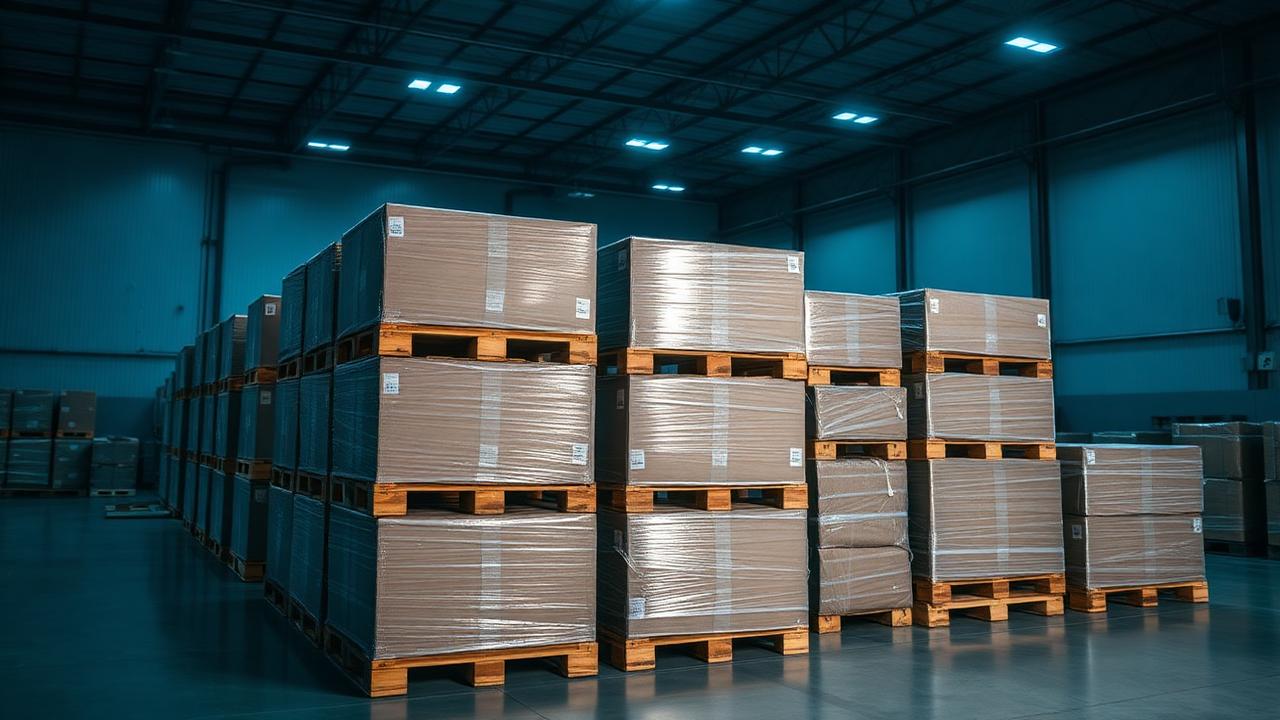 Pallet Valuation
We bought a 48-inch mystery apparel gaylord from a warehouse in North Carolina three years ago. Cost us $650 delivered. Half of it was stained fast-fashion tops, missing-button coats, and unbranded promotional tees. We scraped together $410 after shipping and marketplace fees. That hard lesson taught us that learning how to price QuickLotz pallets requires stripping away original retail stickers and calculating bid limits against cold, hard recovery averages.
QuickLotz sells everything from small mystery boxes to fully manifested retailer liquidation truckloads. If you treat an unmanifested customer return lot like pristine shelf pull overstock, your cash flow dies in two months. According to NRF returns research, consumer returns pushed past $740 billion recently, flooding surplus liquidators with varied inventory grades. Before placing your next bid, check our liquidation glossary if you need a quick refresher on terms like gaylord, salvage grade, or cherry-picking.
QuickLotz stocks three core inventory buckets: small mystery-box cases, unmanifested bulk pallets, and manifested lots. Each carries a radically different valuation baseline. Overstock items carry zero customer wear and tear. You can expect a 40-50% recovery rate against original retail value on resale channels for clean overstock. Customer returns drop quickly to 18-30% recovery. Salvage or mixed apparel rarely hits 10-15% net recovery.
If you inspect a 32-unit mixed small-appliance lot out of their Georgia facility, assume 20-30% of the units require repair, deep cleaning, or part-out. Never bid based on sticker original retail value. If you source a manifested lot, run the file through a manifest analyzer to strip out inflated MSRP numbers and extract actual sold market data.
How to Price QuickLotz Pallets Using Category Recovery Data
Category determines your resale ceiling faster than lot size does. Electronics sell fast, but customer returns carry a 25-35% defect rate. Apparel has minimal functional defects, but moving it requires heavy labor for photo capture, measurement, and multi-channel listing on platforms like Poshmark.
Standard category recovery benchmarks to keep in mind:
- Consumer electronics (mixed customer returns): 25-40% recovery rate
- General merchandise and housewares: 20-35% recovery rate
- Apparel and footwear: 8-15% recovery rate
- Tools and hardware: 30-45% recovery rate
When pricing unmanifested clothing lots on QuickLotz, price by piece count rather than original retail claims. If a mystery box contains 50 items and costs $250, your raw unit cost is $5. After discarding unsellable or damaged items, your effective cost jumps to $7 per sellable unit.
| Inventory Category | Typical Grade | Expected Recovery Rate | Preferred Resale Channel | Primary Risk Factor |
|---|---|---|---|---|
| Small Appliances | Grade B/C Returns | 20-35% | eBay / Facebook | Missing parts, blown thermal fuses |
| Designer / Brand Apparel | Grade A/B Overstock | 12-25% | Poshmark / Mercari | Size mismatches, slow shelf speed |
| Power Tools & Hardware | Grade B Returns | 30-45% | Local Cash / eBay | Missing batteries, dead motors |
| Mystery Boxes / Mixed Lot | Grade C/D Mixed | 10-20% | Local Flea / OfferUp | High trash percentage |
A Step-by-Step System for How to Price QuickLotz Pallets
You cannot price a pallet by looking at a single thumbnail photo. Follow this four-step formula to set a firm ceiling price before placing a bid or placing an online order.
- Determine Gross Resale Value: Calculate what sellable units realistically fetch on secondary marketplaces. Check historical sold listings on eBay, not active asking prices.
- Account for True Freight Costs: QuickLotz ships nationwide, but Less-Than-Truckload (LTL) freight eats margins fast. Base freight runs $0.80-$2.50 per mile. Add $50-$100 for residential delivery, $50-$75 for a liftgate, and $30-$60 for limited-access delivery. Run your shipping route through our shipping cost calculator before placing your final bid.
- Deduct Resale Platform Fees: Selling on eBay means paying roughly 13.25% plus $0.30 per transaction according to official eBay seller fees. Amazon referral fees average 15%. Test your expected channel mix inside our marketplace fee calculator.
- Apply Your Target ROI Floor: Never buy a return lot for less than a 100% net ROI on cash invested unless you turn inventory in under seven days.
Worked P&L Example: A 40-Unit Small Appliance Pallet
Let us walk through a realistic scenario on a QuickLotz unmanifested small-appliance pallet.
Stated original retail value: $3,200. Claimed unit count: 40 units (mixed air fryers, blenders, espresso machines).
Land Cost Breakdown:
- Purchase Price / Winning Bid: $420.00
- Freight Delivery (with liftgate): $185.00
- Total Landed Cost Basis: $605.00 ($15.13 per unit)
Resale Breakdown & Projections:
- Unsellable or Damaged Units (20% / 8 units): $0.00 gross revenue
- Grade C / Parts Only (15% / 6 units sold at $20 average): $120.00 gross revenue
- Grade B / Working Returns (65% / 26 units sold at $45 average): $1,170.00 gross revenue
- Total Gross Realized Revenue: $1,290.00
Fees & Net Calculation:
- Marketplace Selling Fees (~14% average): $180.60
- Outbound Shipping Subsidies & Packing Supplies: $140.00
- Total Net Realized Revenue: $969.40
- Net Dollar Profit: $969.40 - $605.00 landed cost = $364.40
- Net ROI: 60.2% on invested capital
Run your numbers through our pallet ROI calculator to model this scenario. At a 60% ROI on return stock with heavy testing labor, this lot is a marginal pass unless you have dedicated bench-testing equipment and fast local cash buyers. If testing labor takes 8 hours at $15 an hour, your net profit drops to $244.40.
How Buying QuickLotz Lots Goes Wrong
The biggest failure mode on QuickLotz isn't hidden damage. It is inventory density and volumetric shipping traps.
Resellers often buy large, lightweight boxes filled with bulky plush toys, plastic storage containers, or outdoor patio cushions. The retail value looks solid on paper. Then the shipping invoice arrives. Volumetric or dimensional weight pricing kicks in, doubling your freight cost.
When freight runs $220 on a $300 pallet containing $600 worth of low-dollar retail merchandise, your margin vanishes before the delivery truck leaves the terminal dock.
Another common trap is holding dead stock. If your inventory takes six months to clear, your capital is trapped, preventing you from buying higher-margin lots. Check your numbers against our buying decision guide whenever you feel tempted by a flashy retail price tag.
Knowing how to price QuickLotz pallets comes down to disciplined math over optimism. Deduct high freight fees, account for dead units, factor in selling charges, and stick strictly to your maximum allowable bid ceiling.
What is the average recovery rate on QuickLotz mystery boxes?
Mystery boxes typically yield a 15-25% net recovery rate against original retail pricing. Expect up to 30% of the contents to be unsellable, damaged, or slow-moving dollar-store tier items.
How much does freight usually add to a QuickLotz pallet?
LTL freight usually adds between $150 and $350 per pallet, depending on travel distance and accessorial fees like liftgate service ($50-$75) or residential delivery ($50-$100).
Should I buy unmanifested or manifested pallets from QuickLotz?
Beginners should stick to manifested pallets where unit descriptions and model numbers allow exact price researching. Unmanifested lots require deep category experience and a low cost basis to absorb high defect rates.
Pallet IQ Editorial Team
We buy, grade and resell liquidation pallets, then turn what we learn into the tools on Pallet IQ. Every guide here comes from real manifests, real bids and real sell through numbers.
Written October 23, 2026