How to Make Money with Costco Liquidation Pallets
Most resellers buy their first Costco return pallet expecting quick profits and end up with broken appliances. Here is how you actually run the math and make a profit.
By Pallet IQ Editorial Team
Published · Updated
 Wholesale Reselling
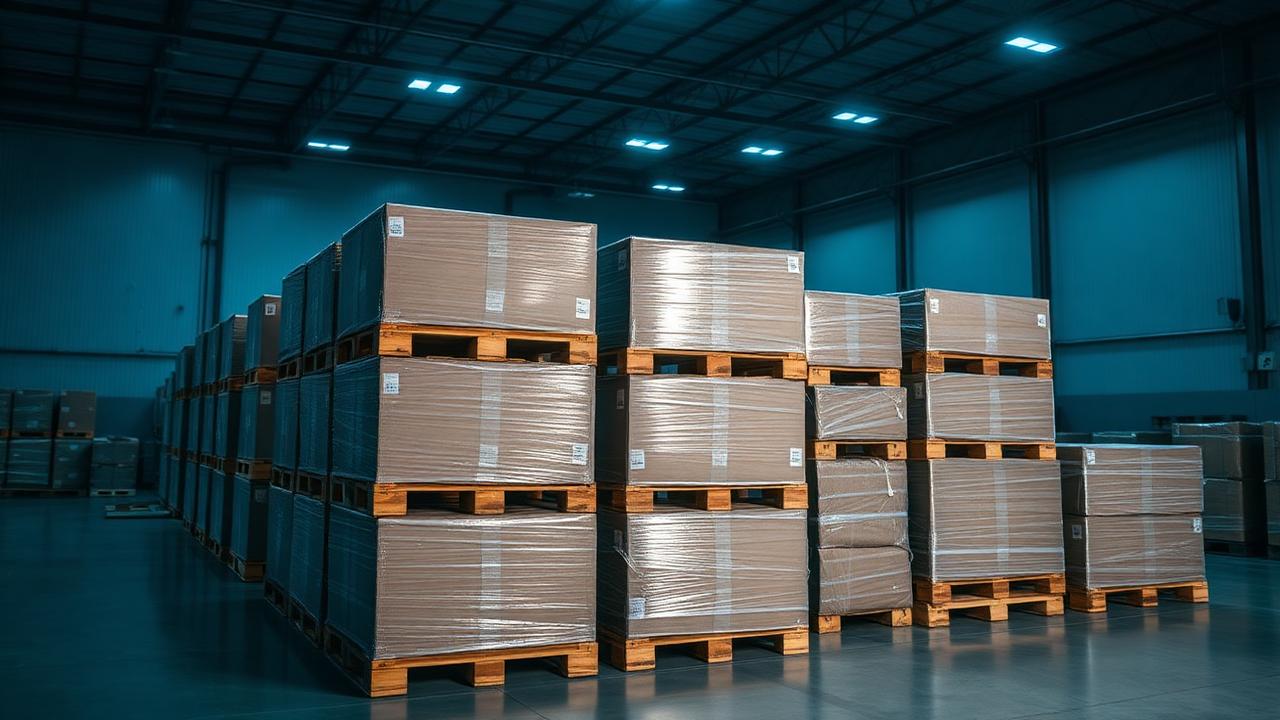
The first Costco load I ever won was a four-pallet customer return lot out of a distribution center in Hanover, Maryland. I placed a winning bid of $1,850. Freight added another $420. I sat on my driveway waiting for the liftgate truck, convinced I was about to turn two thousand bucks into six thousand over a single weekend. What actually showed up was a chaotic pile of crushed Ninja blender boxes, three Dyson vacuums missing their extension wands, and a pallet topped with open packages of Kirkland bath tissue missing half their rolls.
Learning how to make money with costco liquidation pallets isn't about hitting a jackpot on a lucky mystery box. It's an unglamorous process of calculating freight accessorials, testing electric motors, running manifest spreadsheets, and pricing items realistically against flooded secondary markets. Costco has one of the most generous return policies in retail. That means merchandise inside their liquidation loads ranges from brand-new, open-box returns to completely stripped salvage. If you don't know how to filter the garbage from the treasure before you bid, you will lose money fast.
Understanding Costco Liquidation Channels and Product Grades
Costco processes millions of dollars in returns every week. Items that cannot be put back on retail store shelves are routed through dedicated Return Distribution Centers (RDCs). From there, inventory is either sent back to vendors through Return to Vendor (RTV) agreements or funneled into liquidation platforms.
Most official Costco liquidation lots flow through B-Stock Supply's dedicated Costco marketplace. Secondary brokers and local liquidators often buy full truckloads and break them down into individual pallets for smaller buyers.
Before you place a bid, you need to understand the inventory grading system:
- Shelf Pulls and Overstock: These are clean, unhandled goods removed from stores to make room for seasonal inventory. Packaging might have sticker residue or minor shelf wear, but the product inside is intact and unused. Recovery rates on overstock generally run between 40% and 55% of retail value.
- Grade A/B Customer Returns: High-grade returns typically consist of open-box items returned within 90 days. Most items include original boxes and major accessories. You can expect 70% to 80% of the manifest to be functional out of the box, yielding a realistic recovery rate around 30% to 40% of original retail.
- Grade C/D Customer Returns and Salvage: Raw, unsorted customer returns. Boxes are often damaged or missing, key parts will be missing, and testing is mandatory. Salvage lots require extensive labor, component cannibalization, and local cash sales. Recovery rates drop to 15% to 25% of retail, though purchase prices are significantly lower.
How to Make Money with Costco Liquidation Pallets: The Real Math
Profitable resellers don't look at total estimated retail value and multiply by 50%. They build a disciplined cost model that accounts for category recovery, platform fees, freight, and labor.
Category recovery varies wildly across Costco's inventory. Small kitchen appliances like Gourmia air fryers, Instant Pots, and Ninja blenders flood secondary markets like Facebook Marketplace and OfferUp. Because hundreds of resellers buy the same Costco loads, local prices collapse. Expect to recover only 25% to 35% of retail on small kitchen electrics. Electronics and audio gear like Bose, Sonos, and Samsung soundbars command higher margins at 35% to 45% recovery, but carry higher return rates from your buyers if internal defects hide past basic plug-in testing. Power tools hold strong at 35% to 50% recovery due to high demand among contractors. Apparel is a slow grind, yielding 10% to 20% recovery unless sorted into bulk lots.
Marketplace fees cut deep into your gross margins:
- Amazon (FBM/FBA): Roughly 15% category fee, plus fulfillment fees if using FBA (which requires ungating and pristine item condition).
- Mercari: Around 10% total operational impact between selling fees and cash payout costs.
- Facebook Marketplace / Local Cash: 0% for local pickup, 5% for shipped orders.
Freight costs will kill a profitable lot if you calculate them incorrectly. Standard Less-Than-Truckload (LTL) freight ranges from $1.20 to $2.50 per mile. If you lack a commercial building with a loading dock and a forklift, add accessorial charges. Liftgate service runs $50 to $75, residential delivery costs $60 to $100, and limited-access delivery fees add another $30 to $60. A $600 pallet can easily cost $1,050 delivered to your garage door.
A Worked P&L Example: Analyzing a 4-Pallet Costco Load
Let me show you a concrete lot evaluation based on a standard 4-pallet mixed small appliance manifest out of an East Coast RDC.
Manifest summary: 80 total line items. Total original retail value: $8,400.
Cost Basis Breakdown:
- Winning Bid: $1,350
- Buyer Premium (10%): $135
- LTL Base Freight: $340
- Liftgate Accessorial: $60
- Residential Delivery Fee: $65
- Total Landed Cost: $1,950
Item Processing and Recovery Realities: After unpalletizing, cleaning, and testing all 80 items:
- 48 items (60%) are fully functional with boxes and accessories. Sold on eBay and Mercari at 45% of retail average. Retail value: $5,040. Resale value: $2,268.
- 16 items (20%) are functional but missing boxes or minor accessories. Sold locally for cash at 30% of retail average. Retail value: $1,680. Resale value: $504.
- 8 items (10%) are cosmetically damaged or incomplete. Sold for parts or repair at 15% of retail average. Retail value: $840. Resale value: $126.
- 8 items (10%) are unsellable trash, stripped parts, or dead electronics. Resale value: $0.
Financial Summary:
- Gross Resale Revenue: $2,898
- Platform Fees (eBay/Mercari fees ~13.5% on $2,394): -$323
- Shipping Outlay Shortfall: -$110
- Cleaning supplies, box tape, bubble wrap: -$35
- Net Realized Revenue: $2,430
- Less Total Landed Cost: -$1,950
- Net Cash Profit: $480
- Return on Invested Capital: 24.6%
Look at those numbers closely. You did not turn $1,950 into $8,400. You turned $1,950 into $2,430 net profit after 14 hours of unpalletizing, testing, wiping down greasy air fryers, taking photos, listing, and dropping off packages. That works out to roughly $34 per hour for your labor. If your bid had been $300 higher, your hourly rate would have dropped below minimum wage.
Sourcing Channels Compared: Direct Auctions vs. Brokers
Where you buy matters as much as what you buy. Here is how the primary sourcing channels stack up for Costco liquidation inventory.
| Channel | Min. Order | Manifest Detail | Freight Control | Cost % of Retail | Risk Level |
|---|---|---|---|---|---|
| B-Stock Direct | 1-4 Pallets / LTL | Fully Manifested | Buyer Arranged / Managed | 12% - 25% | Moderate |
| Direct Truckload | 24-26 Pallets | Fully Manifested | Buyer Arranged | 8% - 15% | High (Capital) |
| Regional Brokers | 1 Pallet | Partial / Unmanifested | Pickup or Fixed Freight | 20% - 35% | High (Quality) |
| Local Pallet Yards | Single Pallet | Unmanifested (Visual) | Self-Haul | 25% - 40% | Very High |
Where Resellers Get Wiped Out
The most common failure mode for new resellers buying Costco pallets is overestimating manifest yield and ignoring processing costs.
Local market saturation is real. If Costco runs a nationwide sale on a specific De'Longhi espresso machine or a Gourmia digital air fryer, thousands of buyers return those exact units three months later. Liquidation auctions get filled with dozens of the same SKU. When you list yours on Facebook Marketplace, you are competing against five other liquidators in your zip code selling the exact same unit for $25 cash.
Testing and cleaning labor will destroy your margins if you do not streamline your workshop. A Ninja pressure cooker with baked-on food residue requires 20 minutes of scrubbing, sanitizing, and heating tests before you can take photos. If you spend 30 minutes per item on a $30 resale product, you are working for pennies.
Missing key parts renders high-value merchandise useless. A $400 Dyson Stick Vacuum with a missing battery charger and no main motor unit is worth $15 in parts, not $200. Using a manifest analysis tool like PalletIQ before placing a bid helps filter out trash manifests where 40% of the value is tied up in missing accessories or oversized freight that destroys margin.
Unexpected freight fees wipe out tiny profits. If you bid on a lot without checking whether the origin warehouse requires a flatbed truck, or if you forget to select a liftgate for a residential delivery, freight carriers will invoice you post-delivery for $150 to $300 in unexpected accessorials.
How to Make Money with Costco Liquidation Pallets Without Losing Your Shirt
To run a sustainable liquidation business buying Costco inventory, stop treating auctions like gambling and start treating them like industrial procurement.
Establish strict bidding caps before the auction starts. Set your absolute maximum bid at 15% to 18% of manifest retail value for mixed general merchandise, and never exceed 22% for clean, single-category electronics. Factor freight into your maximum bid before clicking the bid button, not after you win.
Build dedicated sales channels for different item conditions. Move clean, high-value electronics to eBay. Sell heavy appliances, furniture, and bulky seasonal goods locally for cash to avoid dimensional shipping fees. Create bulk lot sales for incomplete parts on local selling groups.
If you manage your capital tightly, verify manifests rigorously, and respect the labor required to test and clean returns, learning how to make money with costco liquidation pallets becomes a predictable, repeatable business rather than an expensive hobby.
Can you buy liquidation pallets directly from Costco?
You cannot walk into a local Costco warehouse and buy return pallets from the store manager. Official Costco liquidation loads are sold through corporate return channels, primarily via online auction portals operated by B-Stock Solutions or through authorized bulk liquidators who purchase full contract truckloads directly from Costco Return Distribution Centers.
What is the average profit margin on a Costco liquidation pallet?
Net profit margins typically range between 15% and 30% of total landed cost (purchase price plus freight) when properly processed and sold across mixed channels. While gross margins look attractive on paper, marketplace selling fees, platform payment processing, shipping supplies, and unsellable trash reduce net income significantly.
Do you need a business license to buy Costco liquidation loads?
Yes. Major liquidation platforms like B-Stock require a valid state resale certificate and sales tax ID before you can place bids on Costco liquidation auctions. This allows platforms to sell wholesale merchandise without collecting state sales tax, as you are expected to collect sales tax when selling to the final consumer.
Pallet IQ Editorial Team
We buy, grade and resell liquidation pallets, then turn what we learn into the tools on Pallet IQ. Every guide here comes from real manifests, real bids and real sell through numbers.
Written August 7, 2026, last reviewed October 19, 2026