How to Make Money with Best Buy Return Pallets
Best Buy tech pallets look lucrative until you unload three bent TVs and a box of missing cables. Here is how we actually clear a margin on open-box tech.
By Pallet IQ Editorial Team
Published · Updated
 Electronics Reselling
Three years ago, I won a 22-unit mixed consumer tech lot originating from a Best Buy return facility in Findlay, Ohio. I paid $1,420 at auction. I felt like a genius, until the freight trailer backed into my driveway without a liftgate, and the driver demanded $75 cash on the spot to lower the pallet to the concrete. Inside that stretch wrap lay four 55-inch OLED TVs, six gaming laptops, and a handful of soundbars. Two of the laptops were BIOS locked, three TVs had spider-webbed internal glass with zero exterior damage, and a $300 soundbar was missing its proprietary power supply. I still cleared $610 net profit on that load, but only because I spent 18 hours testing, harvesting spare parts, and parting out dead motherboards on eBay.
If you want to know how to make money with best buy return pallets, you have to throw out the fairy tale that you are buying clean open-box gear to list on Mercari at 80% retail. Best Buy liquidation is a contact sport. Electronics carry some of the highest wholesale gross margins in reselling, but they also come with brutal return rates, missing accessories, and hidden technical dead ends.
Decoding Best Buy Liquidation Grades
Best Buy sells inventory primarily through primary B2B liquidation portals like B-Stock, along with secondary regional brokers. Before you bid a single dollar, you need to understand how these lots are graded.
- Grade A/B (Open Box): Returned within the standard 15-day window. Original box is usually present, though taped or damaged. Functionality is typically 80% to 90%, but expect missing remote controls, HDMI cables, or power bricks.
- Grade C (Used / Customer Return): Heavily handled gear. These often include store display models that ran 14 hours a day for nine months, or customer returns where the buyer swapped their old, broken device into the box of a new purchase.
- Grade D / Salvage: Broken screens, liquid damage, board-level failures, and stripped units. You buy these strictly for component harvesting, display panels, power supply boards, and aluminum housings.
The primary mistake new buyers make is treating Grade C customer returns as plug-and-play stock. When a customer returns a $1,200 gaming laptop because "it ran slowly," there is a 50% chance they fried the GPU or locked the drive with a custom BIOS password before taking it back.
How to Make Money With Best Buy Return Pallets: The Real P&L
Let's break down the math on a realistic mid-tier lot. This is an actual run on a 15-unit audio and computing truckload slice out of a Georgia regional distribution center (RDC).
Lot Cost Basis:
- Winning Auction Bid: $1,250.00
- Marketplace Buyer's Premium (10%): $125.00
- LTL Freight (450 miles): $285.00
- Residential & Liftgate Accessorials: $110.00
- Total Invested Capital: $1,770.00
Manifest Breakdown & Realized Sales:
- 3x ASUS ROG Laptops (MSRP $1,100 ea): 1 Fully Functional ($650 gross), 1 BIOS locked sold for parts ($220 gross), 1 cracked panel sold for motherboard ($280 gross).
- 4x Sonos Soundbars (MSRP $450 ea): 3 Functional without power cords ($260 ea = $780 gross), 1 Dead board ($40 gross).
- 5x Bose Headphones (MSRP $300 ea): 4 Clean working units ($160 ea = $640 gross), 1 Missing left ear-pad ($80 gross).
- 3x Apple iPads (MSRP $450 ea): 2 iCloud locked ($110 ea = $220 gross for parts), 1 Clean working ($290 gross).
- Total Gross Revenue: $3,200.00
Selling Expenses & Net Profit:
- eBay / Mercari Selling Fees (Avg 13.5% + $0.30/order): $436.50
- Outbound Shipping Costs (Buyer paid some, seller absorbed remainder): $310.00
- Replacement Cables / Generic Power Adapters Purchased: $65.00
- Total Operating Expenses: $811.50
Net Summary:
- Gross Revenue: $3,200.00
- Less Total Capital Outlay: -$1,770.00
- Less Operating Expenses: -$811.50
- Net Cash Profit: $618.50
- Return on Investment (ROI): 34.9%
Notice where the profit lived. It was not in the high-headline-value laptops. It lived in the Sonos soundbars and Bose headphones, items with low shipping costs, simple testing protocols, and robust secondary market demand.
Category Expectations and Recovery Rates
Not all tech categories in a Best Buy load carry the same margin potential. Consumer electronics yield wildly different recovery rates depending on how hard they are to test and ship.
| Category | Average Recovery Rate | Main Resale Channel | Common Failure Points |
|---|---|---|---|
| Audio (Headphones/Speakers) | 45% - 60% | eBay / Mercari | Missing cords, blown drivers, hygiene issues |
| Laptops & Desktops | 25% - 40% | eBay / Local | BIOS locks, missing SSDs, liquid spills |
| TVs & Large Monitors | 15% - 30% | Local Cash Sales | Shattered panels, missing stands, panel lines |
| Small Appliances (Coffee, Vacuums) | 35% - 50% | eBay / Local | Heavy dirt/use, missing attachments, pump failure |
| Smart Home & Wearables | 20% - 35% | eBay | Account locked (iCloud/Google), dead batteries |
What You Should Never Buy in Tech Liquidation
Avoid unmanifested TV lots unless you run a local brick-and-mortar repair shop with 2,000 square feet of floor space. Freight costs on 65-inch television boxes destroy your cost basis fast. LTL freight carriers charge by density and cubic space. A pallet containing six giant TVs takes up four pallet spaces on a standard dry van, driving your freight cost to $400 or more.
Worse, televisions have an abysmal survival rate in liquidation pipelines. Once a television leaves a store as a return, it is stacked on edge, squeezed between pallets, and hauled across three states. Expect a 40% glass breakage rate on unmanifested TV loads. Since shipping a repaired 65-inch TV on eBay costs over $120, you are stuck selling locally on Facebook Marketplace to buyers who will negotiate your $300 TV down to $140.
Pass on any manifest where more than 30% of the total retail value is concentrated in unmanifested "as-is" tablet or smartphone lots. Account locks (iCloud, FRP, carrier blacklists) turn an $800 phone into a $70 paperweight for scrap metal recovery.
How This Goes Wrong: The Hidden Death of Margin
The fastest way to blow up your flipping business is miscalculating accessorial freight charges and selling fees.
When you buy from B-Stock or liquidated auctions, freight is rarely included. A quote might look cheap at $180, but if you do not have a commercial loading dock or a forklift, the carrier adds accessorial fees. A residential delivery fee costs between $50 and $100. A liftgate service adds another $50 to $75. A limited-access delivery fee (like delivering to a storage unit or farm) adds another $30 to $60. Suddenly, your $180 shipping charge turns into $395 before the truck turns into your street.
The second margin killer is the "part swapper." Customers frequently buy a new router or graphic card from Best Buy, put their five-year-old broken model back inside the brand-new box, and return it. The retail clerk scanning the box sees a matching outer bar code and accepts the return. When you open the manifest item, you find a useless paperweight inside a pristine box.
To protect yourself, run manifest data through a manifest analysis tool like PalletIQ before bidding. You need to strip out inflated original retail prices and calculate net yields based on real historical eBay sold listings, not Best Buy's original sticker price.
How to Make Money With Best Buy Return Pallets Without Getting Burned
Success comes down to an aggressive, disciplined intake routine. When the pallet lands on your floor, execute this four-step workflow:
- Triage and Sort: Group items by category (audio, computing, accessories). Do not test randomly. Work in batches to stay efficient.
- Serial Number and Account Audit: Immediately check laptops and tablets for MDM locks, BIOS passwords, and iCloud accounts. If an Apple device is locked, list it on eBay explicitly as "For Parts Only / Account Locked" in the title and condition description.
- Accessory Sourcing: Keep a bin of generic USB-C cables, 19V power supplies, and universal remotes. A $200 soundbar with no remote sells for $90. A $200 soundbar bundled with a $6 generic remote sells for $160.
- Multi-Channel Listing Strategy: Put clean, small items on eBay with buyer-paid shipping. Sell heavy or cosmetic-flaw items locally for cash on Facebook Marketplace or OfferUp to eliminate platform fees and shipping risk.
Mastering this operational discipline, knowing what to fix, what to part out, and what to bypass, is how to make money with best buy return pallets over the long haul.
Frequently Asked Questions
Where do resellers buy official Best Buy liquidation loads?
Best Buy disposes of customer returns and overstock primarily through official B2B liquidation auction marketplaces powered by B-Stock Solutions. Brokers also buy full truckloads and split them into smaller pallet lots, though broker lots often have higher prices and cherry-picked items.
Do Best Buy return pallets come tested or wiped?
No. Returned electronics are rarely tested thoroughly by store employees. Laptops and desktop computers may still contain former owners' personal data, custom passwords, or BIOS locks. You are responsible for wiping storage drives in compliance with data privacy standards before reselling.
What tools do I need before my first load arrives?
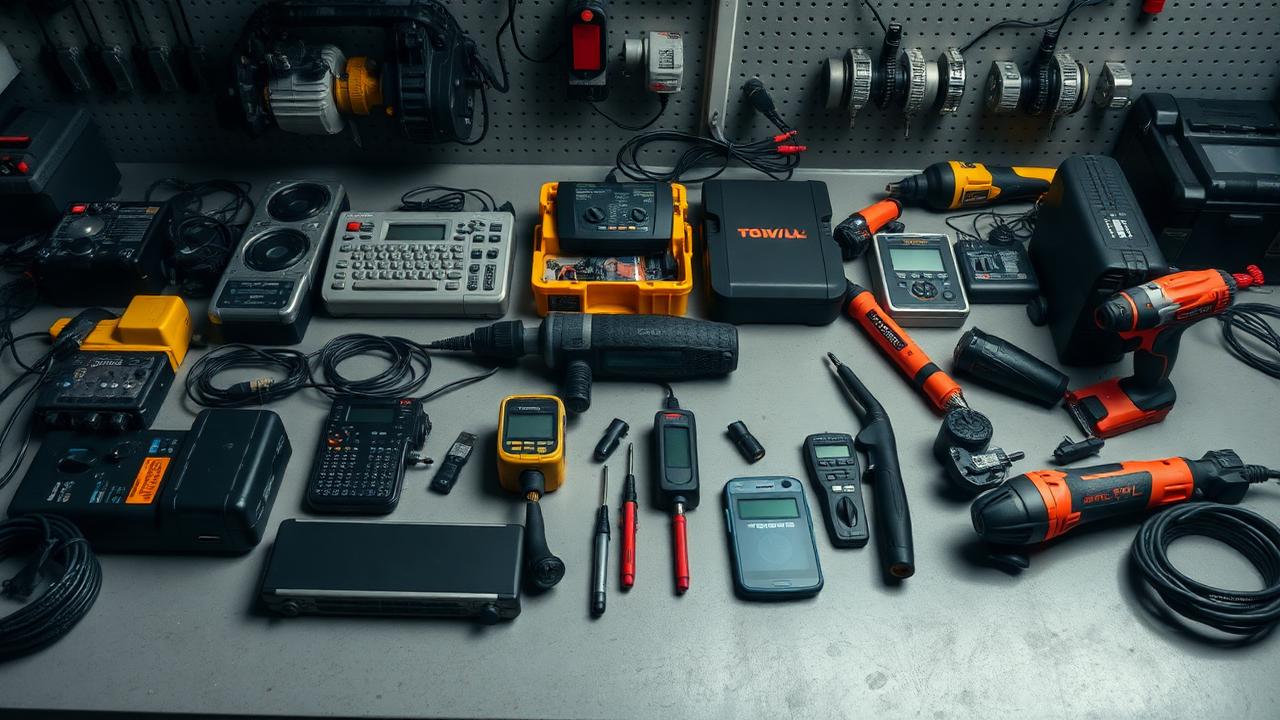
You need a dedicated testing station equipped with standard power bricks, high-wattage USB-C chargers, monitor cables, a digital multimeter, isopropyl alcohol for cleaning sticker residue, and a barcode scanner. A heat gun and guitar picks help open stubborn plastic enclosures for internal inspection.
Pallet IQ Editorial Team
We buy, grade and resell liquidation pallets, then turn what we learn into the tools on Pallet IQ. Every guide here comes from real manifests, real bids and real sell through numbers.
Written August 12, 2026, last reviewed October 19, 2026