How to Flip Customer Return Pallets for Profit
Most return pallet guides leave out freight surprises and dead inventory. Here is the actual math, testing routine, and channel strategy for flipping customer returns.
By Pallet IQ Editorial Team
Published · Updated
 Pallet Flipping
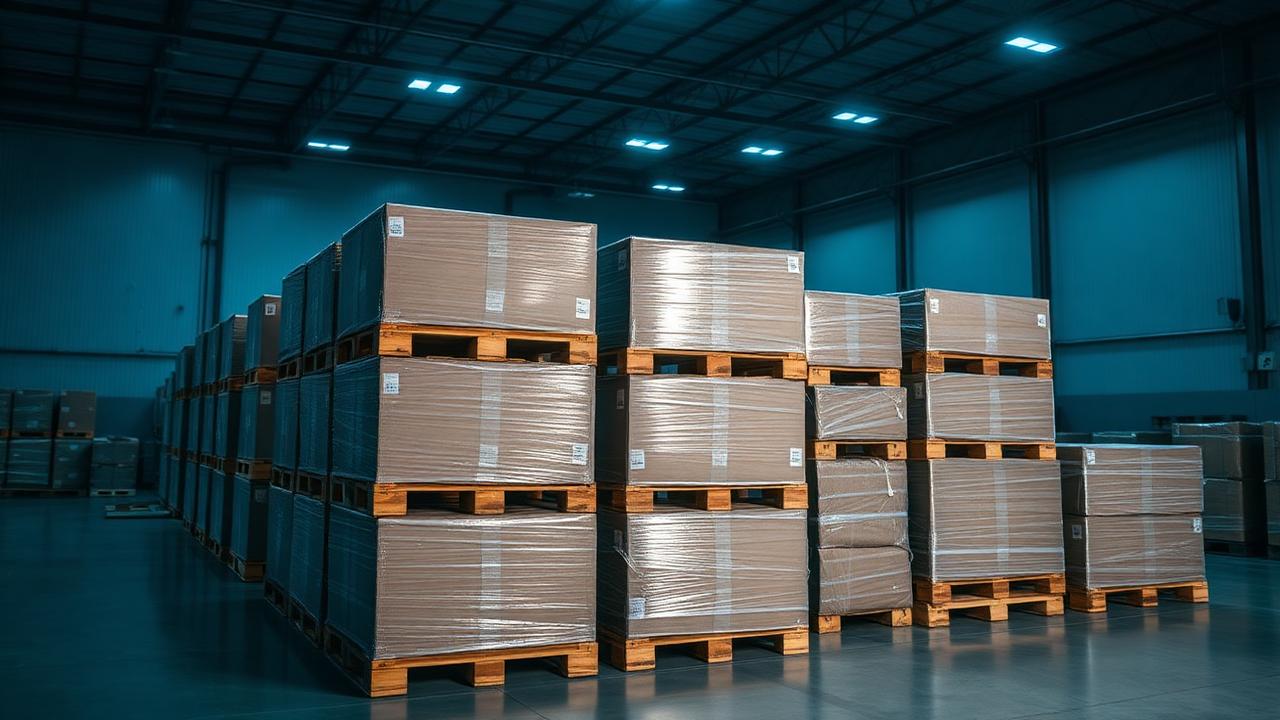
My first customer return pallet arrived on a drizzly Thursday in a dry van with no liftgate. The driver stared at my residential driveway, looked at the 450-pound shrink-wrapped monster sitting in the back of his sleeper cab, and asked how I planned to get it down. I ended up hand-unloading 38 boxes of smashed toaster ovens, missing-cord pressure cookers, and open-box air fryers onto wet asphalt while he checked his watch. After freight and fees, I made $42 on two weeks of manual labor.
If you want to know how to flip customer return pallets, throw away the pipe dream of buying $5,000 worth of pristine Target inventory for $300 and retiring early. Liquidation is a game of margins, logistics, and honest triage. You are paying a liquidator to take their logistics headache off their hands. Once you accept that 20% of what you buy belongs in a dumpster, you can actually build a profitable resale operation.
The Raw Math of Return Categories
Before touching a manifest, get your baseline expected recovery straight. Est. Original Retail Value (MSRP) is a fantasy number used by liquidators to make lots look attractive. What you can actually sell an open-box or returned item for depends on the category.
Electronics usually recover 25-40% of retail value. People assume tech is high margin, but broken screens, missing dongles, and iCloud locks eat your yield alive. Apparel is worse, expect 8-15% recovery on unmanifested clothing trucks because of bizarre sizes, stain damage, and sheer sorting labor. Power tools and outdoor equipment are the sweet spot, pulling 30-45% recovery because buyers on eBay and local marketplaces care about function over pristine cosmetic boxes.
Liquidators sort inventory into rough condition grades:
- Grade A/B: Open-box, shelf pulls, or light cosmetic damage. Most items work and include original accessories.
- Grade C: Raw customer returns. Expect 20-30% defect rates, missing parts, and heavily damaged retail packaging.
- Grade D/Salvage: Untested, crushed boxes, heavily used, or missing major internal components. Strictly for parts pickers and repair shops.
If you buy a Grade C truck or pallet, expect to spend real money replacing power cords, cleaning off dirt, and bundling accessories just to reach that 30% recovery threshold.
How to Flip Customer Return Pallets Without Getting Wiped Out by Freight
You can win on lot pricing and still lose your shirt on delivery. Less-than-truckload (LTL) freight moves at $0.80 to $2.50 per mile depending on fuel surcharges and lane density. But the invoice killer isn't the line haul; it's the accessorial fees.
If you ship to a residential address, carriers add a residential delivery fee of $50 to $100. Need the truck driver to drop the trailer gate to ground level because you don't have a loading dock? That is a liftgate fee ranging from $50 to $75. If your storage garage is down a narrow gravel road or behind a gated entrance, expect a limited-access fee of $30 to $60.
When you buy a $400 pallet with $280 in freight and accessorials, your cost basis isn't $400, it's $680. Every single item on that skid now carries a $21 baseline freight burden before you even slice the stretch wrap. If an item sells for $25 on eBay, you lost money the second you touched it.
Matching Items to Resale Channels
Not every item belongs on eBay. High-weight, low-value items will eat your margins in shipping fees. Small, high-value components should almost always go online. Here is how the main resale channels stack up for liquidation inventory:
| Channel | Fee Structure | Best For | Main Risk |
|---|---|---|---|
| eBay | ~13.25% + $0.30 per order | Tested electronics, power tools, replacement parts | Buyer return fraud, shipping damage |
| Amazon (FBM/FBA) | ~15% + fulfillment fees | Brand new shelf pulls, Grade A open-box | Brand gated categories, IP complaints |
| Mercari | 10% flat fee | Medium-value home goods, apparel bundles | Slower sales speed |
| Facebook Marketplace | 0% (local pickup) / 5% (shipped) | Oversized goods, furniture, uninspected power tools | No-shows, lowball offers |
Local pickup on Facebook Marketplace or OfferUp is your safety valve for heavy items. A 50-pound portable air conditioner might net you $110 on eBay after taking out $45 for UPS Ground shipping and $15 in platform fees. Selling that same air conditioner locally for $120 cash nets you $120 instantly with zero return risk.
Fully Worked P&L: A 32-Unit Tool Pallet
Let's walk through an actual lot. This was a 32-unit mixed power tool lot sourced out of a Georgia Regional Distribution Center (RDC). It was listed as raw customer returns (Grade C).
Cost Basis Calculation
- Winning Bid: $520.00
- Buyer Premium (10%): $52.00
- LTL Freight Linehaul: $140.00
- Residential + Liftgate Accessorials: $120.00
- Total Delivered Cost Basis: $832.00 ($26.00 per unit)
Triage and Yield Breakdown
- 18 Units Grade A/B (Complete, tested working): Resold on eBay for a total of $1,420.00 gross.
- 8 Units Grade C (Working, but missing chargers or side handles): Bought replacement aftermarket chargers for $48.00 total. Resold locally and on Mercari for $410.00 gross.
- 6 Units Salvage/Dead (Burned out armatures, cracked housings): Bundled together as a single parts lot on eBay for $75.00 gross.
Financial Summary
- Gross Revenue: $1,905.00
- Total Cost Basis (Lot + Freight): $832.00
- Parts/Replacement Cords: $48.00
- Platform Fees (eBay/Mercari blended avg): $228.00
- Outbound Shipping Paid by Seller: $195.00
- Shipping Supplies (Boxes, bubble wrap, tape): $32.00
- Net Profit: $570.00
- Return on Investment (ROI): 64.7%
This lot succeeded because the tools held secondary market demand even when non-functional. If this had been a 32-unit lot of cheap visual lighting or unbranded bedding, the salvage units would have been worth $0, and outbound shipping would have devoured the margin on the rest.
How to Flip Customer Return Pallets: The Full Testing and Listing System
To process inventory fast enough to make a real wage, establish a fixed workflow in your shop or garage. Moving back and forth between staging, testing, and photographing adds hours to every lot.
Set up a dedicated testing station. You need a heavy-duty power strip with a built-in circuit breaker, universal AC power adapters, a basic digital multimeter, a light socket tester, isopropyl alcohol, and Goo Gone.
Process every box through four distinct steps:
- Unbox and Inspect: Check the internal serial number against the box label. Customers frequently put their old, broken five-year-old model inside the box of the brand-new unit they just bought and returned.
- Clean and Sanitize: Remove return license plate (LPN) stickers using a heat gun or adhesive remover. Wipe down plastic housings. A clean tool fetches 15% more than a dusty one.
- Function Test: Plug it in. Run power tools for at least 15 seconds to check for hot motor smells or sparking brushes. Fill coffee makers with water and run a cycle to spot internal leaks.
- Accurate Grade Listing: Take close-up photos of scratches, dented metal, or missing manual packets. Explicitly state in your listing description: "Open-box customer return. Tested and fully functional. Retail box shows wear."
Before bidding on unknown manifests, run the itemized list through a manifest analysis tool like Pallet IQ. Knowing your net margin after fees and freight before placing a bid prevents impulse buying on bad lots.
How This Goes Wrong: The "Phantom Retail Value" Trap
The fastest way to burn through your capital is trusting manifest MSRPs without checking historical sold listings. Liquidators pull MSRPs from original manufacturer launch prices. An air purifier marked with a $299 MSRP on a manifest might be selling brand new on Amazon right now for $89.
If you calculate your bid based on a $299 anchor, you will overpay. Imagine bidding $600 for a lot you thought had $4,000 in value, only to realize the actual market cap across eBay and Mercari is $900 gross. After paying freight, purchasing boxes, taking platform fee cuts, and tossing three broken items, you spent twenty hours of manual labor to lose $140.
Always evaluate a manifest based on eBay Sold listings in Used or Open Box condition, never Current List Price, and never Original MSRP.
Do I need a reseller license to buy liquidation pallets?
Most major liquidation auction platforms require a state sales tax exemption certificate (reseller permit) to register and bid. While a few consumer-facing liquidators allow unregistered buyers, they will charge you local retail sales tax on the full purchase price, which immediately shrinks your profit margins.
What is the safest category for a beginner flipping return pallets?
Commercial and home power tools are the safest starting category. They have high structural durability, hold resale value even with cosmetic scratches, and maintain a active secondary market for parts and repair. Avoid mystery apparel or unmanifested small appliance lots when starting out.
How do I handle items missing power cords or crucial accessories?
Don't scrap a $100 item over a missing $6 power cord. Keep a stock of universal 12V power supplies, standard 3-prong IEC cords, and common replacement hose fittings on hand. Buying generic accessory replacements in bulk allows you to upgrade Grade C items to Grade B working status for pennies on the dollar.
Mastering how to flip customer return pallets takes physical workspace, patience for unboxing dirty freight, and disciplined spreadsheet math. Keep your freight overhead tight, price against actual sold listings, and treat every manifest like a puzzle where one-quarter of the pieces require work.
Pallet IQ Editorial Team
We buy, grade and resell liquidation pallets, then turn what we learn into the tools on Pallet IQ. Every guide here comes from real manifests, real bids and real sell through numbers.
Written August 22, 2026, last reviewed October 19, 2026