How to Buy Mixed General Merchandise Pallets and Profit
Mixed general merchandise liquidation pallets contain gold, labor, and literal trash. Here is how working resellers audit manifests, calculate freight, and extract real profit from customer returns.
By Pallet IQ Editorial Team
Published · Updated
 Sourcing Strategy
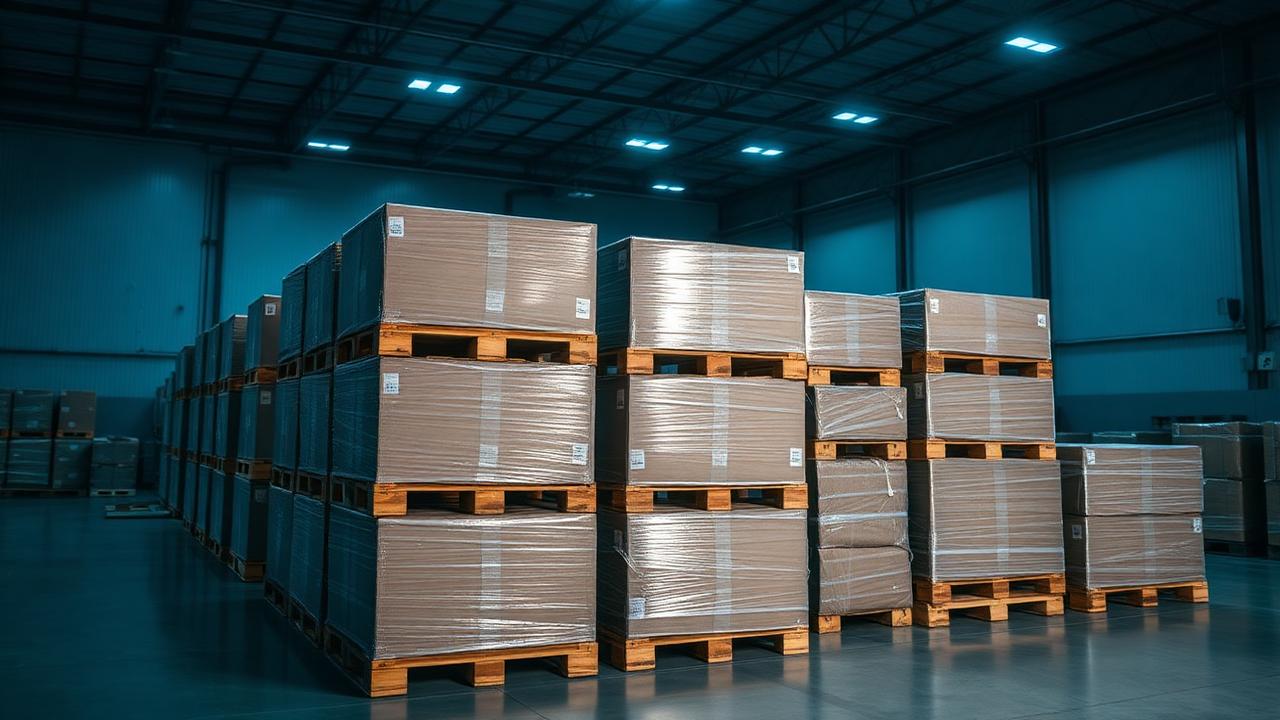
I pulled a six-foot gaylord off the back of a freight truck last Tuesday, sliced through the stretch wrap, and watched three lidless slow cookers roll into a stack of cracked storage tubs. Tucked underneath that wreck was a brand-new $350 DeLonghi espresso machine with a scuffed box and an unopened $90 air fryer. That is the daily reality of learning how to buy mixed general merchandise pallets. You are buying equal parts inventory, labor, and plastic scrap. If you do not know how to value the mess before placing a bid, you will fill your warehouse with garbage and drain your checking account.
Mixed general merchandise is the bread and butter of the secondary market. Big-box retailers dump millions of dollars of customer returns, shelf pulls, and damaged packaging into massive truckloads every week. These lots combine small kitchen appliances, bedding, toys, housewares, and seasonal gear into single pallets. Because the item density and condition vary wildly, pricing these lots requires a sharper pencil than buying clean, single-category electronics or brand-name tools.
Evaluating Lots: How to Buy Mixed General Merchandise Pallets Wisely
Before you look at a single lot photo, you need to understand grading scales. Retail supply chains split liquidation inventory into distinct condition tiers. If a broker does not specify the grade, assume you are buying the worst-case scenario.
- Grade A/B (Overstock and Shelf Pulls): Items never purchased by a consumer. Packaging might have sticker residue, corner dents, or clearance tags. Expect a 90% or higher functional rate and a 35% to 50% recovery against retail price.
- Grade C (Customer Returns): Items returned to a store or warehouse. Some work perfectly out of the box; others are missing power cords, instruction manuals, or vital accessories. Functional rates hover around 65% to 75%, with recovery rates between 20% and 30% of original retail.
- Grade D (Salvage and Heavy Damage): Broken housings, crushed boxes, stripped gears, and missing major components. Unless you run a dedicated repair shop or a bin store selling everything for a dollar on scrap days, stay away. Recovery rarely clears 10% after labor.
General merchandise mixes are notoriously volatile because category recovery rates differ drastically. Portable electronics within a mix might recover 25% to 40% on eBay or Facebook Marketplace. Soft goods and apparel yield a dismal 8% to 15% because listing times are long and consumer demand is soft. Power tools and hardware components quickly bounce back at 30% to 45%. If a 100-item pallet contains 80 cheap polyester sheet sets and 20 low-end toaster ovens, the manifest paper value is meaningless.
Sourcing Channels: How to Buy Mixed General Merchandise Pallets Direct
Where you buy determines your margins just as much as what you buy. You have three primary sourcing channels: direct retailer B2B auctions, regional brokers, and local liquidation auction houses. Each channel trades margin for convenience.
| Channel | Price (% MSRP) | Manifest Accuracy | Scrap Rate | Freight Control |
|---|---|---|---|---|
| Direct Retailer RDC | 7% - 12% | 85% - 95% | 15% - 25% | Buyer Arranged (LTL) |
| Regional Broker Yard | 12% - 18% | 50% - 70% | 25% - 40% | Flat Rate or Included |
| Local Auction House | 15% - 25% | 0% (Unmanifested) | 30% - 50% | Local Pickup Only |
| Liquidation Marketplaces | 8% - 15% | 80% - 90% | 20% - 30% | Platform Arranged Freight |
Buying direct from a Regional Distribution Center (RDC) yields the best profit, but requires trade credentials, a tax ID, and the capacity to unload 53-foot dry vans. Regional brokers make buying easier by offering single-pallet purchases, but they frequently pick through lots first, taking high-value electronics and repalletizing the low-grade housewares.
The Math Behind a 4-Pallet General Merchandise Lot
Let's run a hard P&L on a real transaction. This is a 4-pallet lot of mixed general merchandise customer returns sourced from a Target RDC out of Indiana. The total manifest MSRP is $14,200 across 185 listed units.
Winning bid on the lot was $1,136 (8% of retail MSRP).
Now add shipping. The lot moves 380 miles via Less-Than-Truckload (LTL) freight. Freight base rate is $1.60 per mile, equal to $608. You do not have a commercial loading dock, so the carrier hits you with accessorial charges: a liftgate fee ($65), a residential delivery fee ($75), and a limited-access delivery fee ($40). Total freight cost lands at $788.
Your total cost basis to get those 4 pallets onto your warehouse floor is $1,924.
Now look at realistic sales numbers. You sort, test, and clean the 185 items. Here is how that manifest breaks down in reality:
- 40 items are completely unsellable or missing critical parts (scrap). Value: $0.
- 85 items are lower-value home goods, toys, and small kitchen tools sold on local platforms (Facebook Marketplace, OfferUp) to avoid shipping costs. Average resale price: $18 each. Total: $1,530.
- 60 items are brand-name appliances, working electronics, and complete housewares sold on eBay and Mercari. Total gross sales: $2,420.
Gross resale revenue equals $3,950 (a 27.8% recovery on the $14,200 MSRP).
Here are the operational costs:
- Marketplace fees (eBay averages ~13.25% + $0.30 per order; Mercari takes 10%): $335
- Shipping boxes, bubble wrap, poly mailers, and tape: $110
- Landfill/trash disposal fee for scrapped items: $35
Total operating costs equal $480.
Calculation time:
- Gross Revenue: $3,950
- Total Cost Basis (Lot + Freight): -$1,924
- Platform Fees & Packing Supplies: -$480
- Net Cash Profit: $1,546
It took 22 labor hours to receive, unpallet, test, clean, list, and ship these items. Your net return on labor is $70.27 per hour. That makes it a solid lot. However, if freight had cost $1,400 instead of $788, or if the broken scrap rate hit 40% instead of 21%, your hourly return drops below fast-food wages. The math must leave room for mistakes.
Freight and Accessorials: The Silent Margin Killers
Freight will ruin your profitability faster than damaged inventory. When ordering LTL freight for general merchandise, freight carriers treat small business buyers like cash cows. Every service beyond moving a trailer from terminal to terminal costs money.
- Liftgate Service ($50 - $100): Required if you do not have a forklift or a loading dock built to trailer height. The driver uses a hydraulic platform to drop pallets to the pavement.
- Residential Delivery ($50 - $100): Charged automatically if your delivery address is zoned residential, even if you run your business out of a large home workshop.
- Limited Access Fee ($30 - $75): Applied to locations where 53-foot trucks struggle to maneuver, including storage units, strip malls, and rural routes.
- Re-consignment or Redelivery ($100 - $300): Charged if you are not present during your scheduled delivery window and the driver has to haul the load back to the terminal.
When calculating line-haul costs, expect to pay between $0.80 and $2.50 per mile for LTL shipments depending on diesel prices and lane capacity. If delivery charges exceed 50% of your pallet purchase price, do not place the bid unless the manifest contains pristine, high-value items.
How This Goes Wrong: The Trash Trap and Density Creep
Three major failure modes catch liquidators off guard when learning how to buy mixed general merchandise pallets.
First is the Light-Density Load Trap. General merchandise includes huge, low-cost plastic items: storage totes, outdoor trash cans, cheap laundry baskets, and foam floor tiles. A pallet might stand seven feet tall, fill an entire LTL truck slot, and carry an MSRP of $2,500, yet contain only $200 in net resale value. You are paying $200 in freight to ship empty air and low-density plastic. Always review the manifest item weights and box dimensions before bidding.
Second is Dumpster Creep. Unsellable return inventory does not disappear into thin air. Broken glass, shattered air fryers, and worn mattresses take up space in your facility and cost money to throw away. A single 4-pallet delivery can easily generate two full commercial dumpsters of trash. If you live in an area with high municipal waste fees or strict commercial disposal rules, factor trash removal expenses directly into your lot evaluations.
Third is Manifest Blindness. Manifests provided by liquidators often reflect the original retail price when the item was first released, not current market rates. A small appliance listed on a manifest with a $120 MSRP might sell brand new on Amazon today for $69. If you build your profit margins on outdated MSRP figures, your real-world recovery will crater. Running line items through a manifest analysis tool like Pallet IQ helps flag inflated retail prices and instantly calculates actual historical eBay sold data so you don't overpay.
Executing the Process: How to Buy Mixed General Merchandise Pallets
To build a consistent liquidation workflow, stick to four operational rules:
- Set a maximum bid threshold based on land cost, not bid cost. If your total target acquisition cost is 15% of MSRP, and freight takes up 5%, your hard stop bid limit is 10% of MSRP.
- Process inventory immediately upon delivery. Customer return items lose value every month they sit in your facility. Test, sanitize, and list high-value items within 72 hours of truck delivery.
- Diversify your sales channels. Do not try to list $15 toaster ovens on eBay; shipping fees will eat your profit. Sell low-value items locally for cash, mid-value functional goods on Mercari or Poshmark, and high-value tested electronics on eBay or Amazon secondary accounts.
- Track actual scrap rates per vendor. Keep a simple spreadsheet recording vendor name, lot cost, scrap percentage, and net revenue. Within six months, you will know exactly which retailer distribution centers ship profitable lots and which ones ship unmanifested trash.
Mastering how to buy mixed general merchandise pallets is not about finding hidden treasures on every skid. It is about applying strict financial formulas, controlling transportation expenses, and executing labor-efficient sorting processes day after day.
Are unmanifested general merchandise pallets ever worth buying?
Unmanifested pallets are only worth buying if you purchase them locally to eliminate freight costs and pay under 5% to 8% of estimated retail value. Without a manifest, you must assume a 40% scrap rate and value the remaining contents based on quick-turn local cash sales rather than online marketplace prices.
What is the average recovery rate for mixed general merchandise?
Across broad retail categories, realistic net recovery ranges between 20% and 35% of original retail MSRP. High-demand items like name-brand small appliances recover closer to 35% to 45%, while soft goods, seasonal items, and unbranded housewares average 10% to 15% after platform fees.
How do I handle testing and repair for returned appliances?
Set up a dedicated processing station equipped with basic multimeter tools, universal power cords, sanitized cleaning solvents, and compressed air. Sanitize the item, check for electrical safety, run a two-minute operational test, and take photos of serial numbers. If an item requires more than 15 minutes of technical repair, strip it for valuable spare parts or send it directly to scrap.
Pallet IQ Editorial Team
We buy, grade and resell liquidation pallets, then turn what we learn into the tools on Pallet IQ. Every guide here comes from real manifests, real bids and real sell through numbers.
Written August 18, 2026, last reviewed October 19, 2026