How to Buy Amazon Return Pallets for Real Profit
I spent $1,150 on an unmanifested lot out of Georgia and got broken humidifiers. Here is how real liquidators evaluate manifests, calculate freight, and actually turn a profit on Amazon returns.
By Pallet IQ Editorial Team
Published · Updated
 Reselling Strategy
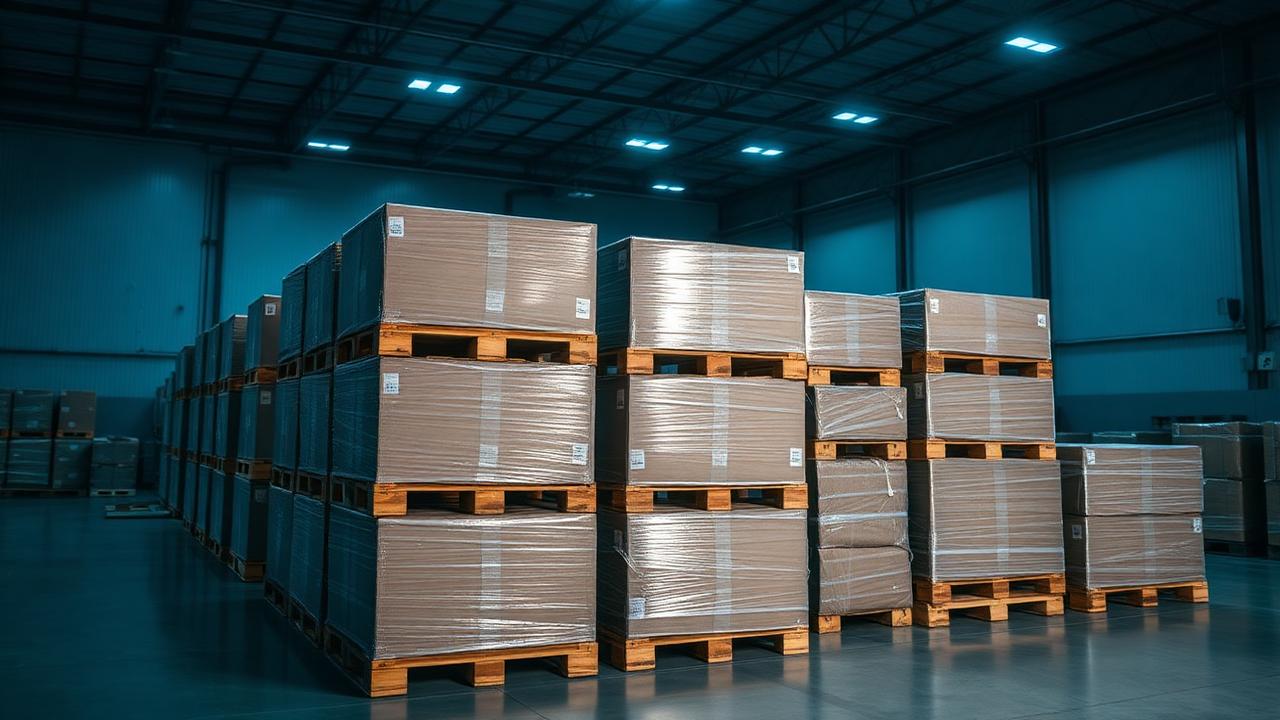
I still remember backing my pickup truck into a dimly lit freight dock in South Fulton, Georgia, back in 2019. I had paid $1,150 for an unmanifested mystery lot out of an Amazon return facility. The broker swore up and down it was high-end audio gear. What I actually loaded onto my truck was 48 units of water-damaged, cord-cut humidifiers and three missing-piece air fryers. I salvaged $320 after three weeks of testing and listing. I lost $830 and a full workweek on my very first attempt.
Learning how to buy amazon return pallets profitably isn't about getting lucky at an auction. It is about strict math, understanding fulfillment logistics, and knowing exactly how liquidation brokers manipulate manifest data to dump junk on inexperienced buyers.
If you jump into this business expecting 80% margins on shiny open-box iPads, you will be broke by month two. But if you treat liquidation like a disciplined procurement operation, there is consistent money to be made.
Where Amazon Liquidation Stock Really Comes From
Amazon handles tens of millions of customer returns every single month. When an item lands back at an Amazon Return Center (RDC), warehouse staff scan it and route it into one of four buckets.
Items that are pristine go back to warehouse shelves as open-box or warehouse deals. Items with damaged boxes or light cosmetic flaws are bundled into customer return lots. Broken, dirty, or unsellable items get pushed down to salvage tiers.
Amazon does not deal directly with single-pallet retail buyers. They liquidate inventory through two primary channels: direct contract auctions (like the B-Stock Amazon Logistics marketplace) and enterprise liquidation brokers like Liquidation.com, Bulq, or Direct Liquidation.
Brokers buy full truckloads (typically 24 to 26 pallets) straight from Amazon fulfillment hubs in places like Indiana, Pennsylvania, or Georgia. They slice those truckloads into single pallets or small LTL (Less-Than-Truckload) lots, add their own markups, and list them online.
If you buy from a middleman broker, you are paying a surcharge on top of their freight costs. If you buy truckloads directly on official auction portals, you need business licensing, tax exemption credentials, and enough warehouse space to unload a 53-foot dry van.
Manifested vs Unmanifested Lots (And Why Mystery Pallets Kill Margins)
Before placing a single bid, you must understand what you are bidding on. Liquidation lots are split into two categories: manifested and unmanifested.
A manifested pallet includes a line-by-line spreadsheet. It lists the ASIN, item description, quantity, estimated original retail price, and sometimes a basic condition code. An unmanifested pallet is a shrink-wrapped mystery box. You get a broad category title like "Mixed Small Domestic Appliances" and a photo of a wrapped skid.
| Lot Metric | Manifested Pallets | Unmanifested Pallets |
|---|---|---|
| Data Visibility | Full item list, ASINs, original retail values | Category description and pallet photo only |
| Resale Recovery Rate | Predictable (25-40% of retail) | Highly volatile (5-25% of retail) |
| Average Wholesale Cost | 15-28% of retail value | 8-14% of retail value |
| Processing Time | Low (match items to manifest data) | High (identify, test, and research every item) |
| Risk Profile | Moderate (subject to mistested gear) | Extreme (high trash and salvage percentage) |
Never buy unmanifested pallets if you are trying to run a lean, predictable reselling operation. Brokers fill unmanifested pallets with items that failed quality checks on manifested truckloads. It is where dead inventory goes to die.
Where to Find and How to Buy Amazon Return Pallets Directly
If you want to cut out predatory middlemen, you need to go directly to enterprise portals or verified liquidation platforms.
- B-Stock Supply (Amazon Logistics): This is Amazon's official B2B auction site for customer returns and overstock truckloads. You will need a registered business entity and a resale certificate to apply. Most lots here are full truckloads or multi-pallet lots.
- Liquidation.com: One of the oldest liquidation sites online. They sell single pallets up to full truckloads. Pay close attention to shipping locations. Shipping a pallet across three state lines can double your total cost basis.
- Direct Liquidation: Offers both buy-it-now and auction options for customer return lots from major retailers, including Amazon. Look specifically for lots coming directly from warehouse hubs rather than third-party consolidator facilities.
- Local Liquidation Warehouses: Skipping freight entirely changes your unit economics. Search for local liquidation liquidators within a 50-mile drive of your location where you can inspect skids in person and haul them on your own trailer.
How to Buy Amazon Return Pallets Step by Step
Running a successful purchase requires a systematic evaluation framework. You cannot rely on emotional bidding when auction timers tick down to zero.
Step 1: Analyze the Manifest Raw Data
Do not trust the total "Estimated Retail Value" printed at the top of an auction listing. Liquidators frequently use original MSRPs from five years ago for obsolete technology. Pull the raw manifest spreadsheet and run the ASINs through eBay sold listings or Amazon current market prices.
Calculate your expected gross revenue using conservative recovery rates. For small appliances and general merchandise, expect a 30-35% recovery rate against original retail. For consumer electronics, expect 25-35%. For apparel, recovery drops down to 8-15%.
Step 2: Factor in Mandatory Accessorials and Freight
Freight cost is the silent profit killer in liquidation. A $400 winning bid on a single pallet looks like a steal until freight adds $350.
When requesting LTL quotes, account for accessorial charges:
- LTL base transit rates ($0.80 to $2.50 per mile based on lane density)
- Liftgate fee at destination ($50 to $75 if you lack a loading dock or forklift)
- Residential delivery surcharge ($50 to $100 if shipping to a home address)
- Limited access fee ($30 to $60 for storage facilities or rural sites)
Step 3: Grade the Inventory Conservatively
Expect damage. Customer return pallets from Amazon carry an average functional failure rate of 20% to 30%. When evaluating a manifest, assume 20% of the units are completely unsellable garbage, 15% need parts or repair, 50% are open-box functional, and 15% are brand new condition.
Using a manifest analysis tool like Pallet IQ allows you to automatically calculate historical yield percentages across specific categories so you do not overpay for high-defect categories like wireless headphones or vacuum cleaners.
The Math Behind a Real Resell Load (A Complete P&L)
Let us run the real math on a typical 36-unit manifested customer return lot containing mixed consumer electronics and small home goods coming out of an Indiana fulfillment warehouse.
Purchase and Procurement Costs:
- Winning Auction Bid: $620.00
- Buyer's Premium (10%): $62.00
- LTL Freight Rate (Indy to Ohio warehouse): $215.00
- Liftgate Accessorial Fee: $65.00
- Total Cost Basis: $962.00
Manifest Breakout & Resale Execution:
- Total Original Retail Value: $3,400.00
- Units Received: 36
*Tested Working Tier (22 units / 61% of lot):*
- Sold on eBay and Mercari over 45 days.
- Total Gross Sales: $1,420.00
*Parts and Repair Tier (7 units / 19% of lot):*
- Sold as "For Parts/Not Working" bundles on eBay.
- Total Gross Sales: $185.00
*Trash and Salvage Tier (7 units / 19% of lot):*
- Complete junk, missing internal boards, or smashed plastics.
- Total Gross Sales: $0.00
Total Gross Revenue: $1,605.00
Selling Fees & Outbound Shipping:
- Marketplace Fees (eBay ~13.25% + $0.30 fixed fee per order): $219.00
- Outbound Shipping Subsidies & Boxes: $142.00
- Total Operational Expenses: $361.00
Final Net Profit Breakdown:
- Gross Revenue ($1,605.00) minus Cost Basis ($962.00) minus Expenses ($361.00)
- Net Profit: $282.00
- Return on Investment (ROI): 29.3%
- Labour Invested: 11 hours (testing, cleaning, photographing, listing, packing)
- Hourly Yield: $25.63/hour
Notice how a $3,400 retail manifest turned into $282 in actual net profit. If freight had cost $150 more, or if three additional high-value items were broken, this lot would have lost money. That is why accurate margin calculations before bidding are mandatory.
How This Goes Wrong: The Cherry-Picked Truckload
The biggest risk in this industry is manifest tampering, commonly known as cherry-picking.
Cherry-picking happens when a dishonest broker buys pristine return truckloads directly from retail distribution centers, manifests them, pulls out all high-value electronics (iPads, Dyson vacuums, Apple Watches), replaces them with lower-value store returns, re-wraps the skids, and sells the lot to unsophisticated buyers.
You will spot this failure mode when your pallet arrives and every box marked "Grade A Open Box" has missing power adapters, taped-over return stickers from secondary pawn shops, or mismatched serial numbers.
To protect yourself:
- Only buy from liquidators with documented chain-of-custody policies.
- Check serial numbers against manifest sheets immediately upon offloading.
- Avoid sellers on public auction boards who hide box labels in listing photos.
- Document damaged skids before signing the carrier's Delivery Receipt (BOL). If the shrink-wrap is torn or clear tape is overlaid on black stretch wrap, write "Subject to Inspection / Shrinkwrap Compromised" on the bill of lading.
Knowing how to buy amazon return pallets with strict discipline keeps you from becoming the liquidation broker's exit liquidity. Stick to manifested inventory, calculate freight before placing a bid, and discount every manifest by at least 25% for dead inventory.
Frequently Asked Questions
Do I need a resale certificate to buy Amazon return pallets?
Yes, most direct liquidation portals and auction platforms require a state-issued resale certificate (tax exemption license). Holding a resale certificate allows you to buy inventory without paying local sales tax at purchase. You will collect sales tax later when you sell individual items to retail end-consumers.
How much money do I need to start buying liquidation pallets?
You should have at least $1,500 to $2,000 liquid capital before buying your first single pallet. This covers a $500 to $800 bid price, $300 to $500 in LTL freight and delivery accessorials, testing equipment, packaging materials, and working capital to cover platform fees before your inventory turns over.
What percentage of items on an Amazon return pallet are usually broken?
On a standard mixed customer return lot, expect a failure rate of 20% to 30%. Around 60% of items are typically functional open-box units, 15% need minor cleaning or missing accessories, and the remaining 25% are either completely broken, cosmetically ruined, or missing core components.
Pallet IQ Editorial Team
We buy, grade and resell liquidation pallets, then turn what we learn into the tools on Pallet IQ. Every guide here comes from real manifests, real bids and real sell through numbers.
Written August 26, 2026, last reviewed October 19, 2026