Common Mistakes Buying QuickLotz Pallets
I paid $650 for a mystery general merchandise pallet, then spent $235 on freight. Here is what I learned after sifting through 85 unmanifested units.
By Pallet IQ Editorial Team
Published · Updated
 Sourcing Tips
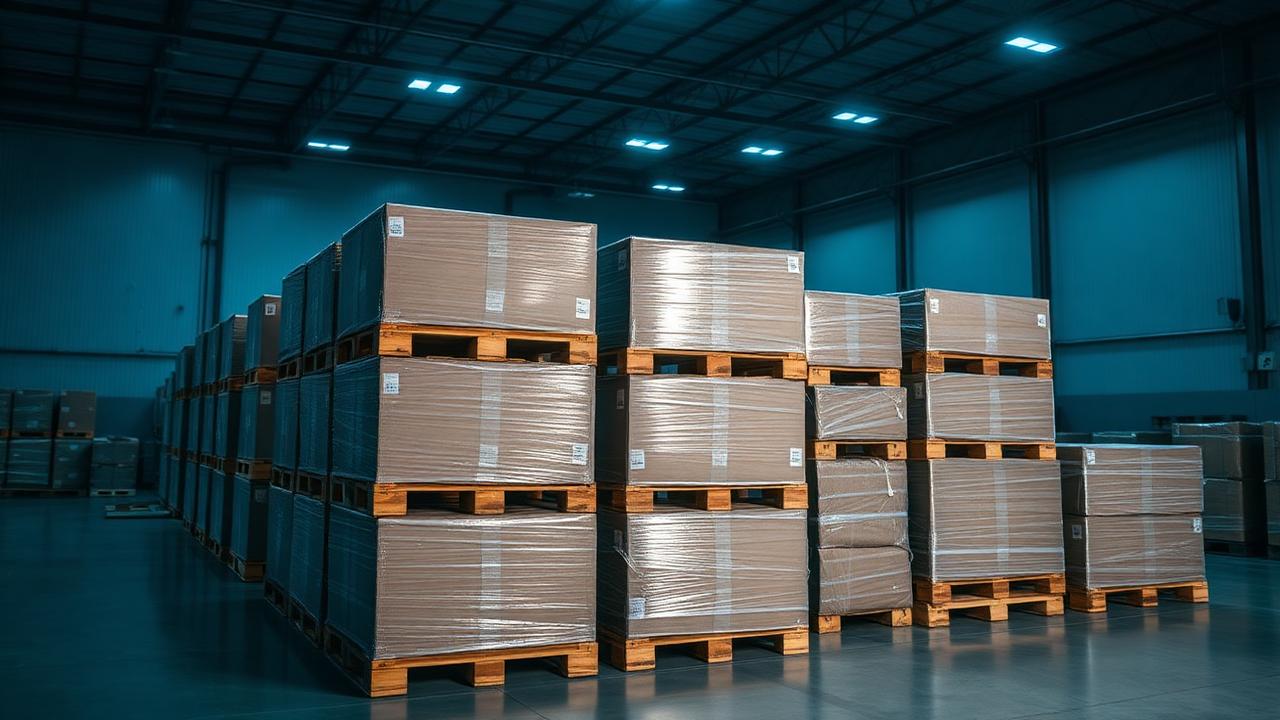
Two summers ago, I backed a trailer into our warehouse to unload a $650 mystery general merchandise pallet out of the QuickLotz Fletcher, North Carolina facility. The shrink wrap was pristine. Underneath it sat three cracked plastic storage bins, a stack of heavily creased Target bedsheet sets, and two vacuum boxes taped together with black electrical tape. I spent forty minutes sorting actual trash from sellable product. By the time I factored in the $235 freight bill, my real landed cost sat at $885. I ended up making $153.80 net profit after three months of listing individual items on local apps and online marketplaces. That lot taught me a brutal lesson. Avoidable operational errors eat up profit margins far faster than bad luck ever will. If you want to build a sustainable reseller business, you need to know the common mistakes buying quicklotz pallets before you transfer your hard-earned dollars.
The liquidation market is full of trapdoors for buyers who rely on gut feelings instead of raw math. QuickLotz built its reputation on bulk mystery boxes, unmanifested pallets, and full truckloads sourced from major box stores and e-commerce giants. According to the NRF returns research, retail customer returns topped $743 billion in recent years. Retailers simply cannot process this mountain of inventory, so they drop thousands of bulk gaylords off at liquidation hubs. QuickLotz aggregates these customer returns and shelf pulls, selling them either directly through their website or via live liquidation auctions.
The single biggest trap for new buyers is treating an unmanifested lot like a guaranteed catalog of clean merchandise. A manifest is an itemized inventory list showing descriptions, stock-keeping units, and original retail prices for every item on a lot. When you purchase a mystery pallet from QuickLotz, you are buying blind. You might get three high-end kitchen appliances alongside eighty pairs of socks, or you might get twenty-five customer-returned air fryers missing their power cords.
When you buy without a paper trail, you cannot plug numbers into a manifest analyzer to project historical recovery rates. You are taking a pure statistical gamble. New resellers routinely overestimate the percentage of retail value they can extract from raw returns. In general merchandise, realistic recovery rates range from 20% to 35% of original retail value, but unmanifested return lots often dip down to 15% once you toss out missing parts and shattered plastic.
The Five Common Mistakes Buying QuickLotz Pallets
Mistake 1: Ignoring the Real Cost of Freight and Accessorial Charges
You spot a general merchandise mystery pallet listed for $450. It looks like a steal. You add it to your cart, go to checkout, and suddenly the shipping price pushes the order total over $700. Freight is the quick death of small-scale resellers.
QuickLotz ships most pallets via LTL freight, which stands for Less-Than-Truckload carrier shipping. Freight pricing depends on shipping lane distance, total weight class, and extra carrier services called accessorials. If you do not operate out of a commercial building with a loading dock and a dedicated forklift, you will trigger extra fees.
- Residential delivery fee: $50 to $100
- Liftgate service fee: $50 to $75
- Limited-access location fee: $30 to $60
A buyer who forgets to calculate these expenses will see their landed cost explode before the delivery truck even hits their driveway. Always plug your lane and delivery conditions into a shipping cost calculator before placing a bid or completing checkout. A $400 pallet with $300 in freight requires an absolute minimum of $1,400 in total resale value just to clear an acceptable margin.
Mistake 2: Mismatching the Merchandise to the Resale Channel
Not every item belongs on e-commerce platforms. If your QuickLotz pallet contains fifty loose, unbranded kitchen gadgets valued at $12 each, listing them individually online is a fast track to negative returns.
Consider marketplace fees. Current eBay seller fees sit around 13.25% plus a $0.30 fixed fee per transaction. Add in parcel shipping costs ($6.50 to $9.00 for small packages) and packaging material, and a $12 item leaves you with maybe two dollars of net gain for fifteen minutes of listing, testing, and packing labor. That is bad business.
For low-dollar unmanifested merchandise, local channels like Facebook Marketplace or flea market booth space are far superior. Local cash buyers take items as-is without platform fees or shipping hassles. High-value small electronics belong on online marketplaces, but cheap home goods and softlines belong in bin sales or local cash bundles. Run your numbers through a marketplace fee calculator before committing to a listing channel.
Mistake 3: Overestimating Processing Speed and Sell-Through
A gaylord full of unsorted returns looks smaller on a computer screen than it does sitting in your garage. Processing an unmanifested QuickLotz pallet requires serious manual labor.
- Unwrapping and sorting items into categorical bins (working, damaged, incomplete, scrap).
- Cleaning items, removing return stickers, and testing electrical functions.
- Taking clear photos, writing item descriptions, and measuring dimensions.
- Shelf indexing and storing listed inventory until it sells.
If you purchase three mystery pallets at once without the physical bandwidth to process them, your workspace becomes an unorganized warehouse nightmare. Cash flow stalls when inventory sits unlisted. A smart buyer accounts for listing time and prices their labor into the lot purchase price rather than pretending their time is free.
Mistake 4: Skipping the Inspection and Grading Process
When liquidators sell return lots, they grade condition tiers from A to D. Grade A covers new overstock or unopened retail shelf pulls. Grade B covers open-box items with complete accessories and minimal packaging wear. Grade C covers customer returns with cosmetic flaws or minor missing pieces. Grade D covers heavily used, broken, or salvage-only items.
QuickLotz mystery lots often combine Grade B, C, and D inventory into one stretch-wrapped package. Assuming everything inside is Grade B open-box is one of the classic mistakes buying quicklotz pallets. If you do not budget for a 20% to 30% throwaway or repair rate on raw return lots, your cash flow projections will fail immediately.
Mistake 5: Sunk Cost Bidding During Live Auctions
QuickLotz runs live liquidation auctions alongside their buy-it-now stock. Auction environments trigger emotional bidding. Resellers get locked into winning a lot they have spent time researching, raising their bid ceiling past logical profit thresholds.
Before placing your first bid, calculate your max bid using a maximum bid calculator. Set your hard cap based on conservative gross margin estimates and walk away the moment the price exceeds that number. Winning a bid feels great for five minutes; living with an unprofitable pallet in your workshop lasts for five months.
A Worked P&L: What a $550 QuickLotz Pallet Actually Returns
Let us look at a real-world financial breakdown for an unmanifested general merchandise pallet sourced from QuickLotz.
Assumptions:
- Pallet Purchase Price: $550.00
- LTL Freight (Residential + Liftgate): $225.00
- Total Landed Cost Basis: $775.00
- Total Units In Pallet: 85 items
- Salvage or Scrap Rate (Broken/Incomplete): 15 units (18%)
- Sellable Units: 70 items
Resale Breakdown:
- Top 10 High-Value Items (Sold on eBay, Avg $38 each): $380.00 gross
- 30 Medium-Value Items (Sold on eBay, Avg $18 each): $540.00 gross
- 30 Low-Value Items (Bundled on Facebook Marketplace): $210.00 gross
- Total Gross Sales Revenue: $1,130.00
Direct Costs and Fees:
- Marketplace Fees (~13.5% avg on $920 online sales): $124.20
- Packaging Supplies (Boxes, bubble wrap, tape): $35.00
- Outbound Shipping Subsidies or Promotions: $42.00
- Total Realized Fees & Selling Costs: $201.20
Net Financial Summary:
- Gross Revenue: $1,130.00
- Cost Basis (Pallet + Freight): -$775.00
- Resale Fees & Expenses: -$201.20
- Net Cash Profit: $153.80
- Net ROI on Investment: 19.8%
Plugging these numbers into a pallet ROI calculator reveals the cold truth. A lot that brought in over $1,100 in cash only generated $153.80 in true net profit. If you spent 12 hours sorting, testing, listing, and packing those items, your hourly compensation sat around $12.80 per hour. If freight had cost $325 instead of $225, your entire profit margin would have vanished into thin air.
QuickLotz Sourcing Comparison: Boxes vs Pallets vs Truckloads
Choosing the wrong tier of volume is another frequent operational error. Here is how QuickLotz inventory formats stack up for different reseller scales.
| Sourcing Tier | Typical Cost Range | Freight Cost / Unit | Risk Level | Best Resale Channel |
|---|---|---|---|---|
| Mystery Boxes | $50 - $150 | High (Parcel) | Very High | Whatnot, TikTok Live, Mystery Bins |
| Unmanifested Pallets | $400 - $800 | Medium (LTL Freight) | High | Local Marketplace, eBay, Flea Market |
| Manifested Truckloads | $4,000 - $12,000 | Low (Full Truckload) | Moderate | Storefront, Multi-Channel E-Commerce |
How This Goes Wrong: The Trash Sinkhole
Let us talk about how a QuickLotz order spiraled down the drain for a buyer in Indiana last winter.
He ordered two unmanifested tool and home hardware mystery pallets for $1,200 total. Because he lived in a narrow suburban cul-de-sac without commercial access, the freight carrier tacked on a limited-access accessorial fee alongside residential liftgate delivery. Shipping totaled $510. His landed cost was $1,710.
When he unwrapped the gaylords, he found 60% of the tools were heavy cordless power tool bodies without batteries or chargers. Another 20% were store returns with burned-out motors packaged inside fresh retail boxes. Only 20% were tested, working shelf pulls.
Instead of cutting his losses and selling the tool bodies in bulk lot bundles on local channels to recover his principal cash, he spent six weeks buying third-party replacement batteries and charger packs on Amazon to complete each set. He sank another $450 into replacement parts. By the time he listed the restored tools on eBay, market prices for used power tools had dipped.
After paying eBay final value fees, outbound shipping costs, and covering two customer returns for defective motors, his total net payout was $1,620. He invested $2,160 in cash and 40 hours of tedious repair work to lose $540. The failure mode was simple: he tried to force low-grade scrap returns into clean e-commerce listings while sinking fresh capital into bad inventory.
To succeed with QuickLotz or any bulk liquidator, you must treat every purchase as an exercise in strict cash flow management. Always demand a freight quote before placing bids. Assume 20% of unmanifested merchandise will yield zero return. Never sink additional cash into repairing low-dollar items unless the profit delta is backed by completed comps. Understanding these common mistakes buying quicklotz pallets keeps your capital intact.
If you are evaluating a questionable lot right now, step back and review our buying decision guide before entering your payment details.
What is the average recovery rate on QuickLotz mystery pallets?
For unmanifested general merchandise returns, realistic net recovery typically ranges from 18% to 28% of estimated original retail value. High-value category lots like clean electronics may hit higher percentages, while softlines and mystery apparel boxes often net under 15% after accounting for unsellable garments and processing labor.
How do I handle missing or broken items in an unmanifested QuickLotz lot?
Unmanifested liquidation lots are sold as-is without guarantees regarding exact condition or unit counts. Unless a pallet arrives completely stripped or damaged by carrier negligence during transit, liquidators will not issue partial refunds for broken customer returns. You should factor scrap rates into your initial purchase price calculation.
Are mystery boxes better for beginners than full liquidation pallets?
Mystery boxes offer a lower entry cost, making them accessible for buyers without warehouse space or forklift capabilities. However, their parcel shipping cost per item is drastically higher than LTL freight per item on a full pallet. Beginners often lose money on mystery boxes due to high shipping overhead relative to low item values.
Pallet IQ Editorial Team
We buy, grade and resell liquidation pallets, then turn what we learn into the tools on Pallet IQ. Every guide here comes from real manifests, real bids and real sell through numbers.
Written September 10, 2026, last reviewed September 21, 2026